
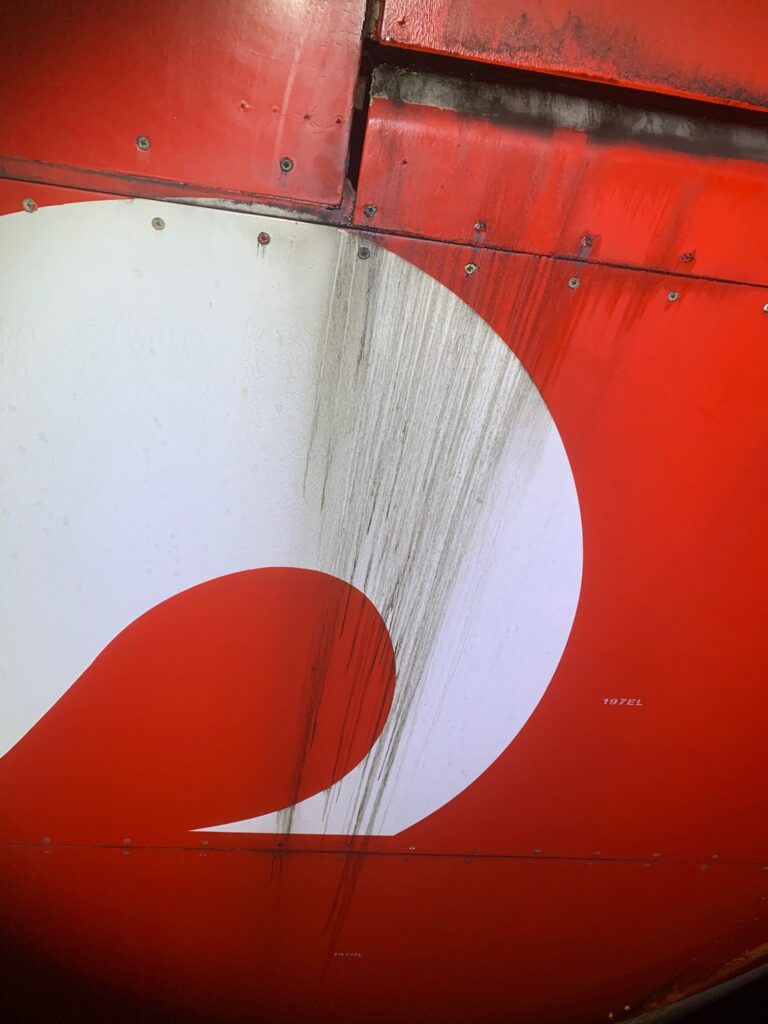
It’s not uncommon for maintenance crews or pilots to spot reddish or dark oily streaks on an aircraft’s fuselage, particularly near access panels, landing gear bays, or hydraulic servicing ports. These stains can easily raise concerns about a possible hydraulic leak—a serious issue in aviation. However, not every stain indicates an active or dangerous leak. Understanding the true causes of hydraulic stains and how to communicate their safety to pilots is critical for maintaining operational confidence and ensuring safety.
What Are Hydraulic Stains?
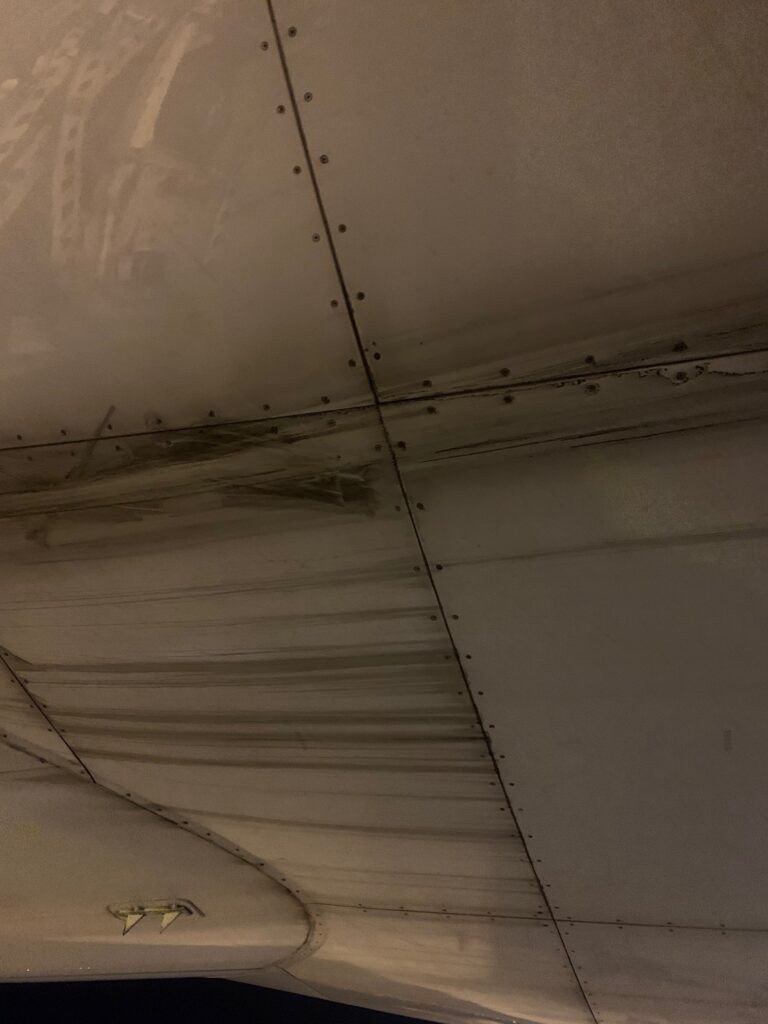
Hydraulic stains are discolored streaks or smudges typically caused by Skydrol or similar hydraulic fluids. These fluids are commonly used in aircraft hydraulic systems for flight control surfaces, landing gear, and brakes. When small amounts of fluid escape or get spilled during maintenance, they may leave behind visible marks on the aircraft’s fuselage or components.
Common Reasons for Hydraulic Stains (Not Active Leaks)
- Residual Fluid from Maintenance
- After routine maintenance or refilling, small amounts of hydraulic fluid may drip or smear around fittings or ports. This often causes stains that look alarming but are harmless.
- Over-servicing or Spillage
- Overfilling hydraulic reservoirs can lead to overflow, especially when the system is pressurized. The excess fluid escapes and leaves stains.
- System Venting
- Hydraulic systems may release minor amounts of fluid through vents or overflow ports as part of normal pressure regulation. These can result in staining without a fault present.
- Wicking Through Seals or Fittings
- Some seals allow for minimal seepage under normal conditions. While this might leave a stain, it does not necessarily indicate a defective component or leak.
- Cleaning Oversights
- Maintenance personnel might forget to completely clean up spilled or dripped fluid, leading to visible marks that raise unnecessary alarms during pre-flight walk-arounds.
How to Reassure Pilots It’s Not a Leak
When pilots notice hydraulic stains during a walk-around or post-flight inspection, it’s essential to provide technical reassurance and evidence to confirm it’s not a leak:
✅ 1. Show Maintenance Records
Highlight recent maintenance involving hydraulic servicing, filter changes, or component replacements where fluid may have been handled. This gives context to the staining.
✅ 2. Demonstrate System Pressure and Level Checks
Show that:
- Hydraulic fluid levels are stable
- System pressures are within normal range
- No loss of functionality is present
This proves the system is not actively leaking.
✅ 3. Explain Known Stain Locations
Point out that staining near reservoir breathers, quick-disconnect fittings, or relief valves are common and expected, especially on older aircraft.
✅ 4. Use UV Dye Inspection (If Available)
If concerns persist, a quick inspection with UV light can confirm whether fresh leaks are present, using dye additives in hydraulic fluid.
✅ 5. Clean and Monitor
Wipe the area clean and monitor over the next few flights. If no new stains appear, it confirms it was a residual stain.
Final Thoughts
Hydraulic stains on aircraft fuselages are often misunderstood. While it’s essential to take any potential leak seriously, it’s equally important to distinguish between a critical hydraulic leak and a cosmetic or maintenance-related stain. Educating flight crews and using data-driven inspection practices can go a long way in building trust between pilots and maintenance teams.
By Aeropeep