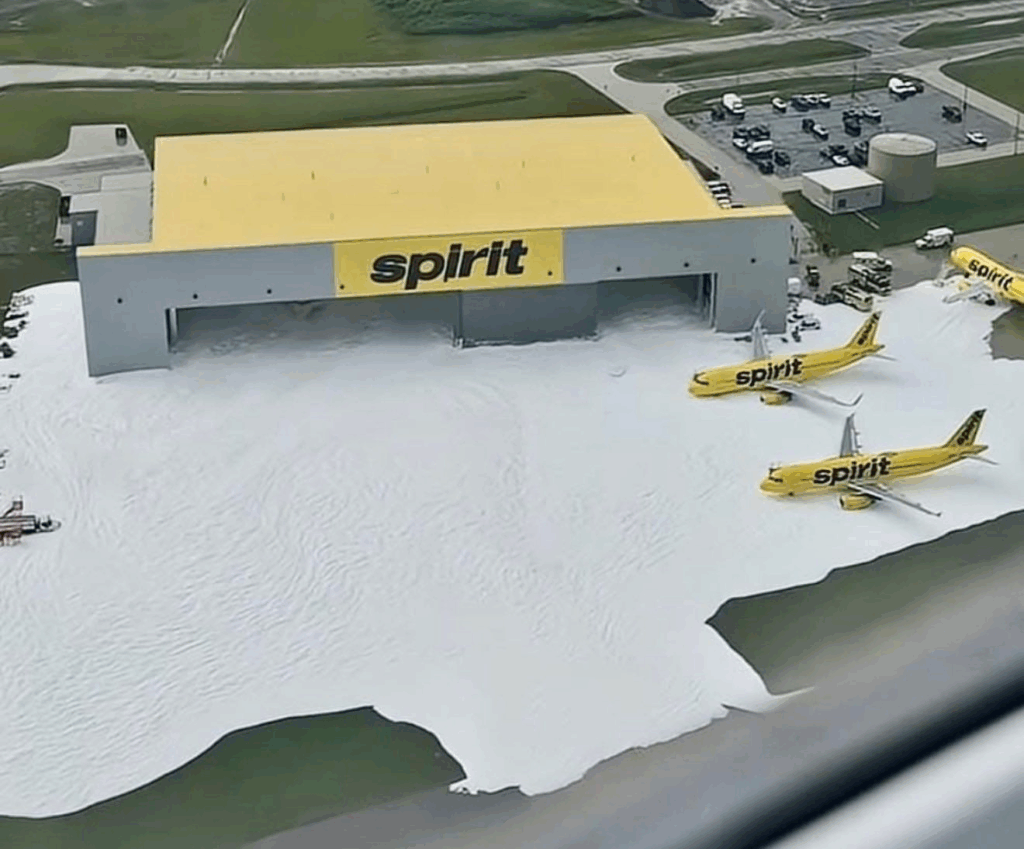
On July 4th, 2025, an unusual and costly mishap occurred at Detroit Metropolitan Wayne County Airport (DTW) involving Spirit Airlines’ maintenance hangar. The hangar’s fire suppression system was accidentally triggered, causing a massive release of fire-retardant foam — not due to a fire, but due to a false activation.
Fire Suppression System Triggers Unexpectedly
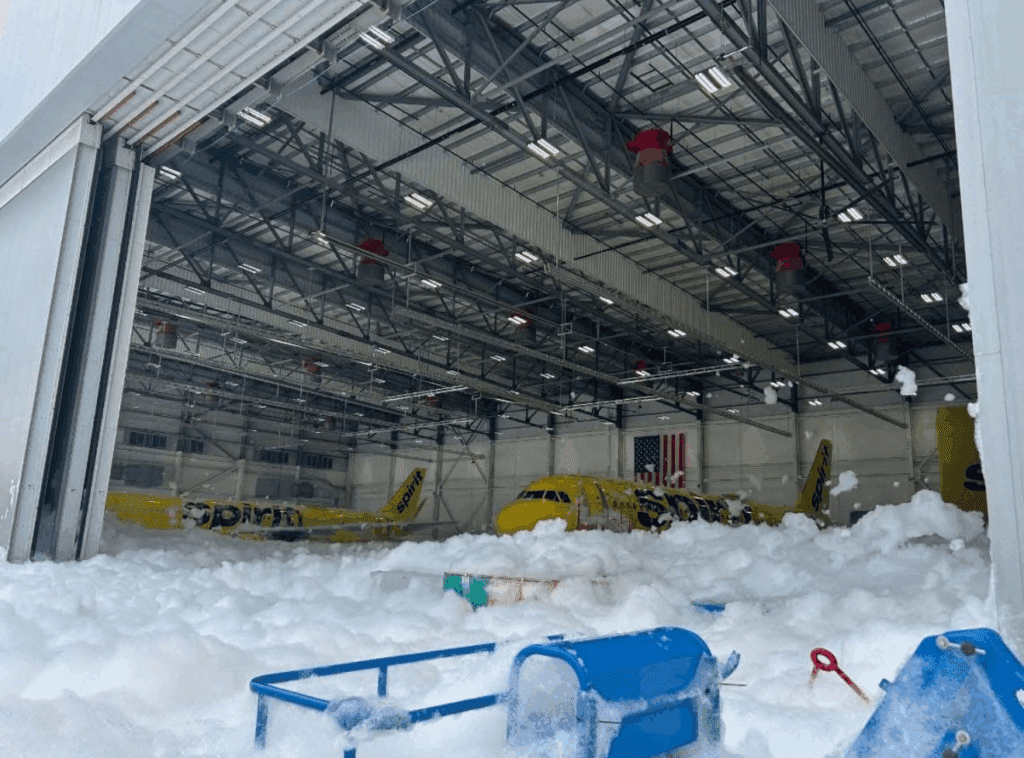
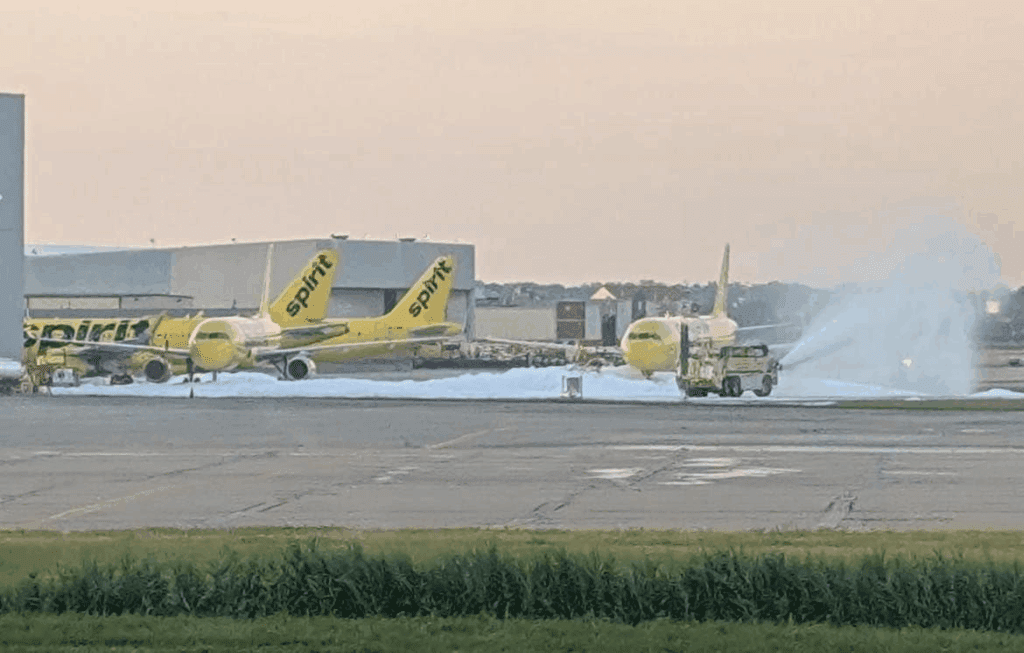
The foam-based fire suppression system is designed to flood the hangar floor in case of a fire emergency to protect both aircraft and crew members. However, this unintended discharge engulfed the entire hangar floor in thick, white foam, impacting two Spirit Airlines aircraft — an Airbus A320 and an Airbus A321.
Foam Spill Reaches the Ramp Area
What made this incident more severe was the fact that the hangar doors were open during the activation. This allowed the foam to spill out onto the adjacent ramp area, creating a messy and potentially hazardous situation for ground crew operations.
Fortunately, no injuries were reported. However, the cleanup process is complex and time-consuming, as fire suppression foam is not only slippery but also corrosive to aircraft components if not cleaned thoroughly.
Impact on Aircraft and Operations
Both aircraft — the Airbus A320 and A321 — were undergoing routine maintenance at the time. They were completely covered in foam, and their return to service will depend on extensive inspections to ensure no damage has occurred to the engines, avionics, or other critical systems.
There is currently no public statement from Spirit Airlines about flight delays or cancellations due to the incident. However, aircraft grounded for unexpected reasons can impact operational schedules, especially during the busy summer travel season.
Airport Fire Suppression Systems: A Double-Edged Sword?
Modern fire suppression systems in aircraft hangars are essential safety tools, but incidents like this raise concerns about sensitivity and maintenance protocols. Foam systems are costly to recharge and, if triggered erroneously, can lead to millions in cleanup and inspection costs — not to mention potential service disruptions.
Final Thoughts
The Spirit Airlines foam incident at Detroit Metro Airport serves as a reminder of how even highly automated safety systems can malfunction. While no one was hurt, the economic and operational consequences are still being assessed.
Stay tuned for more updates as Spirit Airlines and airport authorities investigate the root cause of the system activation and implement corrective measures.