
The Boeing 787 Dreamliner represents the pinnacle of modern commercial aviation technology. Among its sophisticated engine and fuel management systems is a key component: the fuel control switch. While often overlooked, this switch plays a vital role in engine start-up, shutdown, and fuel flow regulation. In this article, we provide a technical breakdown of the fuel control switch, its functions, how it operates, and whether it can be accidentally activated during flight.
What Is the Fuel Control Switch on the B787?
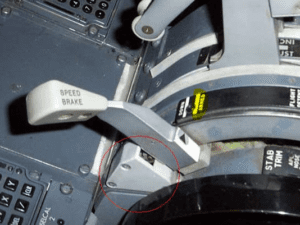
On the Boeing 787, the fuel control switch is located on the center pedestal, immediately behind the throttle levers, between the two pilots’ seats.. There are two switches — one for each engine (Engine 1 and Engine 2). These switches are sometimes referred to as Engine Fuel Control Switches or simply Engine Run switches.
Each switch has two positions:
- CUTOFF
- RUN
Technical Function of the Fuel Control Switch
The fuel control switch is primarily used for:
- Engine Start Procedure:
- When the switch is moved from CUTOFF to RUN, it opens the spar valve (also known as the fuel shutoff valve) and sends a signal to the FADEC (Full Authority Digital Engine Control) to allow fuel flow to the engine.
- Engine Shutdown:
- Moving the switch to CUTOFF shuts off fuel to the engine by closing the spar valve, terminating combustion and stopping the engine.
- FADEC Integration:
- The B787 uses a dual-channel FADEC system, which electronically controls the engines. The fuel control switch communicates with FADEC to confirm that all conditions for fuel flow are met before ignition.
- Protection Systems:
- The switch is also linked with fire protection systems. If a fire handle is pulled, the spar valve is commanded to close regardless of the switch position.
Can the Fuel Control Switch Be Moved Accidentally?
From a design and operational safety perspective, accidental movement of the fuel control switch is highly unlikely, due to several factors:
- Physical Design:
- The switch is guarded and requires deliberate manual action to change positions.
- It has a firm detent mechanism that prevents casual movement due to turbulence or vibration.
- Ergonomics and Location:
- Located on the center pedestal, immediately behind the throttle levers, between the two pilots’ seats.
- It is separate from frequently used flight controls and displays.
- Procedural Controls:
- Movement of the fuel control switch is governed by strict checklists (e.g., during engine start, shutdown, or emergencies).
- Flight crew are trained to double-check its position and function during Pre-Flight, Before Start, and Shutdown checklists.
- Electrical and Software Safeguards:
- Even if the switch were somehow moved, the FADEC system requires multiple parameters to be satisfied before fuel is introduced.
- Any anomaly or inconsistency will trigger ECAM or EICAS messages, alerting the crew immediately.
Accidentally Moving Fuel Control Switch: Is It Possible in Flight?
While the switch is mechanically moveable, inadvertent movement in flight is nearly impossible without deliberate human action. No known incidents on the B787 have involved unintentional activation of the fuel control switch. Any fuel starvation events are typically related to other causes, such as fuel system issues, maintenance error, or external factors—not accidental switch movement.
In the case of engine fire or severe malfunction, the crew may be instructed to use the switch as part of the emergency checklist. Even in these high-stress scenarios, pilots are trained to ensure correct and safe operation.
Conclusion
The Boeing 787 fuel control switch is a critical part of the aircraft’s engine management and safety architecture. Its design prevents accidental movement, while integration with the FADEC and aircraft fire protection systems ensures fuel flow is tightly controlled and safe. With advanced safeguards and robust procedures, the Dreamliner ensures that critical components like the fuel control switch remain secure during all phases of flight.
By Aeropeep Team