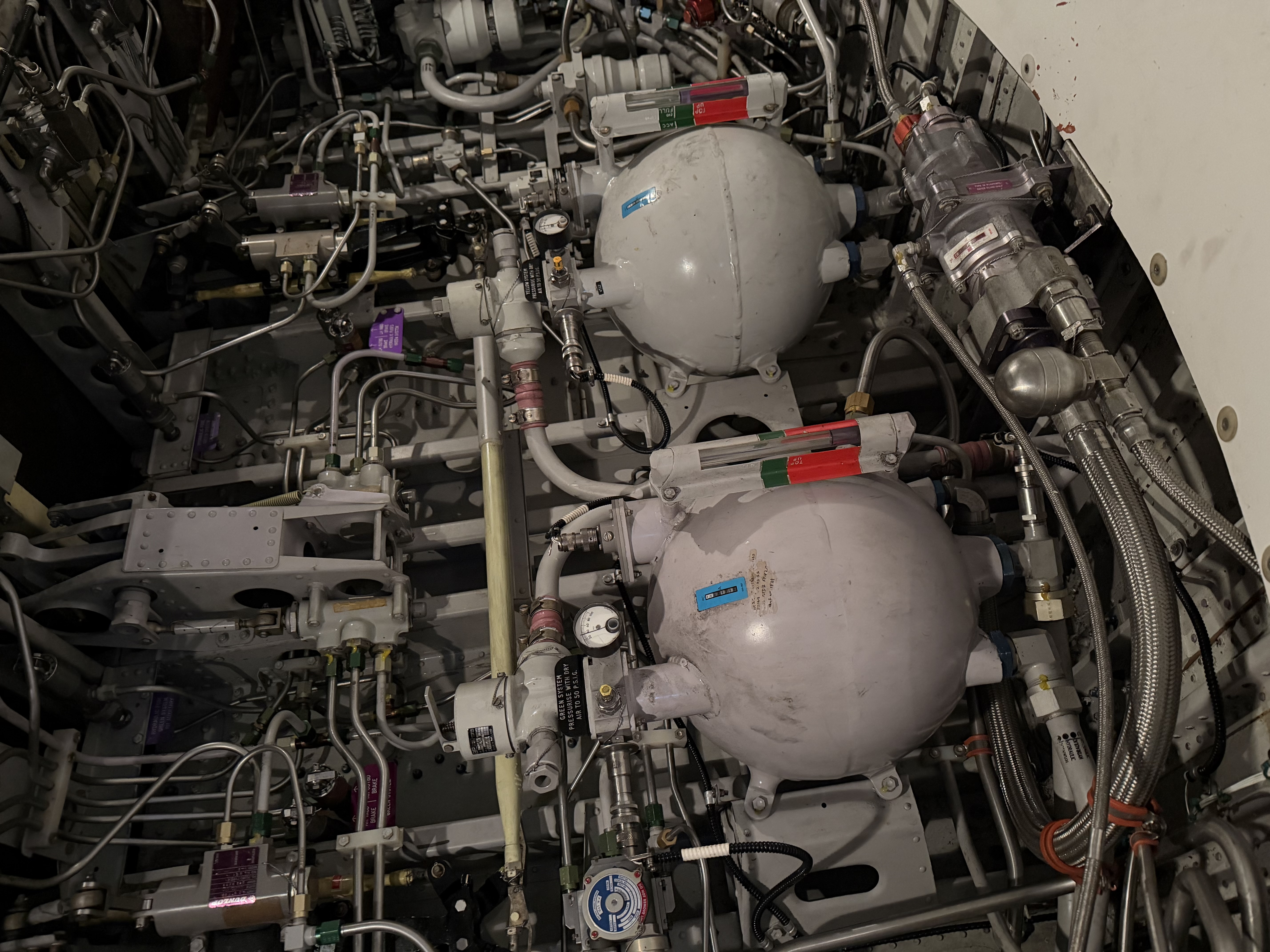
Deep inside the aircraft, far from windows and passengers, lived a hidden world of steel and pressure.
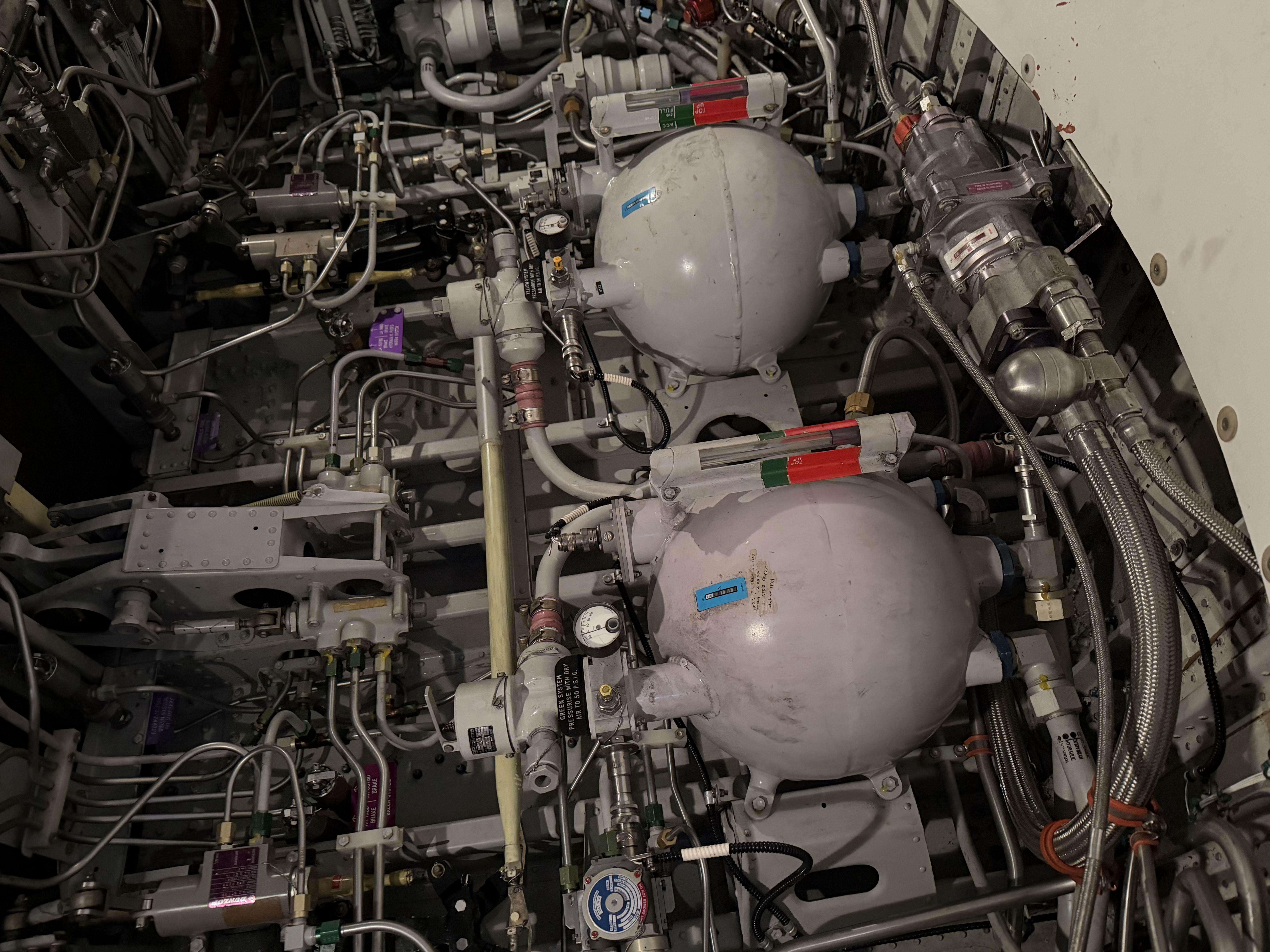
It was a place few ever saw—a narrow bay behind panels and fasteners—where silver pipes twisted like veins and thick hoses pulsed with quiet strength. Two round accumulators sat side by side, calm and patient, storing energy like restrained heartbeats. They didn’t move, didn’t speak, yet they carried the force that made the entire aircraft obey.
Every flight began here.
When the pilots advanced the thrust levers, pressure surged through this compartment. Valves opened with discipline, pumps hummed steadily, and fluid rushed through precisely bent lines. The landing gear listened. The flight controls responded. Brakes waited, ready.
This system never sought attention. It didn’t sparkle like cockpit screens or roar like engines. Its job was simpler—and heavier: never fail.
On one long night flight over an endless ocean, turbulence arrived without warning. The aircraft shuddered. Passengers gripped armrests. In the cockpit, alerts flickered briefly before settling back to normal. What no one knew was that down here, in this dim mechanical chamber, pressure spiked and regulators worked instantly, absorbing the shock.
The accumulators took the load.
The lines held firm.
The pumps kept turning.
Not a single drop leaked.
While passengers slept, this system stayed awake—balanced between force and control, chaos and order. It carried the weight of landings yet to come, the certainty of braking on wet runways, the smooth correction of wings in crosswinds.
And when the aircraft finally touched down, tires screaming and reversers roaring, it was this quiet network that brought everything safely to rest.
After shutdown, silence returned. The pressure eased. The metal cooled.
Tomorrow, no one would thank it.
No one would see it.
But the aircraft would fly again—
because deep inside, this hidden world was always ready.