The Airbus A350 XWB brake system is a hydraulically actuated, electronically controlled brake-by-wire system designed to meet certification, safety, and dispatch reliability requirements for long‑haul operations. The system eliminates mechanical pedal-to-brake linkages while retaining proven hydraulic braking force.
This document is written in a training manual / AMM-style format and provides:
- A system architecture overview
- Functional descriptions of normal, alternate, emergency, and parking braking
- Brake temperature and anti-skid logic explanation
- Common line maintenance faults with structured troubleshooting guidance
This information is intended for maintenance engineers, technicians, and technical students.
1. Airbus A350 Brake System Architecture
1.1 Hydraulic Brake-by-Wire Concept
The A350 brake system uses electronic control with hydraulic actuation:
- Brake pedal inputs are converted into electronic signals
- Control logic computes braking demand
- Hydraulic pressure is modulated via servo valves to apply braking force
Key clarification: The A350 does not use electric brake actuators. Hydraulic pressure provides braking force. Aircraft such as the Boeing 787 use electromechanical (electric) brake actuators instead.
1.2 Major System Components
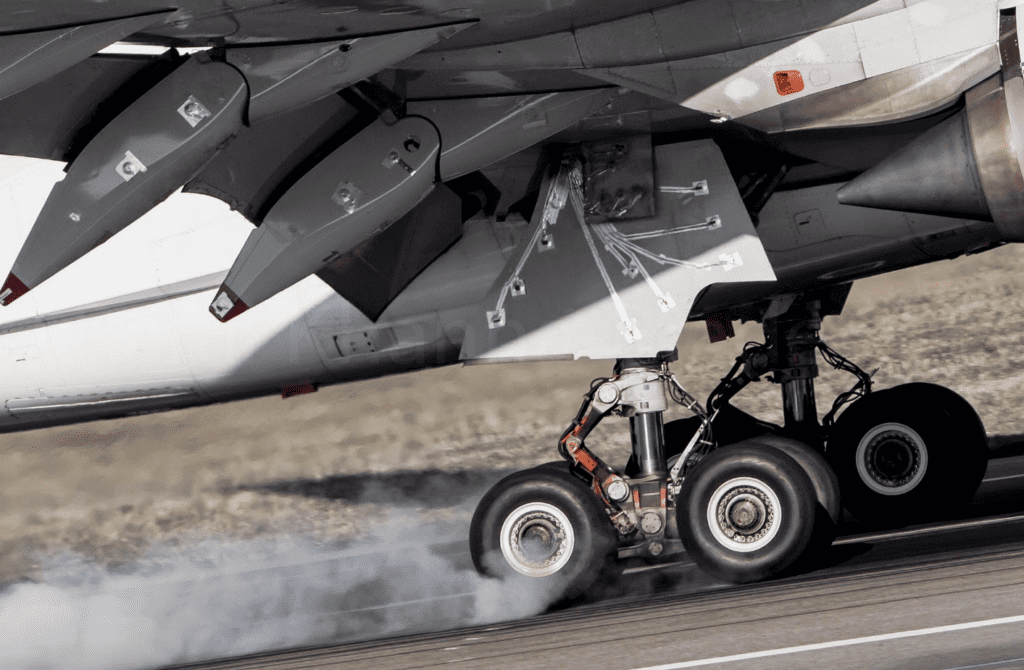
- Carbon brake assemblies on each main landing gear wheel
- Hydraulic servo valves
- Remote Brake Control Units (RBCU 1 and RBCU 2)
- CPIOMs running the Braking Control System (BCS) application
- Brake pedal position transducers
- Wheel speed sensors (tachometers)
- Brake temperature sensors
- Brake cooling fans
- Parking brake system with hydraulic accumulators
2. Hydraulic Power Distribution
2.1 Normal Braking Hydraulic Supply (A350-900)
- GREEN hydraulic system: Wheels 5–8 (rear bogie)
- YELLOW hydraulic system: Wheels 1–4 (front bogie)
- RBCU 1 controls GREEN system wheels
- RBCU 2 controls YELLOW system wheels
This split architecture ensures redundancy and balanced braking capability.
2.2 Alternate, Emergency, and Parking Braking Supply
- Supplied by hydraulic accumulators
- Accumulators are charged by GREEN and YELLOW systems
- Provides braking capability if primary hydraulic supply is lost
This design preserves braking authority even during multiple hydraulic failures.
3. Brake System Operation
3.1 Normal Braking Operation
- Pilot applies brake pedals
- Pedal position sent electrically to CPIOMs (BCS application)
- BCS computes braking demand
- Commands transmitted to RBCUs via AFDX network
- RBCUs modulate hydraulic servo valves
- Hydraulic pressure applies force to carbon brake stacks
- Anti-skid logic prevents wheel lock
Although control is electronic, braking force remains purely hydraulic.
3.2 Autobrake System and Brake-to-Vacate (BTV)
Autobrake provides consistent deceleration during landing or rejected takeoff.
Available modes:
- LO
- MED
- MAX
- BTV (Brake-to-Vacate) – allows selection of a desired runway exit
Autobrake disengages automatically when:
- Manual braking is applied
- Thrust levers are advanced
- A system fault is detected
3.3 Alternate Braking
- Automatically selected if normal braking fails
- Uses accumulator pressure
- Maintains brake-by-wire control logic
- Anti-skid remains available if accumulator pressure is sufficient
3.4 Emergency Braking
- Backup to normal and alternate braking
- Uses accumulator pressure only
- Limited braking authority
- No anti-skid protection
3.5 Parking Brake System
The parking brake is hydraulically actuated using accumulators.
Key characteristics:
- Controlled via cockpit parking brake handle
- Full braking pressure (approx. 206 bar / 3,000 psi)
- No anti-skid protection
- Can hold aircraft for at least 12 hours
- Serves as the ultimate braking mode
4. Brake Temperature Monitoring and Cooling
- Brake Temperature Sensors (BTS) installed on each wheel
- Temperatures displayed on the WHEEL page of the System Display
- Automatic brake fans operate based on thermal logic
- High brake temperatures inhibit landing gear retraction
- Manual brake fan control available via BRK FAN pushbutton
5. Anti-Skid Protection System
The anti-skid system is integrated within the RBCUs and uses wheel speed data from tachometers and ADIRS.
Functions:
- Prevents wheel lock-up
- Protects against tire burst
- Optimizes braking efficiency per wheel
Anti-skid unavailable when:
- Emergency braking selected
- Parking brake applied
- Alternate braking with accumulator pressure below limits
- Ground speed below approximately 10 knots
6. Common A350 Brake System Defects and Line Maintenance Troubleshooting
6.1 BRAKES HOT / HIGH BRAKE TEMPERATURE
Typical causes:
- Heavy braking or RTO
- Inoperative brake fans
- Faulty temperature sensor
Troubleshooting:
- Review WHEEL page temperatures
- Confirm brake fan operation
- Check related circuit breakers
- Inspect fuse plugs and heat damage
- Allow adequate cooling time
6.2 ANTI-SKID FAULT
Typical causes:
- Wheel speed sensor failure
- Wiring damage near axle
- RBCU fault
- ADIRS data loss
Troubleshooting:
- Perform RBCU BITE via MCDU
- Identify affected wheel
- Inspect sensor gap and wiring
- Verify valid ADIRS data
- Reset system or defer per MEL
6.3 AUTOBRAKE FAULT / AUTOBRAKE INOP
Typical causes:
- Brake pedal transducer mismatch
- CPIOM or RBCU logic fault
- Electrical signal inconsistency
Troubleshooting:
- Verify pedal symmetry
- Perform CPIOM and RBCU BITE tests
- Check for related hydraulic faults
- Reset system or apply MEL
6.4 PARK BRK FAULT / PARK BRK NOT SET
Typical causes:
- Low accumulator pressure
- Parking brake selector valve malfunction
- Accumulator leakage
Troubleshooting:
- Check accumulator pressure
- Verify GREEN/YELLOW hydraulic pressure
- Use accumulator reinflation function
- Inspect selector valve operation
6.5 BRAKE WEAR INDICATION
Typical causes:
- Normal carbon brake wear
- High-energy braking cycles
- Incorrect wear indication
Troubleshooting:
- Inspect wear indicators visually
- Measure brake stack thickness
- Compare with WHEEL page data
- Replace brake if limits exceeded
6.6 Uneven Braking or Aircraft Pulling
Typical causes:
- Servo valve malfunction
- Anti-skid modulation fault
- Hydraulic pressure imbalance
Troubleshooting:
- Compare left/right brake temperatures
- Review ECAM fault history
- Perform taxi brake check
- Inspect hydraulic pressures and servo valves
6.7 Brake Drag or Wheel Not Free-Spinning
Typical causes:
- Servo valve stuck open
- Residual hydraulic pressure
- Mechanical brake seizure
Troubleshooting:
- Perform aircraft power reset
- Reset RBCUs
- Check wheel rotation manually
- Inspect for leaks and valve operation
7. Line Maintenance Best Practices
- Review ECAM fault history before troubleshooting
- Use MCDU BITE tests as first diagnostic step
- Monitor brake temperature trends
- Inspect wheel and axle wiring closely
- Verify hydraulic and accumulator pressures
- Track brake wear data for predictive maintenance
8. Summary and Maintenance Considerations
The A350 hydraulic brake-by-wire system combines electronic command logic with robust hydraulic actuation, delivering precise braking control while maintaining redundancy and fail-safe capability.
From a line maintenance perspective, the majority of brake system events are related to:
- Brake temperature exceedances
- Anti-skid or wheel speed sensor faults
- Autobrake logic or pedal transducer issues
- Hydraulic pressure or accumulator degradation
Efficient fault isolation relies on ECAM analysis, MCDU BITE testing, hydraulic system verification, accumulator pressure checks, and detailed wheel-area inspections.
System philosophy note: The A350 employs electronic control with hydraulic actuation, whereas aircraft such as the Boeing 787 utilize electronic control with electric motor actuation. Both meet brake-by-wire objectives through different design approaches.
FAQ – Airbus A350 Brake System
Does the Airbus A350 use electric brakes?
No. The A350 uses a hydraulic brake‑by‑wire system. Brake commands are electronic, but braking force is applied hydraulically. Electric brake actuators are used on aircraft such as the Boeing 787.
Which hydraulic systems power the A350 brakes?
During normal braking, the GREEN and YELLOW hydraulic systems supply different wheel groups. Alternate, emergency, and parking braking are supplied by hydraulic accumulators.
Is anti-skid available in all braking modes?
No. Anti-skid is not available during emergency braking, parking brake operation, or when accumulator pressure is below required limits.
What causes frequent BRAKES HOT ECAM messages?
Common causes include high‑energy braking, rejected takeoffs, inoperative brake fans, or faulty brake temperature sensors.
How long can the A350 parking brake hold the aircraft?
The parking brake can maintain braking pressure for at least 12 hours using hydraulic accumulator pressure.
By Aeropeep Team