Every pilot remembers their first full-flare landing in a Cessna 172 — throttle to idle, nose gently raised, waiting for the stall warning before the main wheels touch the runway.
It feels natural. Almost poetic.
But step into a Boeing 737 or Airbus A320, and that instinct becomes dangerously wrong.
As aircraft grow in size, speed, and power, the physics of landing fundamentally change—and nowhere is that more evident than in the role of ground spoilers.
Single-Engine Landings: A Controlled Descent
In light aircraft, landing is relatively simple and intuitive.
At the runway threshold:
- Throttle is reduced to idle
- The aircraft enters the flare
- Lift gradually decreases
As the wing approaches its critical angle of attack, the stall warning sounds, and the aircraft settles onto the runway.
This isn’t a smooth “fly-on” landing—it’s essentially a controlled descent, repeatable and predictable.
Multi-Engine & Turboprop Aircraft: Power Changes Everything
Move up to multi-engine and turboprop aircraft, and the rules shift.
These aircraft:
- Maintain power during landing
- Continue generating significant lift through the flare
- Require controlled energy management
Pulling power to idle too early can result in:
- Rapid sink rate
- Hard landing
- Loss of control precision
This effect becomes even more pronounced in jet transport aircraft.
Large Airliners: Managing Lift, Not Eliminating It
Aircraft like the Boeing 737 or Airbus A320 generate enormous lift even at landing speeds.
Unlike small aircraft:
- They do not land in a near-stall condition
- Lift is still very much present at touchdown
- Removing lift too early would cause a hard, damaging impact
Instead, pilots aim for a smooth touchdown while lift still exists.
The True Role of Ground Spoilers
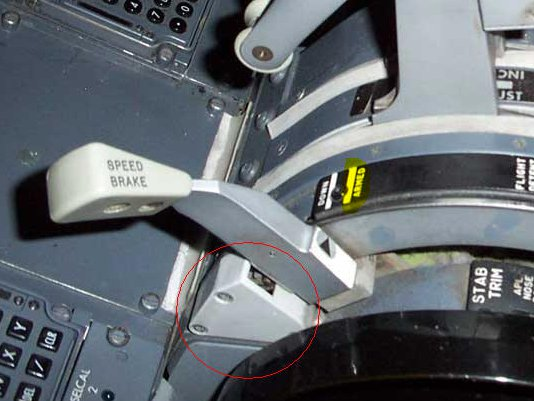
Ground spoilers are panels located on the upper surface of the wing. When deployed, they disrupt airflow and destroy lift almost instantly.
On modern airliners, deployment is typically automatic and triggered by:
- Weight-on-wheels sensors
- Thrust levers at idle
Once deployed, spoilers perform two critical functions:
1. Firm Landing & Bounce Prevention
Immediately after touchdown:
- Spoilers eliminate remaining lift
- Aircraft weight transfers fully onto landing gear
- Bounce is prevented
Without spoilers, the aircraft could briefly become airborne again.
2. Maximum Braking Effectiveness
Braking efficiency depends on weight on the wheels.
Spoilers ensure:
- Full aircraft weight presses onto the landing gear
- Tire-to-runway friction increases
- Wheel brakes and reverse thrust become fully effective
This is why spoilers are essential—not optional—in modern jet operations.
Why Spoilers Are NOT Used Before Touchdown
Deploying spoilers in the air would be dangerous.
If activated prematurely:
- Lift would drop suddenly
- The aircraft could slam onto the runway
- Structural damage risk increases
Even more critically, it would compromise a go-around.
The Go-Around: A Critical Safety Decision
Every commercial landing is based on strict performance calculations.
If the aircraft:
- Is unstable
- Touches down too far along the runway
- Exceeds landing limits
Pilots initiate a go-around:
- Full thrust is applied
- Aircraft climbs away safely
- Approach is flown again
In airline operations, a go-around is not a failure—it’s good airmanship.
Spoilers must remain retracted in flight to allow:
- Immediate lift recovery
- Safe climb performance
Engineering Perspective: Precision Timing Matters
Spoiler systems are designed with precise logic:
- Deploy only after confirmed touchdown
- Integrate with landing gear sensors
- Work in coordination with braking and reverse thrust systems
This ensures:
- Maximum safety
- Optimal landing performance
- Zero compromise during go-around scenarios
Even slight timing errors could significantly affect landing dynamics.
From Light Aircraft to Widebody Jets
The progression of landing technique across aircraft types highlights a key principle:
You don’t eliminate lift—you manage it.
From a Cessna 172 to an Airbus A380, the concept evolves:
- Small aircraft: reduce lift before touchdown
- Large aircraft: maintain lift, then destroy it instantly
Final Thoughts
Spoilers may look like simple panels, but they are one of the most critical safety systems in modern aviation.
By deploying only after touchdown, they:
- Eliminate lift instantly
- Improve braking performance
- Prevent unintended liftoff
- Stabilize the aircraft on the runway
It’s a perfect example of how aerodynamics and engineering precision work together to make air travel safe.
By Aeropeep Team