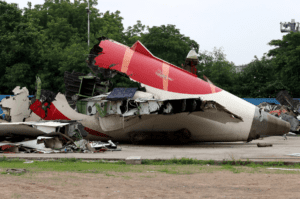


In the realm of commercial aviation, the threat of airframe icing remains a critical concern — especially during operations in instrument meteorological conditions (IMC) or at high altitudes in moist, sub-zero air. While sophisticated ice detection systems and automatic anti-icing technologies now play a central role in modern airliners, the visual ice indicator remains one of the most reliable, immediate tools for situational awareness and pilot response.
What Is a Visual Ice Indicator?
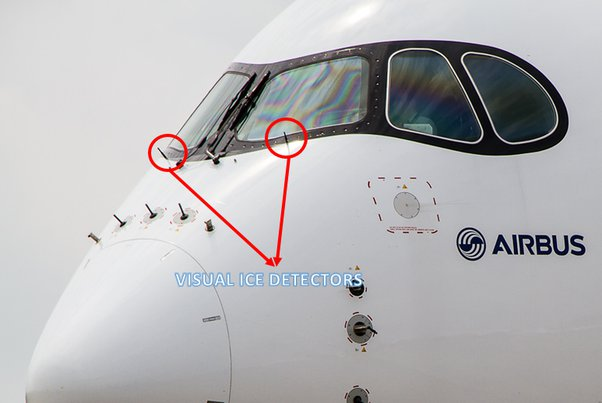
A visual ice indicator is a passive, externally mounted probe, typically placed within the pilot’s field of vision — such as on the windshield wiper assembly or the cockpit window frame. The device is intentionally exposed to ram air, and when supercooled water droplets impact and freeze on the indicator, the visible ice buildup signals the onset of icing conditions.
This cue prompts the pilot to engage thermal or pneumatic anti-ice systems, including bleed air heating for engine inlets and wing leading edges, or electrically heated elements in newer aircraft like the Boeing 787.
Aircraft Integration Examples
- Dash 8 (Q400 Series): Visual indicators are mounted on each pilot’s wiper blade mechanism, highly visible during the day. However, limited night-time illumination requires pilots to use handheld torches to verify ice accumulation on the wing’s leading edge or on metallic surfaces prone to freezing.
- Airbus A320 Family: A dedicated ice detector post near the forward cockpit window includes a built-in light activated from the overhead panel, enabling night-time ice inspection.
- Boeing 777 & 787: These advanced jets feature automated ice detection sensors integrated with the Aircraft Health Monitoring System (AHMS). However, visual indicators remain onboard as a secondary or manual cross-check mechanism.
The Risks of Undetected Icing
Aircraft icing is not merely a nuisance — it presents serious operational and aerodynamic hazards, including:
- Airfoil Contamination: Ice disrupts the smooth flow of air over wings, increasing drag and potentially causing aerodynamic stall at higher speeds.
- Propeller and Engine Inlet Icing: Can lead to compressor stalls, flameouts, or even engine shutdowns in severe conditions.
- Pitot-Static System Obstruction: Ice can block critical sensors, causing erroneous airspeed or altitude readings.
- Flight Control Restrictions: Accumulated ice can mechanically restrict control surface movement, reducing responsiveness.
The Federal Aviation Administration (FAA) and European Union Aviation Safety Agency (EASA) classify these conditions under hazardous icing, requiring mandatory detection and mitigation.
Why Visual Ice Indicators Still Matter
Despite the evolution of automated detection algorithms and real-time icing alerts, visual indicators remain invaluable because:
- They offer instant visual confirmation of sensor data
- They do not rely on electrical or software systems, making them failure-resistant
- They help pilots judge the severity and growth rate of ice accumulation
In essence, they serve as a fail-safe, giving pilots an independent, real-world observation point — especially useful when sensor drift or data latency could delay response.
Conclusion
Visual ice indicators may be small and often overlooked, but their contribution to flight safety is substantial. Their simplicity, reliability, and effectiveness under high-risk conditions make them a critical component of both legacy and modern aircraft. In aviation, sometimes the most straightforward solutions remain the most indispensable.
- Iran Airspace in Crisis: How the 2026 War Is Reshaping Global Aviation
- De Havilland Canada Dash 8 Accidents: Complete Safety Record & Reliability Analysis
- Propeller Hub Ball Bearings: The Critical Components That Keep Aircraft Propeller Blades Secure in Flight
- Air India B787 Crash Latest Update: Investigation Status, Fuel Control Switch Concerns & What We Know So Far
- How to Choose the Best Aviation Headset for Student Pilot Training