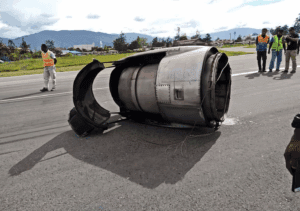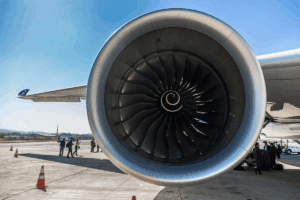

If you’ve ever stood near a Boeing 737 or seen a close-up photo, you may have noticed something unusual about its engines. The air intake at the front of the engine appears squashed or flattened at the bottom. This odd shape is not a flaw — it’s a smart aerodynamic and engineering solution tailored to the unique needs of the 737 family, especially those powered by the CFM56 turbofan engine.
Let’s dive into the technical reasons behind this distinctive design and understand what makes it necessary — and brilliant.
🔧 The Problem: Ground Clearance Constraints
Boeing designed the original 737 in the 1960s as a short-haul jetliner with low ground clearance, making it easier to board and service directly from the ground without jet bridges or special equipment. The aircraft sat close to the runway, and early versions used smaller JT8D low-bypass engines mounted near the fuselage.
However, when it became necessary to upgrade to more fuel-efficient high-bypass turbofan engines like the CFM56 series, engineers encountered a major challenge. These modern engines featured a larger fan diameter, which, as a result, increased the risk of scraping the ground during takeoff, landing, or taxiing.
🛠️ The Ingenious Solution: Squashed (Flattened) Nacelles
To solve this, Boeing and CFM International collaborated to redesign the engine nacelle (the outer casing of the engine). Instead of mounting the engine directly underneath the wing, they:
- Moved the engine slightly forward and upward, positioning it in front of the wing.
- Redesigned the nacelle shape, flattening the bottom of the engine intake to maximize ground clearance without altering the wing structure.
This flattened shape is often referred to as a “hamster pouch” nacelle in the aviation community due to its rounded and bulging appearance.
🌬️ How Does It Affect Aerodynamics?
Despite the odd shape, the flattened air intake is carefully engineered using computational fluid dynamics (CFD) and wind tunnel testing to ensure:
- Efficient airflow into the engine fan
- Minimal drag
- Stable pressure recovery across all operating conditions
While not as aerodynamically clean as a perfect circle, the shape is optimized to maintain engine performance without compromising safety or fuel efficiency.
🔍 Which Engine Has This Feature?
The CFM56-7B engine, which powers the Boeing 737 Next Generation (737-600/-700/-800/-900), features this squashed intake design. The newer LEAP-1B engine used on the 737 MAX also has a large fan and continues the tradition of mounting the engine in a higher, forward position — although nacelle design has further evolved to enhance performance.
✈️ Fun Fact: Unique to the 737
You won’t find this squashed nacelle on aircraft like the Airbus A320, Boeing 757, or Boeing 787, because those aircraft have higher ground clearance, allowing for a traditional circular intake.
🚀 Summary:
The flattened engine intake on the Boeing 737 is a clever solution to a design limitation imposed by its low ground clearance. By modifying the nacelle shape and engine placement, Boeing maintained compatibility with modern high-bypass engines like the CFM56-7B, ensuring fuel efficiency, safety, and reliability — all without a complete redesign of the aircraft’s wing or landing gear.
By Aeropeep Team