
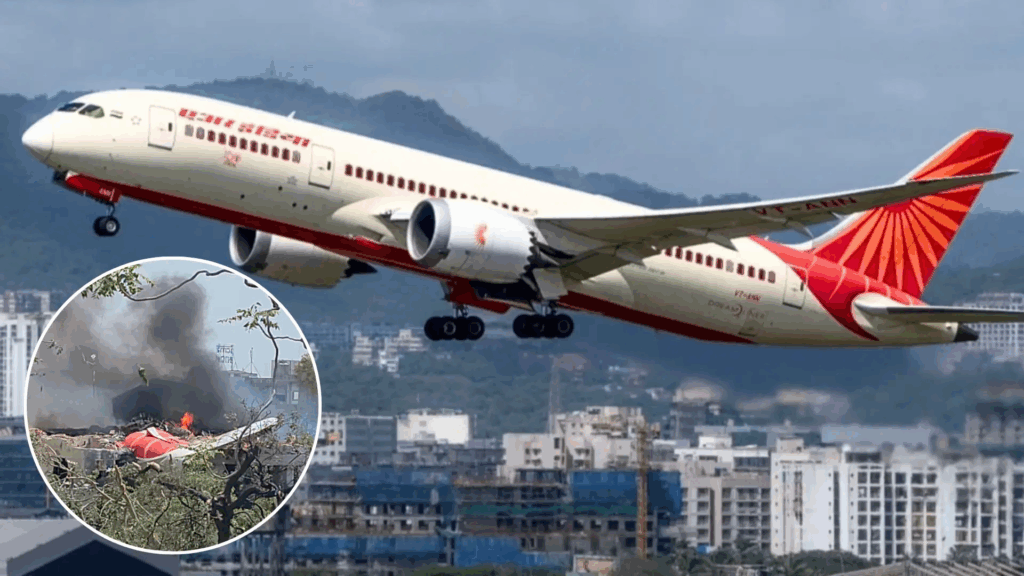
The tragic Air India Flight AI171 crash involving a Boeing 787 Dreamliner on June 12, 2025, has reignited the global conversation about aviation safety, aircraft performance, and competition between the two aerospace giants — Boeing and Airbus.
As regulatory authorities investigate the fatal crash that claimed 241 lives, the broader aviation industry is watching how this incident affects market confidence, aircraft orders, and manufacturer dominance. Here’s a detailed breakdown of the current sales trends, technical comparisons, and which manufacturer is leading the commercial aircraft market in 2025.
📉 Impact of the Air India Boeing 787 Crash
The crash of a two-year-old Boeing 787-8 Dreamliner shortly after takeoff from Ahmedabad sent shockwaves through the aviation community. While the cause is still under investigation, early signs have already affected Boeing’s stock, market sentiment, and trust in the Dreamliner program.
Following the incident:
- Boeing shares dropped by nearly 5% on Wall Street.
- Airline executives began questioning widebody fleet renewal decisions.
- Media scrutiny intensified, highlighting Boeing’s prior safety history (737 MAX crashes, door plug failures, and production flaws).
✈️ 2025 Order & Delivery Comparison: Airbus vs Boeing
Despite Boeing’s efforts to rebuild trust, Airbus has surged ahead in orders and deliveries throughout the first half of 2025.
Airbus Commercial Aircraft Orders (Jan–Jun 2025)
- Gross Orders: 494
- Net Orders (after cancellations): 402
- Major Wins: 200+ aircraft signed during Paris Air Show 2025
- Backlog: Over 8,600 aircraft, equal to 10+ years of production
Boeing Commercial Aircraft Orders (Jan–Jun 2025)
- Gross Orders: ~427
- Net Orders: Around 390
- Biggest Deal: $96 billion widebody order from Qatar Airways
- Backlog: Estimated 6,300–6,600 aircraft
Aircraft Deliveries (First Half 2025)
| Manufacturer | Deliveries | Market Share |
|---|---|---|
| Airbus | 306 | ~56% |
| Boeing | 280 | ~40% |
📝 Conclusion: Airbus is leading in both orders and deliveries as of mid-2025.
🧰 Technical Comparison: Airbus vs Boeing
Narrow-body Segment
- Airbus A320neo / A321neo:
- Best-selling narrow-body aircraft
- High fuel efficiency, long range (especially the A321XLR)
- Preferred by low-cost and legacy carriers alike
- Boeing 737 MAX:
- Plagued by production caps and regulatory scrutiny
- Still recovering from grounding and manufacturing delays
- High backlog, but deliveries are inconsistent
Wide-body Segment
- Airbus A350-900 / A350-1000:
- Extremely fuel-efficient with modern carbon-composite structure
- Preferred for ultra-long-haul routes
- Strong safety record and stable production
- Boeing 787 Dreamliner:
- Once a technological marvel, now under scrutiny
- Involved in recent Air India crash
- Delivery rates improving, but safety concerns linger
- Boeing 777X:
- Delayed to late 2026 or beyond
- No commercial deliveries yet
- Competitive specs, but slow rollout affects momentum
🔍 Which Company Is Leading the Aviation Market in 2025?
| Category | Airbus | Boeing |
|---|---|---|
| Orders (H1 2025) | 402 net orders | 390 net orders |
| Deliveries (H1 2025) | 306 aircraft | 280 aircraft |
| Backlog Size | 8,600+ jets (10+ years) | 6,300–6,600 jets (7–11 years) |
| Narrow-body Leader | A320neo family (esp. A321neo XLR) | 737 MAX under scrutiny |
| Wide-body Strength | A350 family performing well | Dreamliner reputation damaged |
| Safety Reputation | Stable, clean recent record | Multiple recent safety incidents |
✅ Winner in 2025 (So Far): Airbus
🛫 What Airlines Are Choosing Now
Airlines are leaning toward:
- Airbus A321neo and A350 for both fuel savings and safety track records.
- Holding off on some Boeing Dreamliner and 737 MAX orders amid ongoing investigations.
Even though Boeing secured a massive $96B deal with Qatar, many carriers are diversifying their fleets or favoring Airbus’s reliability and consistency.
📌 Final Take: Trust Is the New Currency
In a post-pandemic, carbon-sensitive, and safety-conscious era, aircraft manufacturers must compete not just on performance—but on trust. Boeing’s ability to recover depends on its handling of safety investigations and restoring airline and passenger confidence.
For now, Airbus is flying ahead — technically, commercially, and reputationally.
By Aeropeep
1. AAIB Preliminary Report: Crash of Air India Flight AI171
- The Aircraft Accident Investigation Bureau (AAIB) has submitted its initial findings, highlighting the movement of both fuel-control switches from “RUN” to “CUTOFF” shortly after takeoff, leading to engine flameout and loss of thrust.
2. Analysis from The Guardian: Fuel Switch Findings
- Covers critical details from the report such as the non-mandatory FAA advisory on fuel switches and pilot confusion captured during takeoff. Offers nuanced perspective on potential causes.
3. Times of India Coverage: Cockpit Audio & Switch Malfunction
- Emphasizes pilot confusion, simultaneous shutdown of both engines within a 1-second gap, and the ongoing focus of investigators on switch behavior.
4. Air India CEO Statement: No Mechanical Issues Found
- Air India’s CEO confirms initial investigation shows no maintenance or mechanical defects on the 787. Highlights early-stage status of findings.
5. Boeing–Qatar Airways $96 Billion Widebody Order
- Reputable coverage from multiple outlets (AirlineGeeks, Reuters, Boeing PR): details the historic deal for up to 210 Boeing 787 Dreamliners and 777X aircraft, valuing at $96 billion, that significantly boosted Boeing’s backlog despite safety scrutiny.
6. Flightplan / Forecast International: Airbus & Boeing Orders & Deliveries (May 2025)
- Reports Airbus and Boeing order and delivery performance, backlog levels, and production outlook as of May 2025. Highlights Airbus’ steady pipeline and Boeing’s backlog-equivalent years of output .