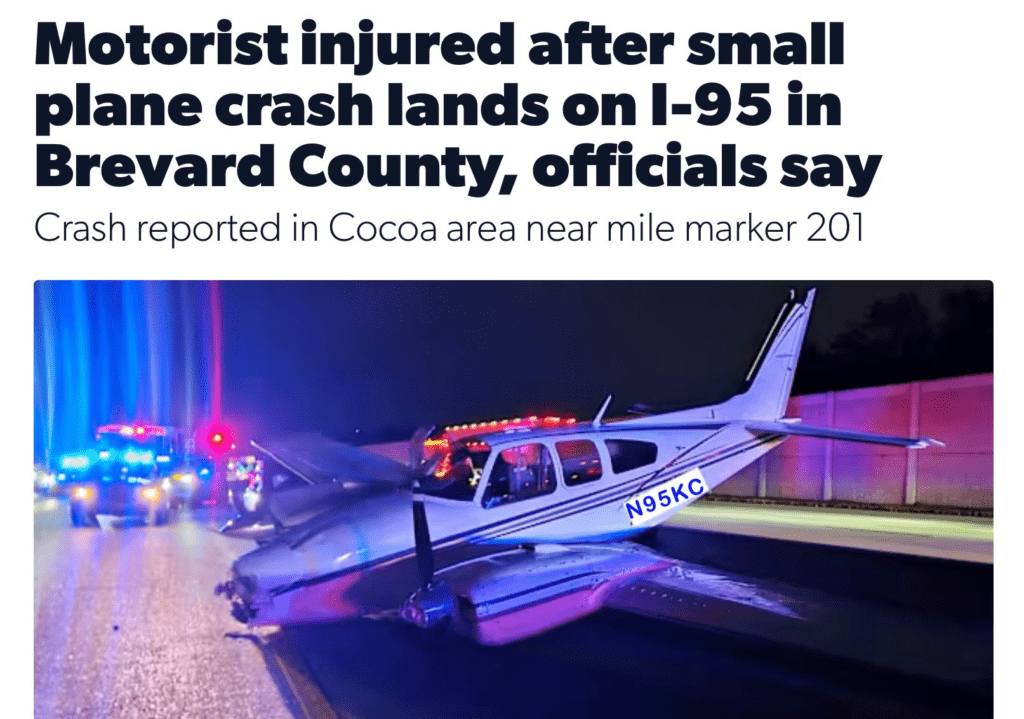
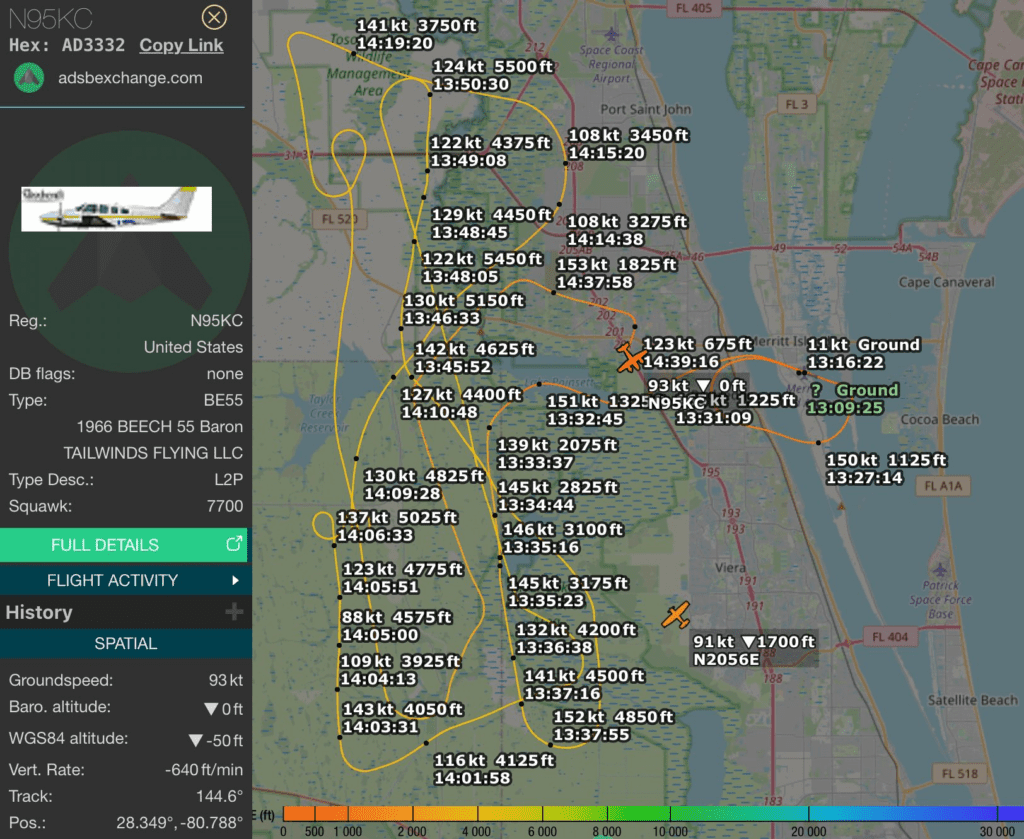
A routine instructional flight turned into a life-or-death emergency on December 9, 2024, when a Beechcraft 55 Baron was forced to land on Interstate 95 near Cocoa, Florida. The aircraft, which had departed from Merritt Island Airport, experienced a sudden dual-engine power loss—an extremely rare and catastrophic event for a twin-engine aircraft.
Timeline of the Incident
The emergency unfolded around 5:45 p.m., during Monday evening rush hour. The Beechcraft 55, operated by Tailwinds Flying LLC, carried two occupants:
- A 27-year-old pilot from Orlando, and
- A 27-year-old passenger from Temple Terrace.
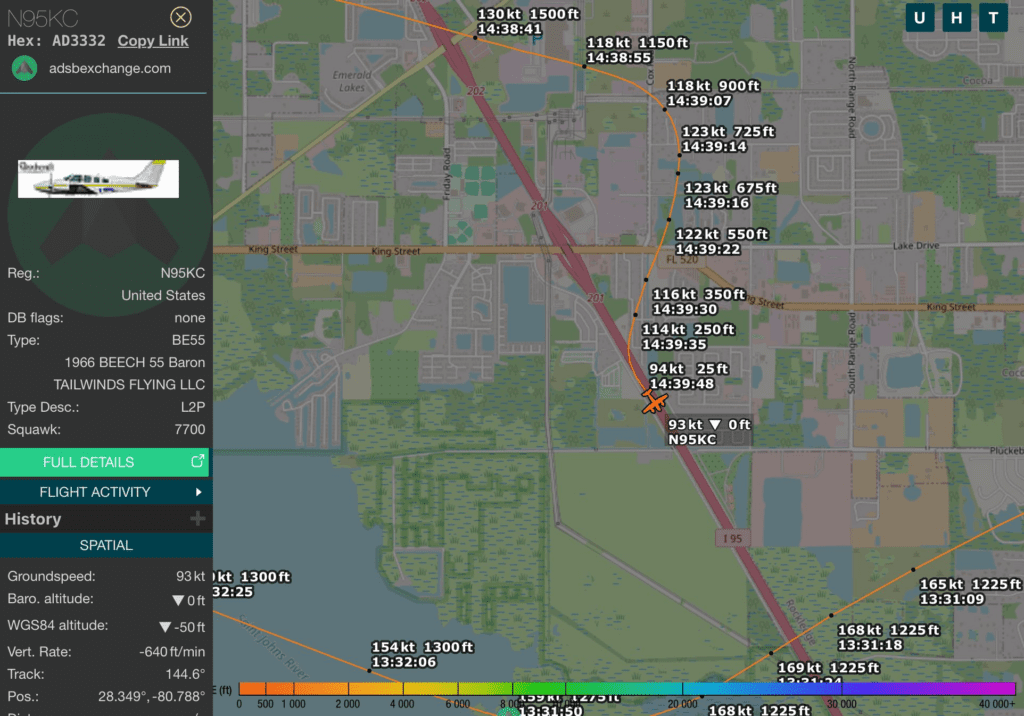
Shortly after takeoff, the crew reported engine trouble. According to the National Transportation Safety Board (NTSB), the aircraft lost power in both engines, leaving the pilots with few options. With no open fields or suitable terrain nearby, they selected the southbound lanes of Interstate 95 near mile marker 201 for an emergency landing—believing it to be the only survivable choice.
Collision With Vehicle on the Highway
As the aircraft descended, it landed directly onto a 2023 Toyota Camry traveling in the middle lane. Dashcam footage captured by motorists Jim and Peter Coffey, who were driving directly behind the Camry, shows the aircraft dropping into frame and partially striking the vehicle before skidding down the highway.
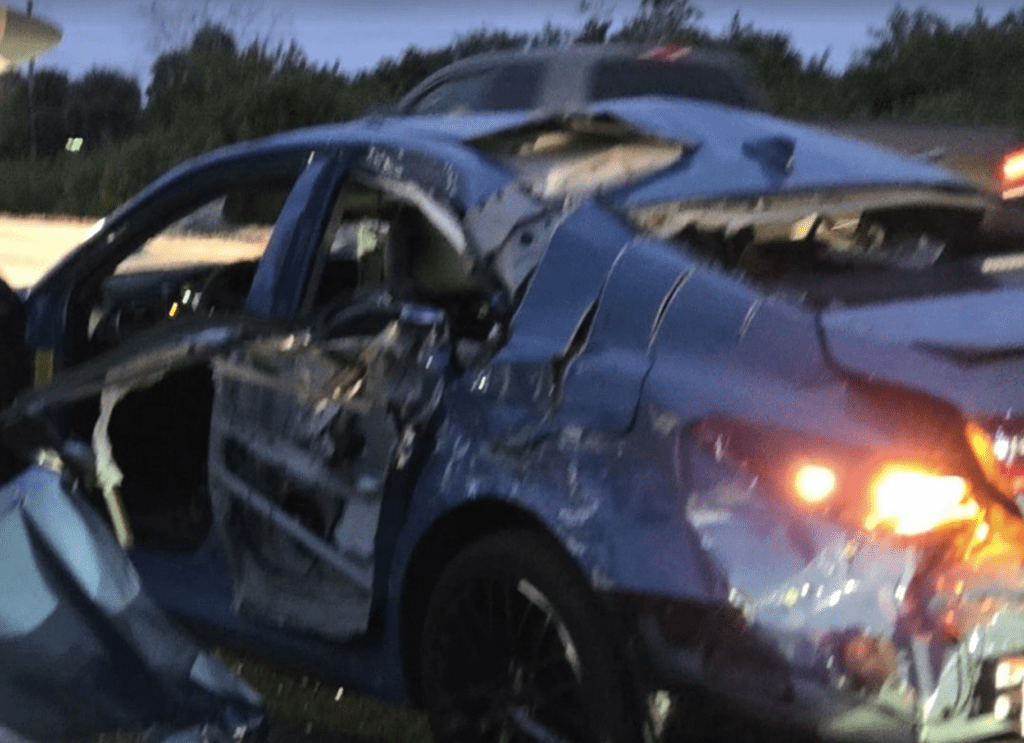
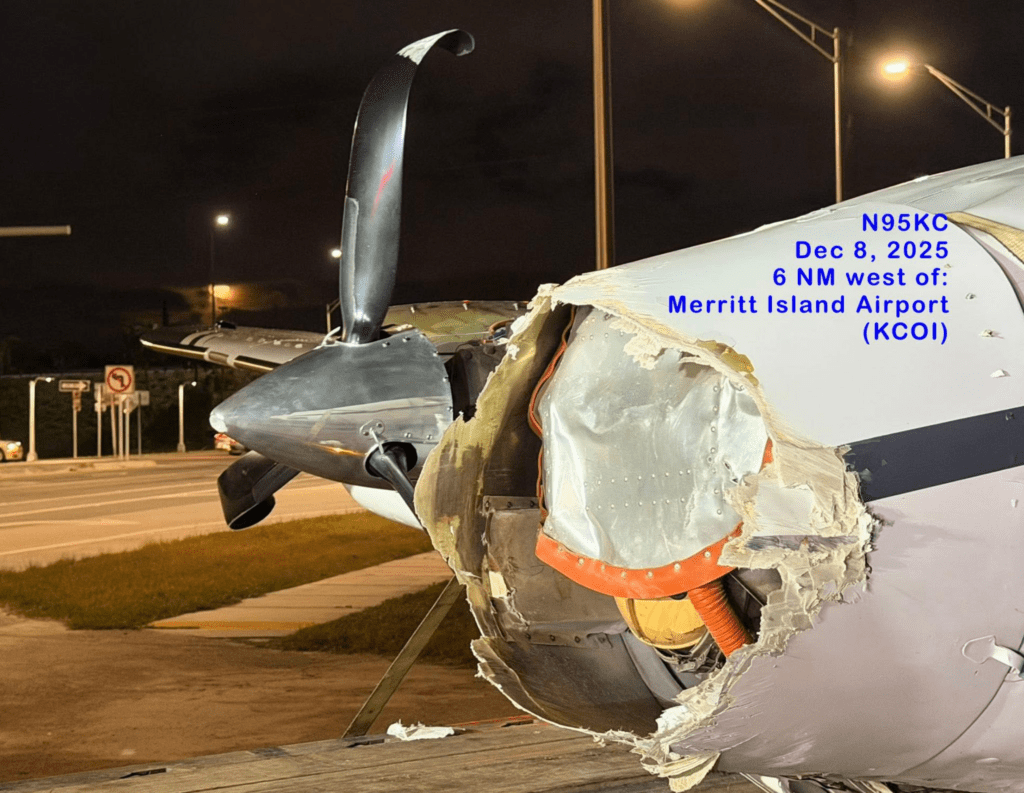
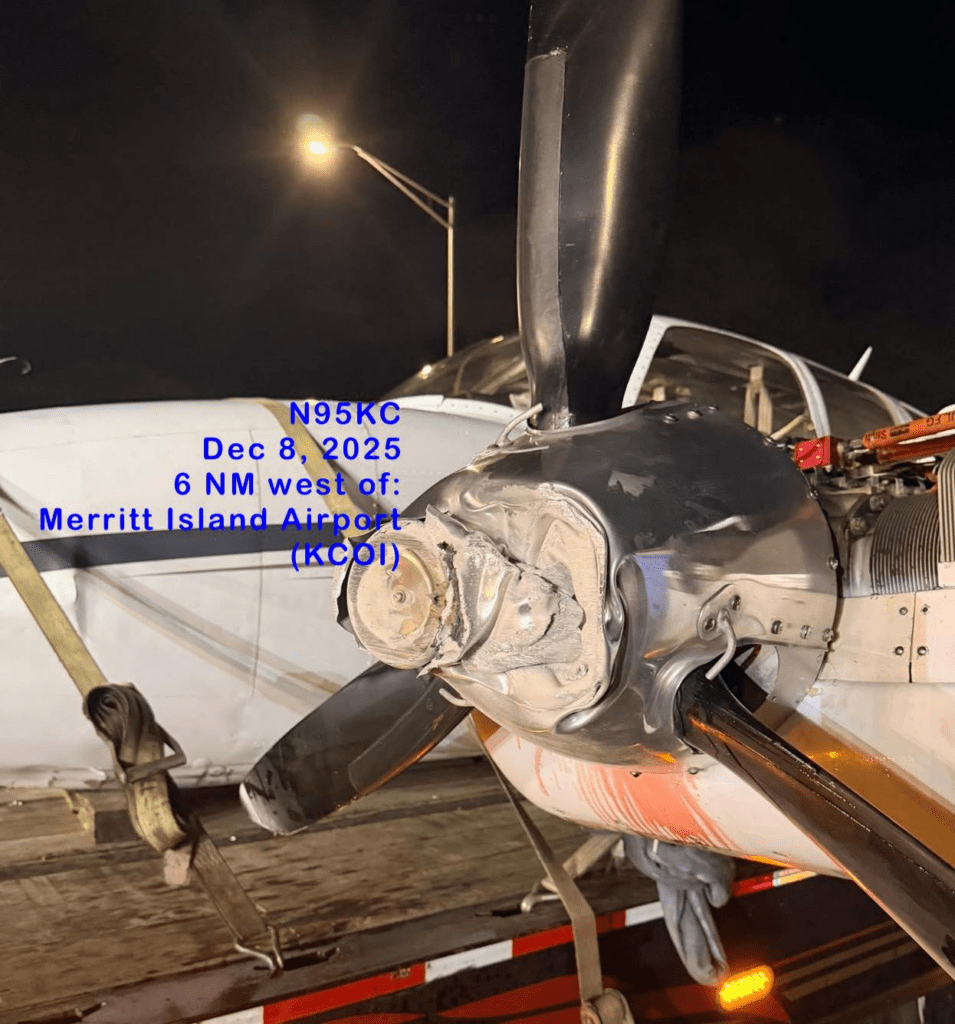
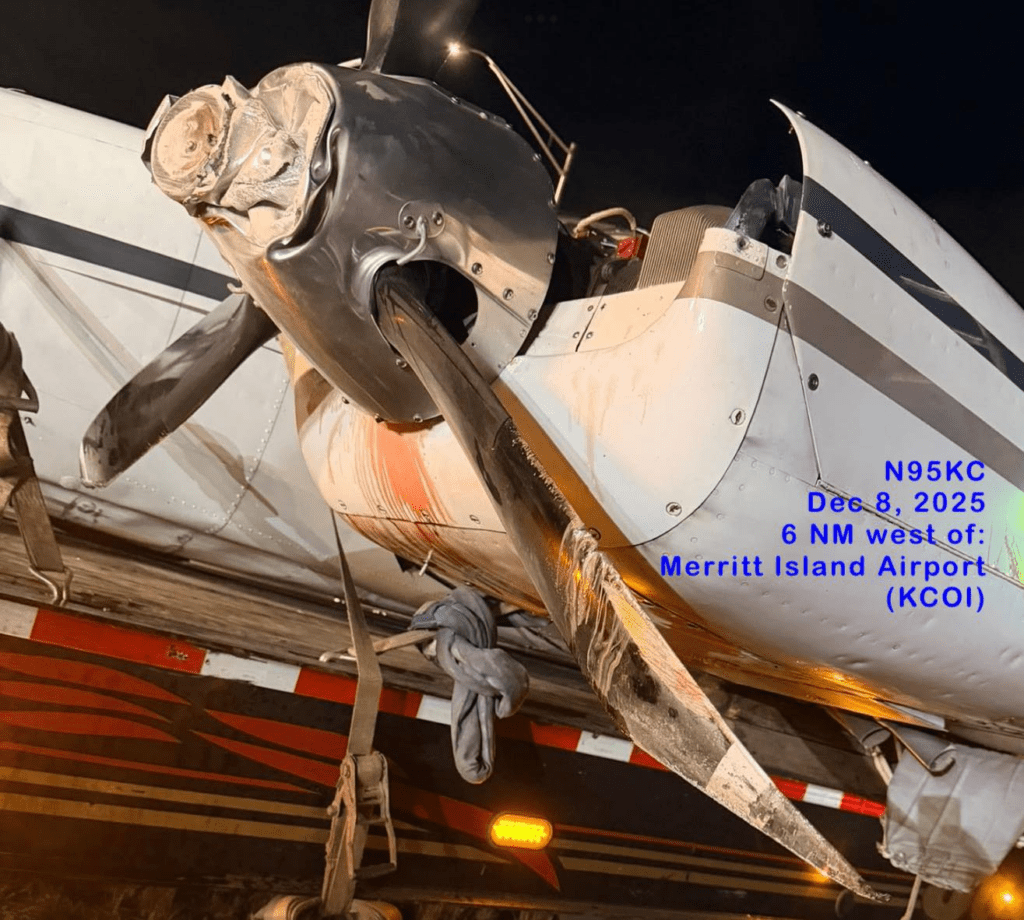
The impact almost completely crushed the Camry. The aircraft bounced off the car, sending sparks across the roadway, before finally stopping against a concrete barrier in a cloud of smoke.
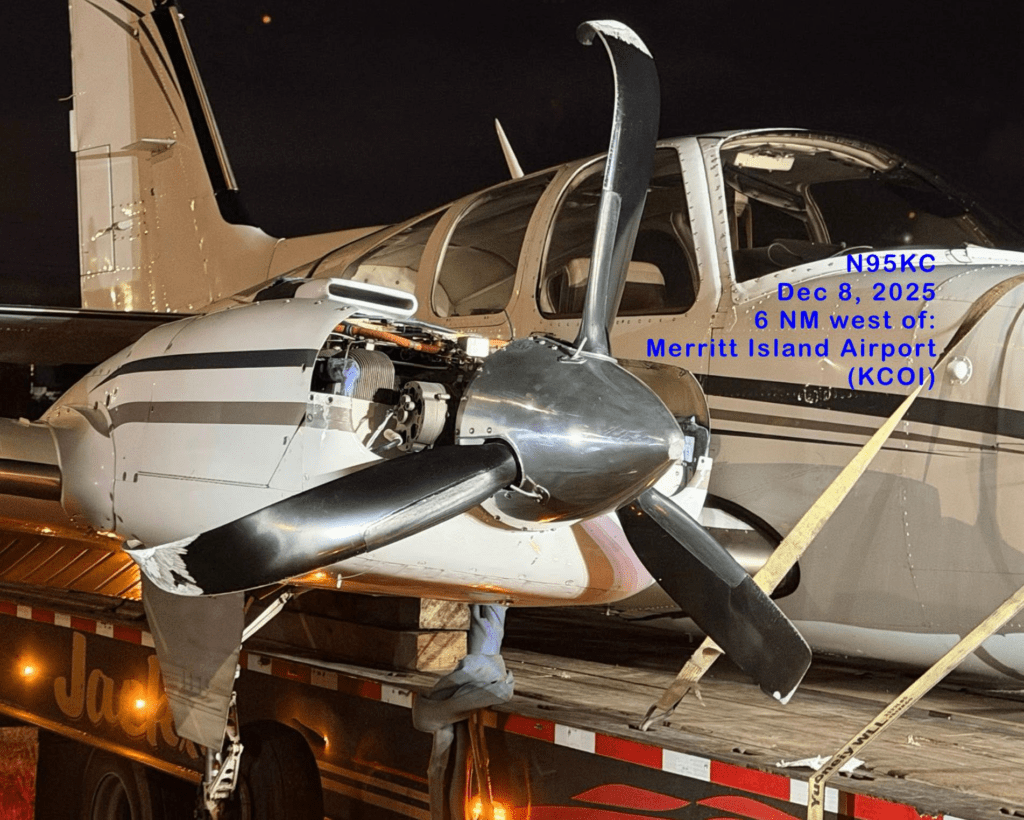
Amazingly, the 57-year-old Melbourne woman driving the Camry sustained only minor injuries and was taken to a hospital for evaluation. Both aircraft occupants escaped unharmed and declined medical transport—an extraordinary outcome given the high-risk nature of landing a powerless aircraft on a busy interstate.
What Caused the Dual Engine Failure?
The FAA confirmed that the pilot radioed engine trouble prior to the crash, and the NTSB later verified that both engines suffered a loss of power. Investigators are exploring several potential causes:
Possible Factors
- Fuel System Issues
Problems such as fuel starvation, mis-selected tanks, or fuel contamination can cause simultaneous power loss. - Mechanical Failure
A rare but possible scenario where critical components fail on both engines. - Fuel Exhaustion or Contamination
Among the most likely explanations when both engines fail nearly simultaneously. - Maintenance-Related Issues
The NTSB has indicated a particular focus on the aircraft’s maintenance records.
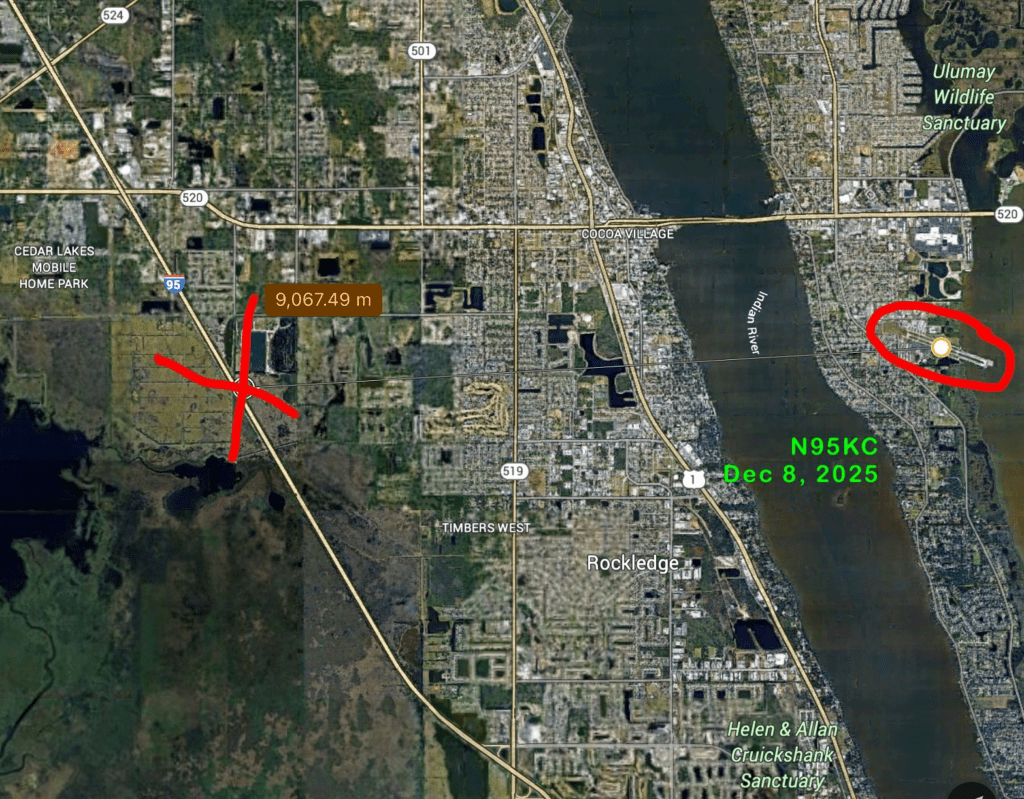

The investigation will also examine flight track data, ATC communications, and the pilot’s recent flight experience.
Pilot Airmanship and Emergency Decision-Making

Despite the outcome, the pilots’ actions undeniably prevented a far worse catastrophe. Executing a forced landing on a multi-lane interstate during rush hour—without any serious injuries—is a remarkable demonstration of:
- Rapid emergency assessment
- Strong situational awareness
- Controlled handling of a powerless aircraft
- Split-second decision-making under extreme stress
Attempting to glide back to the airport or descending into unsuitable terrain could have led to a fatal crash. Choosing the highway, although dangerous, provided the only viable landing surface.
A Narrow Escape for Motorists
Witnesses Jim and Peter Coffey emphasized how close they came to being struck.
“The debris started coming at us and we had to swerve out of the way,” Jim said.
Peter added, “It was about three seconds difference.”
Had their vehicle been slightly closer to the Camry, multiple vehicles may have been involved, likely with far more severe consequences.

The Camry driver’s survival—despite an aircraft landing directly on top of her car at highway speed—has been described by responders as nothing short of miraculous.
Response and Investigation
Both directions of I-95 were temporarily shut down as emergency crews cleared debris and stabilized the aircraft. Video footage captured by several motorists quickly circulated online, increasing public attention.

The FAA and NTSB have launched full investigations. Key areas of focus include:
- Engine mechanical condition
- Fuel quality, quantity, and distribution
- Detailed maintenance history
- Pilot training records and flight logs
- ATC audio and radar data
- Witness accounts and video evidence
A preliminary NTSB report is expected within weeks, with a complete factual and probable-cause report released months later.
Regional Context: A Series of GA Incidents
This was one of several general aviation incidents in Central Florida on the same day. Earlier on December 9, a Cessna 172 crashed in DeLand, and on November 7, 2024, another aircraft made an emergency landing along State Road 407. The frequency of incidents highlights the challenges of flying in Florida’s dense and weather-dynamic airspace.
Conclusion
The emergency landing on Interstate 95 stands as a powerful example of the unpredictability of flight—and the critical importance of pilot training and emergency preparedness. A total loss of power in both engines is a worst-case scenario for any aircraft, but the crew’s quick decisions and controlled execution prevented a major tragedy.
Although the aircraft struck a moving vehicle, all individuals survived—a result attributed to a combination of pilot skill, rapid decision-making, and an undeniable measure of good fortune.
What began as a routine training flight became a dramatic survival story on one of Florida’s busiest highways.
By Aeropeep Team