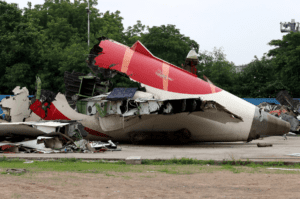

Flap settings on an aircraft are critical for controlling lift, drag, and overall aerodynamic performance during takeoff and landing. These high-lift devices, mounted on the trailing edge of the wings, enable the aircraft to operate safely at lower speeds by increasing lift. However, incorrect flap settings can have catastrophic consequences, including runway overruns, loss of control, and in severe cases, fatal crashes.
Understanding how flaps work—and the dangers of improper configuration—is essential for both pilots and aviation safety professionals.
What Are Aircraft Flap Settings?

Flap settings refer to the degree of extension of the wing flaps, usually measured in degrees (e.g., 5°, 15°, 30°). The exact settings depend on the aircraft type, weight, runway length, and weather conditions.
Common flap configurations include:
- Flaps Up (0°): Used in cruise flight for minimal drag.
- Takeoff Flaps (5°–15°): Provides additional lift without excessive drag.
- Landing Flaps (30°–40°): Maximizes lift and drag for a steep, controlled approach and slower touchdown speed.
The Role of Flap Settings in Takeoff and Landing
- Takeoff
- During takeoff, flaps are typically set between 5° and 15° to allow the aircraft to generate sufficient lift at a lower airspeed.
- Incorrect takeoff flap setting—either too low or too high—can result in longer takeoff roll or excessive drag, potentially preventing the aircraft from achieving safe climb performance.
- Landing
- During landing, full flap extension enables a steeper approach, slower touchdown speed, and shorter stopping distance.
- If flaps are not extended properly, the aircraft may land at a higher speed, increasing the risk of runway overrun or hard landing.
How Incorrect Flap Settings Can Lead to a Crash
1. Reduced Lift on Takeoff
If the flaps are set too low or remain retracted, the aircraft requires a longer runway to achieve the necessary lift. In short or wet runway conditions, this can lead to failed takeoff or overrun accidents.
2. Excessive Drag During Initial Climb
Using too much flap during takeoff creates excessive drag. This can significantly reduce climb performance, especially in high-density altitude conditions or engine failure scenarios, leading to stall and loss of control.
3. High-Speed Landings
Incorrect landing flap settings—such as partial or no deployment—force the aircraft to touch down at higher speeds. This increases stopping distance, reduces braking efficiency, and can lead to runway excursions.
4. Stall and Loss of Control on Approach
Deploying excessive flaps at too high a speed can destabilize the aircraft and cause structural stress. Deploying them too early or in turbulence can also induce a wing stall if airspeed drops below the stall margin.
Real-World Accident Examples
- Northwest Airlines Flight 255 (1987) – The McDonnell Douglas DC-9 crashed shortly after takeoff from Detroit when the crew failed to extend flaps and slats. This resulted in insufficient lift, and the aircraft stalled immediately after rotation.
- Spanair Flight 5022 (2008) – Similar to Flight 255, incorrect flap configuration during takeoff combined with failure of the takeoff warning system led to a deadly crash.
- Emirates Flight 521 (2016) – An incorrect flap retraction during a go-around attempt contributed to loss of lift and eventual impact with the runway.
Preventing Flap Setting Errors
Aviation safety authorities and airlines employ multiple layers of protection to prevent incorrect flap settings:
- Standard Operating Procedures (SOPs) – Mandatory flap setting checks before takeoff and landing.
- Takeoff Configuration Warning Systems (TOWS) – Alerts pilots if flaps are not in the correct position.
- Crew Resource Management (CRM) – Encourages cross-checking between pilots.
- Recurrent Pilot Training – Simulations of flap-related emergencies to reinforce muscle memory.
Conclusion
Flap settings are not just another cockpit control—they are a lifeline for safe aircraft operation. Even a seemingly small deviation from the correct configuration can create a chain of events that leads to an accident. From lift generation to drag management, flaps must be managed precisely according to flight phase, aircraft weight, and environmental conditions.
The history of aviation has shown that incorrect flap settings remain a recurring factor in accidents, making rigorous checklist discipline and technical awareness essential for every flight crew.
By Aeropeep Team