

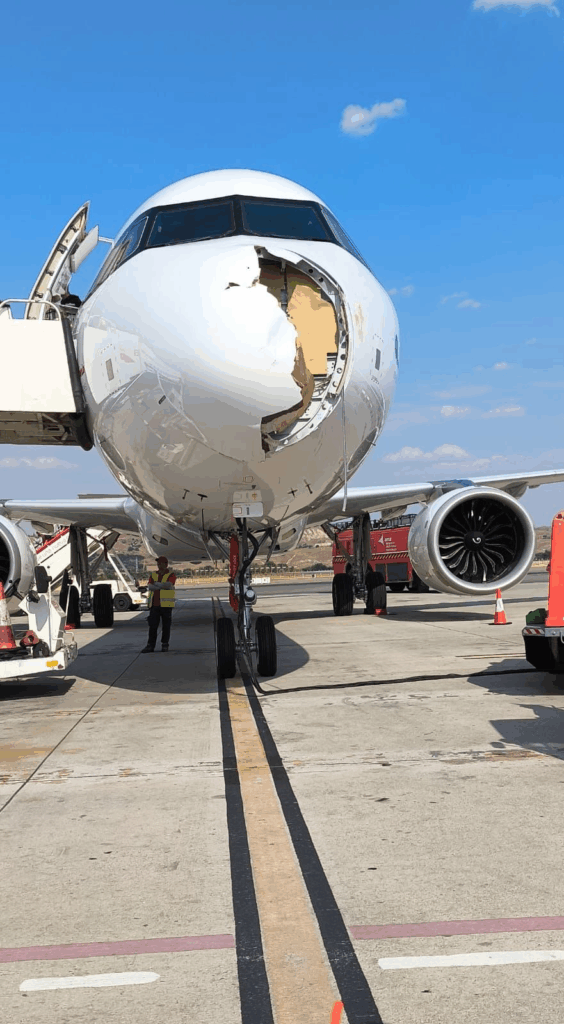
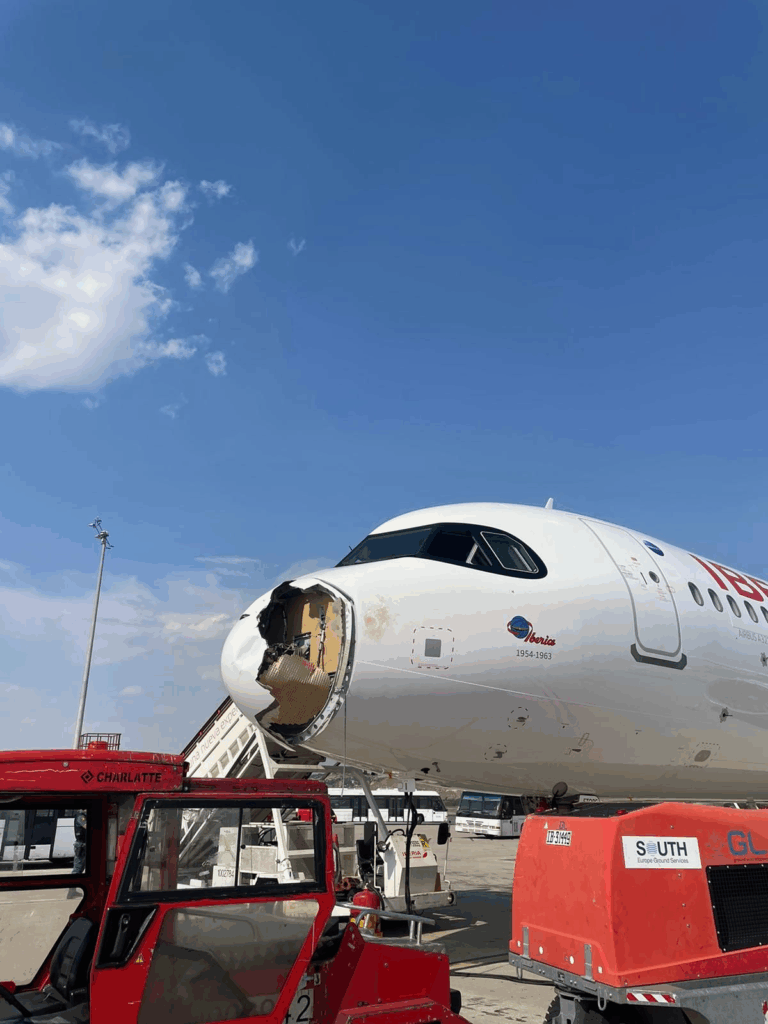
Madrid, August 4, 2025 – A two-month-old Iberia Airbus A321-253NX XLR, registered EC-OOJ (MSN 12375), suffered a bird strike earlier today while operating flight IB579 from Madrid-Barajas International Airport (MAD) to Paris Orly Airport (ORY). The incident resulted in damage to the aircraft’s left engine, raising immediate safety and operational concerns.
The aircraft, delivered to Iberia in June 2025, is one of the newest A321XLR (extra-long-range) aircraft in the airline’s growing fleet. It was designed for longer single-aisle operations with enhanced fuel efficiency, increased range, and advanced environmental performance.
Details of the Incident
Shortly after takeoff from Madrid, flight IB579 encountered a bird strike, reportedly involving a large flock. The impact occurred on the left CFM International LEAP-1A engine, causing abnormal vibrations and engine performance anomalies. The flight crew, trained for such contingencies, promptly declared an emergency and returned to Madrid-Barajas Airport for a precautionary landing.
All passengers and crew on board were safe, and no injuries were reported. Emergency services were on standby as a precaution, and the aircraft was towed to a remote stand for inspection.
Aircraft Specifications
- Model: Airbus A321-253NX XLR
- Registration: EC-OOJ
- MSN: 12375
- Delivery Date: June 2025
- Engine Type: CFM LEAP-1A
- Operator: Iberia Airlines
- Route: MAD (Madrid) to ORY (Paris Orly)
- Flight Number: IB579
Understanding the Bird Strike Hazard
Bird strikes remain one of the most common hazards in commercial aviation, especially during takeoff and landing. Engines like the LEAP-1A are certified to withstand some degree of bird ingestion, but depending on the size and number of birds, serious engine damage can still occur.
This incident underlines the importance of bird control systems, advanced radar detection, and airport wildlife management programs—especially near major hubs like Madrid and Paris.
Impact on Operations and Maintenance
Iberia has temporarily withdrawn EC-OOJ from service for a comprehensive engine inspection and possible replacement of components. The incident could delay upcoming long-haul narrowbody services, as the A321XLR plays a crucial role in Iberia’s plans to expand into medium-capacity transatlantic markets.
The airline has rerouted affected passengers via alternative flights and offered compensation in accordance with EU Regulation 261/2004.
Airbus A321XLR: Key Role in Modern Aviation
The Airbus A321XLR represents a significant evolution in narrow-body aircraft design, with:
- Maximum range of 4,700 nautical miles
- Lower CO₂ emissions per seat
- Higher efficiency for medium- and long-haul routes
As one of the early operators of the type, Iberia is among several European carriers using the aircraft to bridge transatlantic and secondary routes without needing widebodies.

Final Thoughts
Though this bird strike was unfortunate, Iberia’s quick response, combined with the aircraft’s robust safety systems, prevented any harm to passengers or crew. Investigations by Iberia’s maintenance team, Airbus representatives, and Spanish aviation authorities will determine the extent of damage and ensure the continued airworthiness of this high-tech aircraft.