



In aviation, safety depends on precision. While engines and avionics often get the spotlight, it is the small, highly engineered components that ensure reliability at 10,000 feet and beyond. One such component is the propeller hub ball bearing — a vital element that helps prevent propeller blade detachment during flight.
If you work in aircraft maintenance, aviation engineering, or simply love aircraft systems, understanding the role of propeller hub ball bearings is essential.
What Are Propeller Hub Ball Bearings?
Propeller hub ball bearings are precision-engineered hardened steel spheres installed within the propeller hub assembly. Their primary function is to:
- Retain and support the propeller blade within the hub
- Withstand extreme centrifugal loads
- Enable smooth pitch change movement
- Reduce friction between rotating components
- Maintain structural integrity during operation
In constant-speed propeller systems, these bearings operate under high rotational speeds and significant aerodynamic loads.
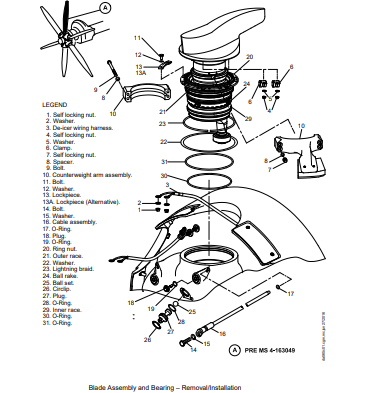

Why Are These Bearings Critical for Flight Safety?
During flight, a propeller blade experiences tremendous centrifugal force. At high RPM, the outward force acting on each blade can reach several tons. Without proper retention mechanisms — including precision ball bearings — the blade could separate from the hub.

These ball bearings:
✔ Help secure the blade inside the hub assembly
✔ Absorb radial and axial loads
✔ Maintain alignment during pitch adjustments
✔ Prevent excessive wear and vibration
In simple terms: they help ensure the propeller blade remains firmly attached to the hub throughout flight.
In aviation, there are no “minor” parts. Every component is mission-critical.
How Propeller Hub Ball Bearings Work
Inside the propeller hub, the ball bearings sit between carefully machined races. As the propeller rotates:
- Centrifugal forces act outward on the blade.
- The bearing assembly distributes these loads evenly.
- The spherical shape minimizes friction while supporting high stress.
- The system allows controlled blade pitch movement in constant-speed propellers.
This combination of load-bearing strength and rotational smoothness is what makes ball bearings ideal for propeller applications.
Engineering and Material Standards
Aircraft propeller hub bearings are manufactured from:
- High-grade chrome alloy steel
- Case-hardened or through-hardened materials
- Precision ground surfaces with micron-level tolerances
They must comply with strict aviation quality standards and are subject to:
- Non-destructive testing (NDT)
- Surface finish inspection
- Dimensional tolerance verification
- Fatigue resistance evaluation
Any deviation from specification can result in vibration, imbalance, or structural risk.
Common Inspection and Maintenance Considerations
During aircraft maintenance, technicians inspect propeller hub bearings for:
- Pitting
- Corrosion
- Brinelling
- Surface scoring
- Cracks
- Wear beyond manufacturer limits
Contamination or improper lubrication can significantly reduce bearing life. Maintenance must always follow the applicable Aircraft Maintenance Manual (AMM) and manufacturer service bulletins.
For aircraft maintenance engineers (AMEs), careful inspection of hub bearings is a critical safety responsibility.
Failure Risks and Operational Consequences
Failure of propeller hub components can lead to:
- Severe vibration
- Propeller imbalance
- Blade misalignment
- Loss of efficiency
- In extreme cases, blade separation
This is why precision, quality control, and scheduled maintenance intervals are non-negotiable in aviation.
Why This Small Component Deserves Big Attention
To the untrained eye, these polished steel balls may look simple. But in reality, they are:
- High-load structural components
- Safety-critical retention devices
- Essential to propeller system integrity
- Vital for safe and efficient flight
In aircraft engineering, small components often carry enormous responsibility.
Final Thoughts
Propeller hub ball bearings are a perfect example of aviation precision engineering. Though small in size, they perform one of the most important safety functions in the propeller system — helping ensure that the blade remains securely attached to the hub during flight.
The next time you see these perfectly polished steel spheres, remember: aviation safety depends on components exactly like these.