
Why Would a Jet Engine Be Radioactive?
It sounds like science fiction: a radioactive jet engine flying at supersonic speeds. Yet during the 1950s and 1960s, some U.S. and Soviet aircraft did use components made from thorium alloys, which are slightly radioactive. The goal wasn’t to build “nuclear-powered jets,” but rather to improve performance by taking advantage of thorium’s unique material properties.
Why Thorium Was Added to Aircraft Engine Alloys
Aircraft engines face extreme conditions of heat, pressure, and stress. Engineers looked for metals that could handle:
- High temperatures without softening
- Creep resistance (avoiding long-term deformation under stress)
- Oxidation protection from hot exhaust gases
- Strength-to-weight advantages for lighter aircraft
Thorium alloys delivered these benefits:
- Thorium oxide has a melting point over 3300°C, giving alloys high heat resistance.
- Magnesium-thorium alloys were lighter and stronger than pure magnesium.
- Nickel-thorium alloys improved turbine blade strength through grain refinement.
- Thorium coatings resisted oxidation inside hot turbine sections.
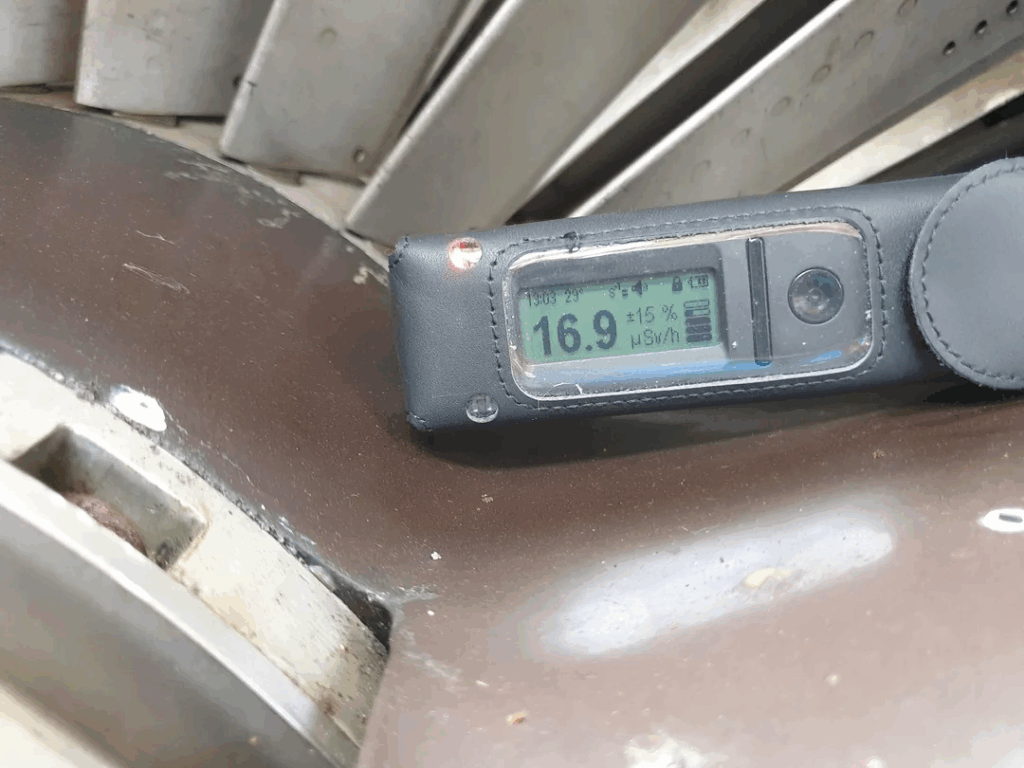
The trade-off: thorium is naturally radioactive. While not highly dangerous in solid form, machining or grinding thorium alloys released radioactive dust, creating risks for workers.
Where Thorium Came From
Thorium is not rare — it occurs in monazite sands, with large reserves in:
- India (Kerala, Tamil Nadu, Odisha)
- Brazil
- United States (Idaho, Florida)
- Australia (Queensland, Western Australia)
- South Africa
Both the U.S. and USSR had access to thorium, making it attractive for aerospace research during the Cold War.
Which Jet Engines Used Thorium Alloys?
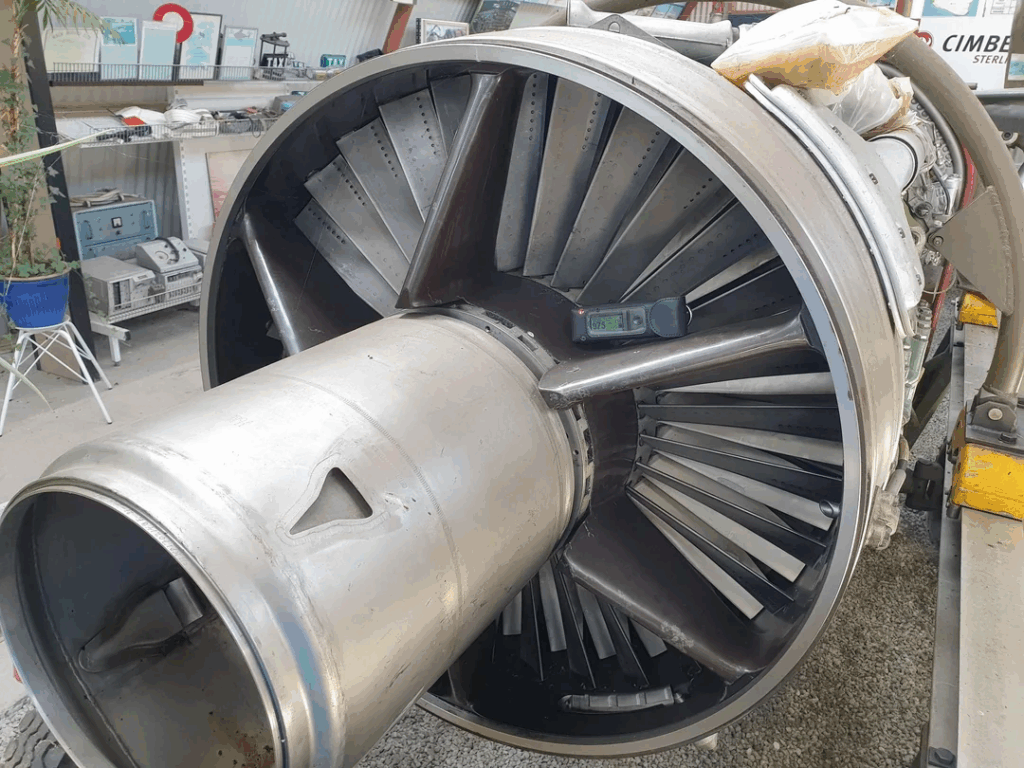
Thorium alloys were never used in rotating turbine blades of production engines on a large scale, but they did appear in casings, housings, and accessory parts.
- Pratt & Whitney J57 – Used in the Boeing B-52 Stratofortress and F-100 Super Sabre. Magnesium-thorium alloys were used in housings and non-critical engine sections.
- General Electric J79 – Powered the McDonnell F-4 Phantom II. Thorium alloys were used in accessory components and casings.
- Soviet jet engines – Records show thorium alloys were investigated for similar uses, but documentation is limited.
Thus, while no operational jet engine was “glowing radioactive,” some did carry thorium alloy parts.
Why Thorium Was Abandoned
By the late 1970s, thorium alloys had disappeared from aerospace use due to:
- Health concerns – radioactive dust from machining was hazardous.
- Regulation – tighter safety and environmental standards restricted thorium use.
- Better alternatives – nickel-based superalloys with cobalt, tungsten, and rhenium delivered high performance without radiation risks.
Conclusion
So, why would a jet engine be radioactive? The answer lies in the aerospace industry’s pursuit of stronger, lighter, and more heat-resistant materials during the Cold War. Thorium alloys gave engineers valuable performance gains, but safety concerns and advances in metallurgy eventually ended their use.
Today, thorium’s place in aviation is a historical footnote — a fascinating reminder of how far engineers were willing to go to push the limits of jet engine technology.