Every time an aircraft lands, its tires make forceful contact with the runway surface, releasing heat and friction. This process causes rubber accumulation on the runway, a common but critical issue in airport operations. Left unmanaged, this buildup can compromise runway friction and safety. In this technical SEO article, we explore how rubber is deposited, its estimated weight, why it’s essential to remove it regularly, and how airports clean their runways to ensure safe landings.
What Is Rubber Accumulation on Runways?
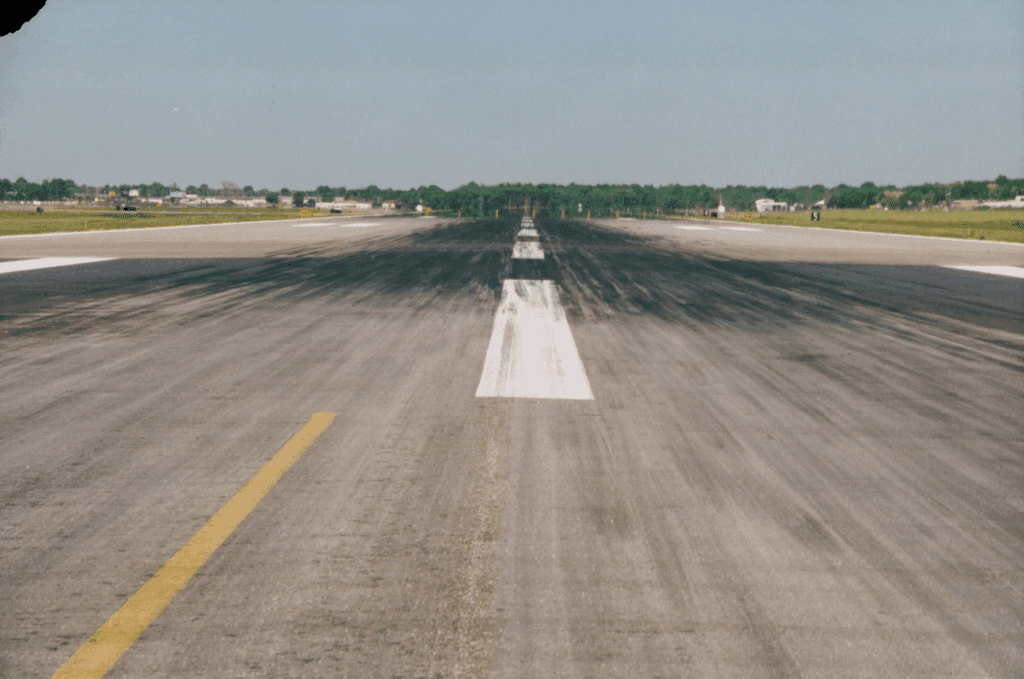
Rubber accumulation refers to the layer of synthetic rubber particles that transfer from aircraft tires onto the runway surface during landings. As aircraft touch down at high speeds—often over 240 km/h (150 mph)—their tires go from zero to full rotational speed in milliseconds. This sudden acceleration creates tremendous shear forces, causing tiny rubber particles to deposit on the pavement.
Why Does Rubber Accumulate on the Runway?
- Frictional Heating: Tire rubber heats up during the landing rollout due to intense friction, causing it to melt slightly and adhere to the runway.
- Hydroplaning Prevention Design: Runways are designed with grooving to prevent hydroplaning, but the grooves can trap rubber particles, especially in touchdown zones.
- High Frequency of Landings: Major international airports experience hundreds of landings per day. This frequency accelerates the buildup of rubber, especially in the touchdown zone.
How Much Rubber Accumulates on a Runway?
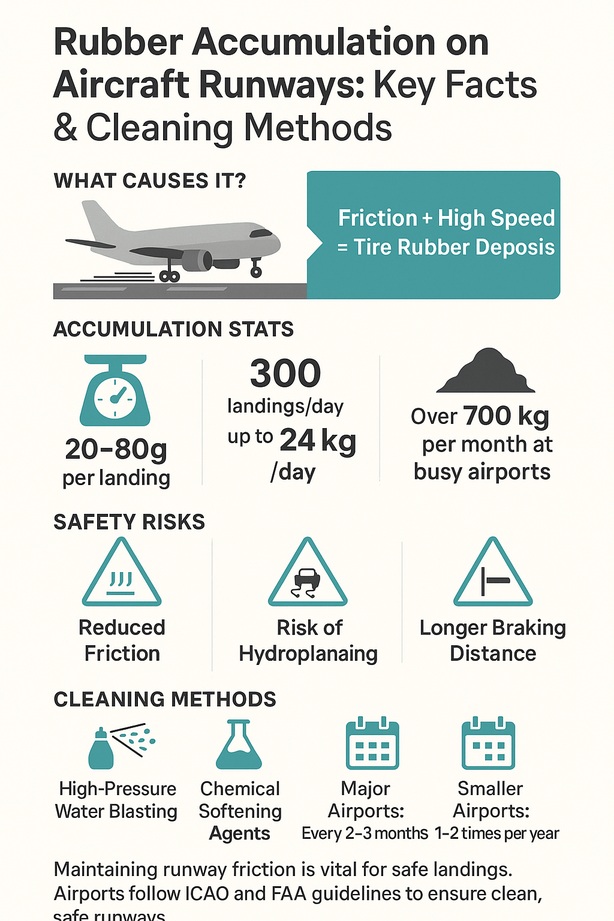
On average, each aircraft landing can deposit 20 to 80 grams of rubber on the runway. While this may sound small, it adds up quickly:
- At a busy airport handling 300 landings per day, the runway could accumulate 6 to 24 kilograms of rubber daily.
- Over a month, this figure rises to between 180 to 720 kilograms of rubber—potentially almost a metric ton every two months at a high-traffic hub.
The heaviest accumulation zones are typically the first 1,000 meters of the runway, where most aircraft touch down.
Effects of Rubber Buildup on Runway Safety
Rubber accumulation reduces the coefficient of friction between the aircraft tires and the runway. This can lead to:
- Increased braking distance
- Higher risk of hydroplaning during wet weather
- Compromised takeoff and landing performance
- Regulatory non-compliance with ICAO and FAA runway friction standards
How Do Airports Clean Runway Rubber Accumulation?
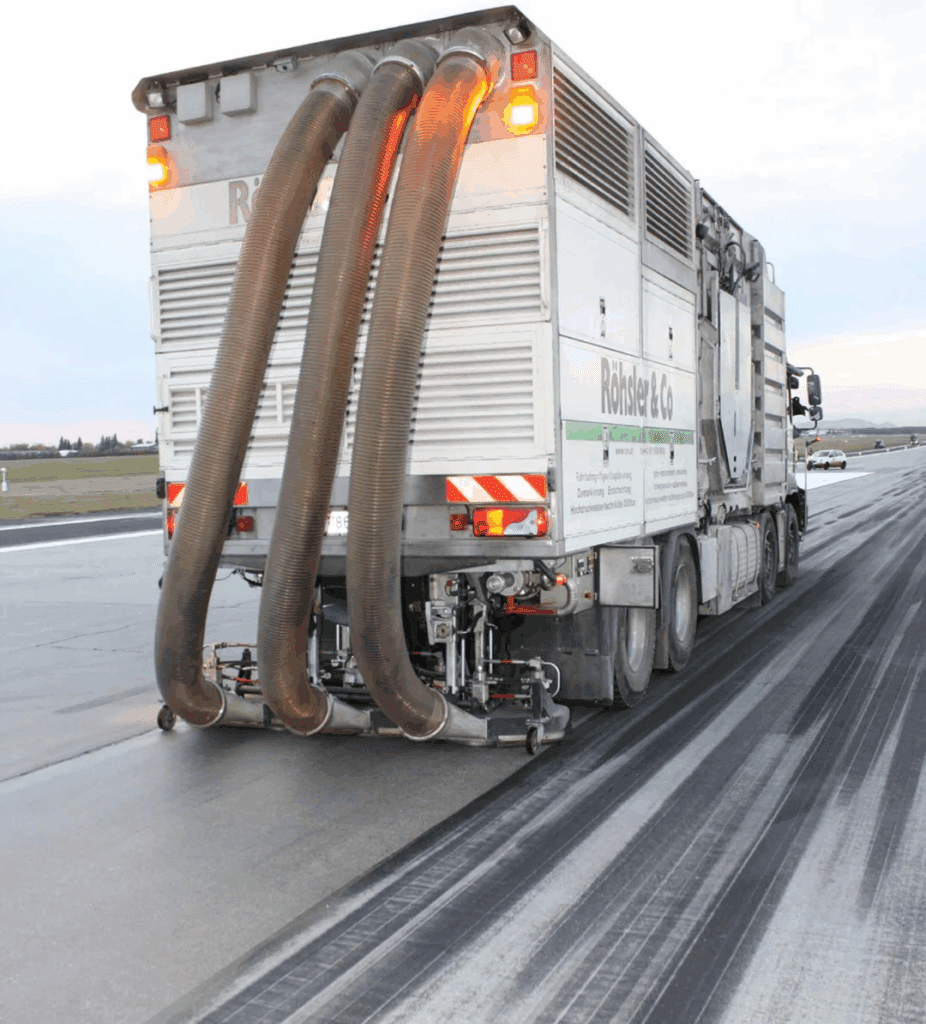
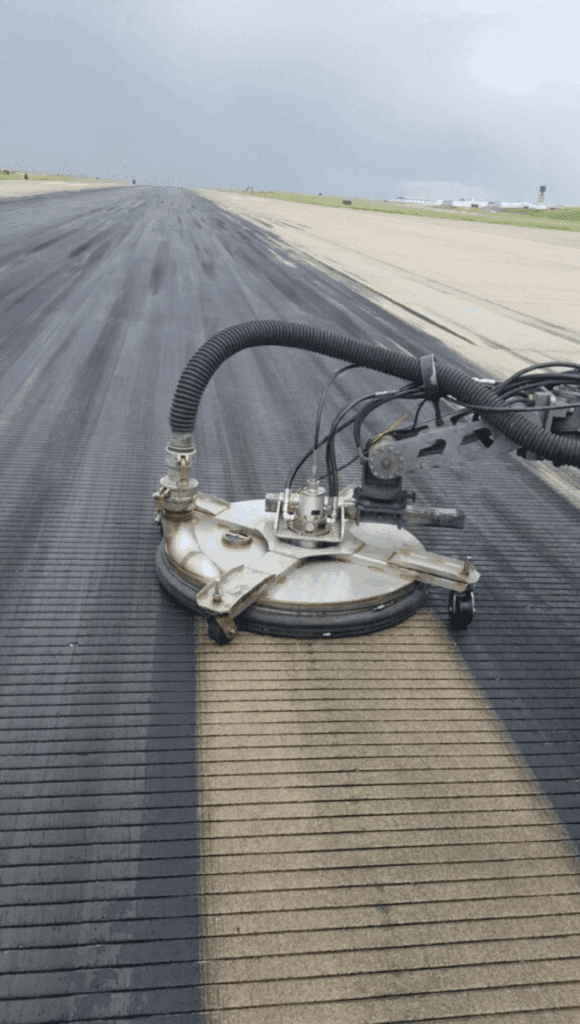
To maintain safety and operational standards, airports undertake regular rubber removal procedures using specialized equipment. Common techniques include:
1. High-Pressure Water Blasting
- Uses jets at 30,000–40,000 psi
- Effectively strips rubber from surface without damaging the asphalt or concrete
- Environmentally friendly; no chemicals used
2. Chemical Cleaning
- Involves applying biodegradable rubber removal agents
- Agents soften the rubber for easier removal via water spraying
- Not ideal for frequent use due to potential surface damage
3. Shot Blasting
- Steel beads or particles are shot at the surface to remove rubber
- Highly effective but can wear runway surface faster
4. Friction Testing and Scheduling
- Airports monitor runway friction with Continuous Friction Measuring Equipment (CFME)
- Cleanings are scheduled once friction values drop below acceptable levels
How Often Is Runway Rubber Removal Done?
Rubber removal frequency depends on:
- Traffic volume
- Runway material (asphalt or concrete)
- Weather conditions
- Friction measurements
Major airports may clean runways every 2 to 3 months, while regional airports may do so biannually or annually.
Regulatory Guidelines
- FAA (AC 150/5320-12) and ICAO Annex 14 mandate friction maintenance on runways.
- Periodic friction testing and runway rubber removal are essential to meet these global aviation safety standards.
Conclusion
Rubber accumulation on aircraft runways is a natural consequence of high-speed aircraft landings. However, if left unmanaged, it can compromise runway friction, increase accident risks, and violate international aviation safety regulations. Airports use advanced techniques such as high-pressure water blasting and friction testing to ensure the runway surface remains safe and operational.
Routine maintenance and rubber removal are not just technical necessities—they are critical to ensuring the safety of every takeoff and landing.
By Aeropeep Team