
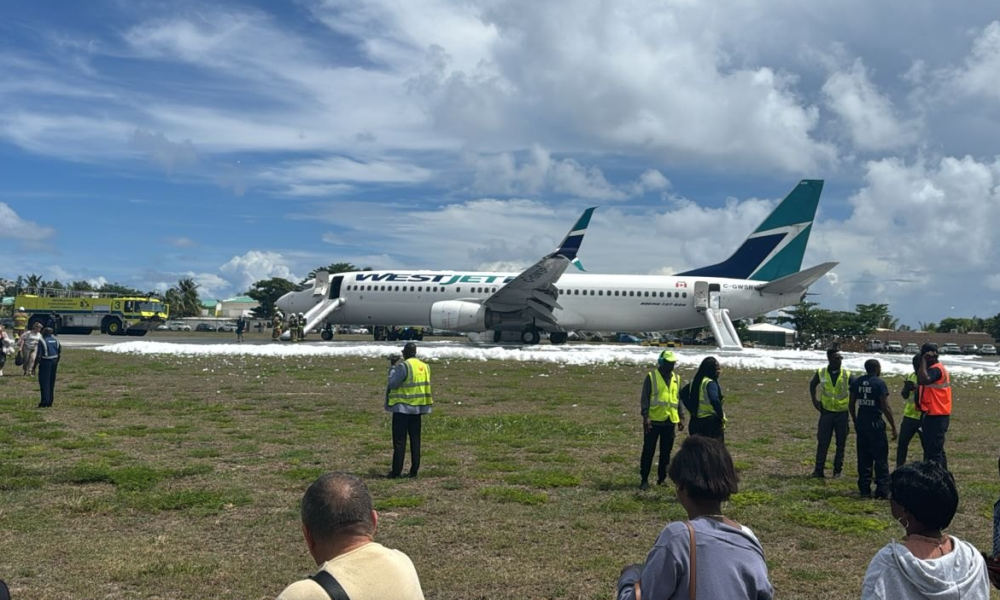
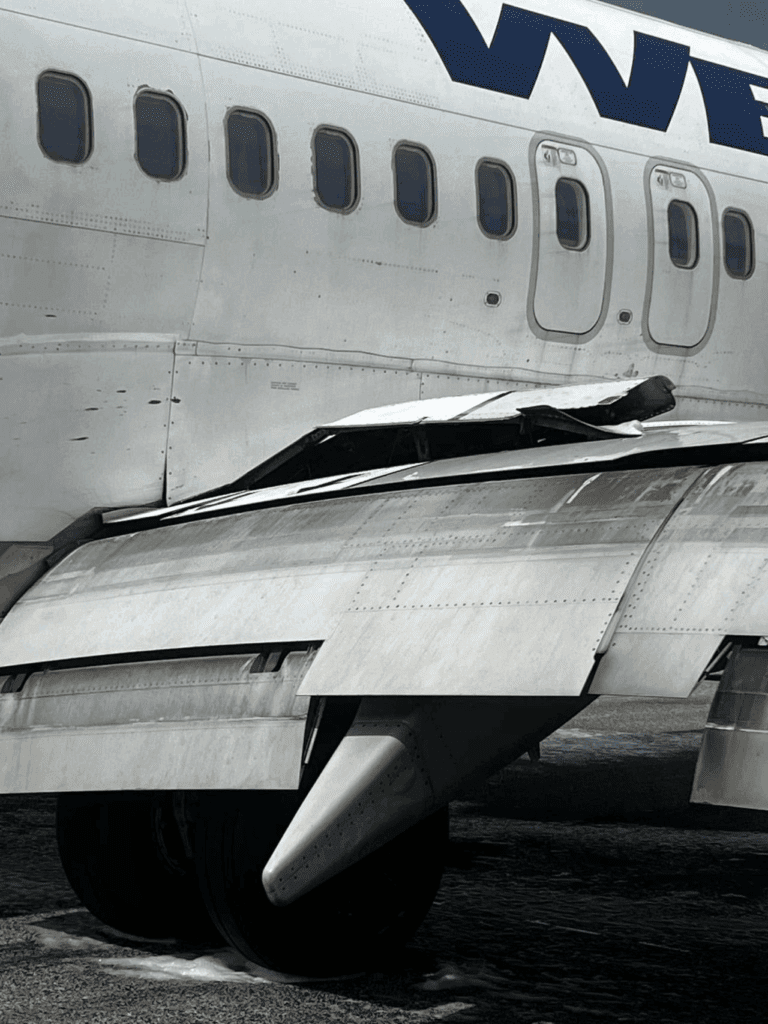
A WestJet Boeing 737-800 registered C-GWSR operating as flight WS2276 from Toronto to Sint Maarten suffered a hard landing on Runway 10 at Princess Juliana International Airport (SXM) on September 8, 2025 (Sunday afternoon). The aircraft’s right-hand main landing gear (MLG) collapsed, and the right-hand engine and right wing sustained damage. All passengers and crew evacuated using the emergency slides, with three passengers taken for precautionary medical evaluation and no serious injuries reported. Emergency services responded promptly and the runway was closed until further notice while authorities removed the aircraft and began an investigation.
What Happened — Timeline & Facts
Flight / Aircraft: WestJet flight WS2276, Boeing 737-800, registration C-GWSR
Date / Time: The incident occurred on September 8, 2025, at 1:29 p.m. local time (Sunday afternoon)
Location: Princess Juliana International Airport (SXM) — Runway 10. The airport has a single runway, so operations were disrupted after the event.
Passengers / Crew: All souls on board evacuated via emergency slides. Three passengers were taken for medical evaluation as a precaution, while the rest were safely evacuated. No serious injuries were reported.
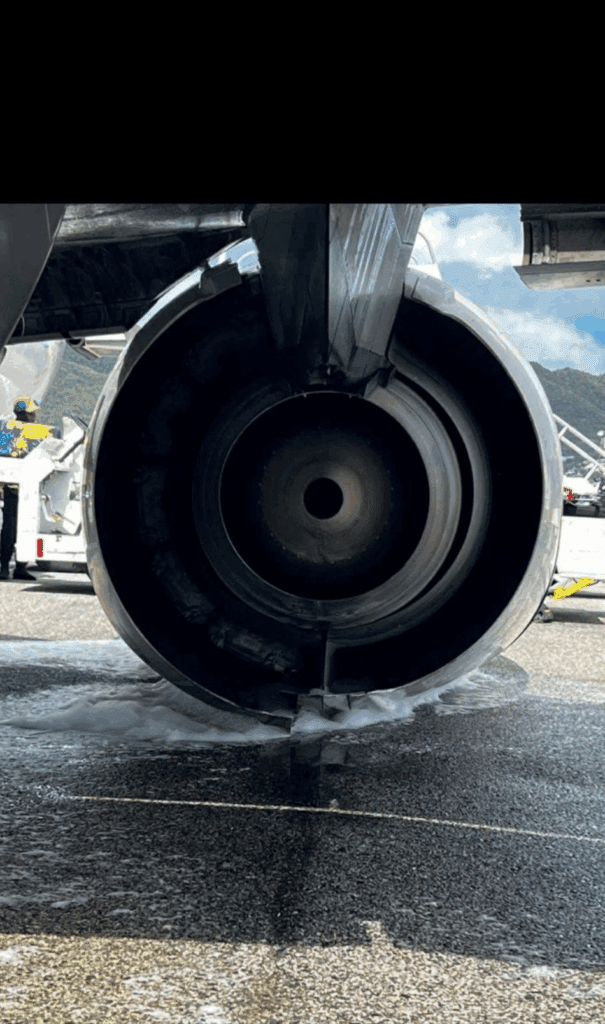
Damage & Response: Right main landing gear collapsed during landing; right-hand engine sustained damage. Airport fire/rescue attended, and the runway was closed until further notice pending aircraft removal and inspection.
Official Statements & Investigation
The Prime Minister of Sint Maarten, Dr. Luc Mercelina, issued a statement following the incident: “First and foremost, we are grateful that the passengers and crew of WestJet flight WS2276 are safe following today’s incident at Princess Juliana International Airport. The safety and security of travelers, our aviation personnel, and the general public remain our highest priority.”
At the time of reporting, WestJet and local authorities had confirmed the hard landing, the evacuation, and that an investigation had been launched. The airline and aviation authorities will examine flight data and the aircraft’s maintenance records to determine the root cause. No definitive cause has been publicly released as the formal investigation is ongoing.
Technical Analysis — What Failure Modes Explain a Right-Hand MLG Collapse After Landing?
The following summarizes likely technical areas investigators will examine. These are standard investigative lines — not definitive findings for this event, which remains under investigation.
High Sink Rate / Severe Hard Landing
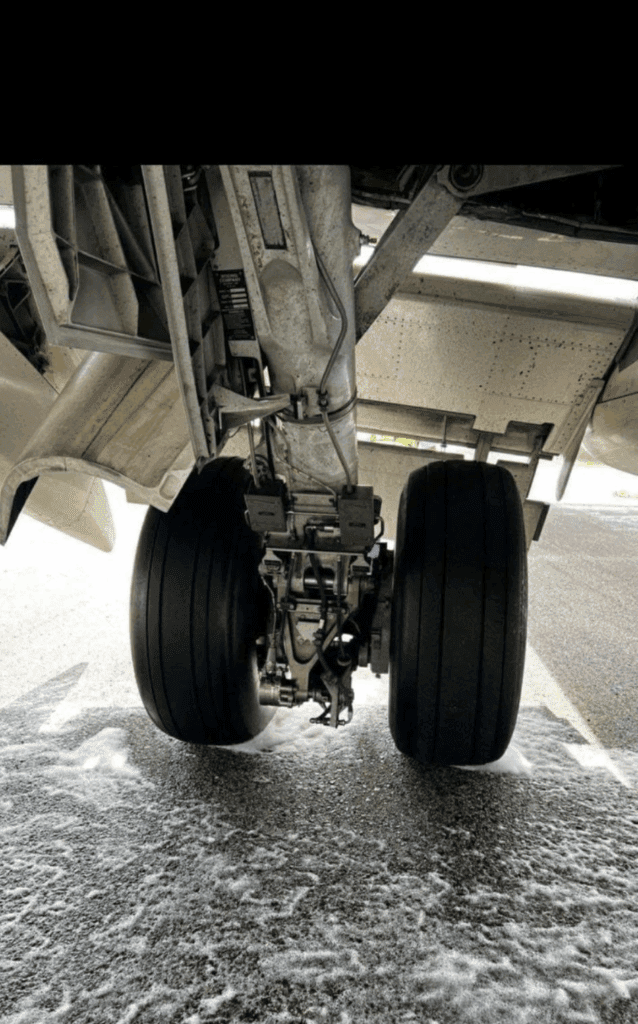
A hard landing with an excessive vertical speed at touchdown can overstress the MLG structure (struts, torque links, axles, bogie attachments) beyond design limits and cause collapse or collapse-like damage. Investigators will examine recorded vertical acceleration (G loads) from the flight data recorder (FDR).
Oleo Strut or Shock Absorber Failure
The 737 MLG uses oleo struts (hydraulic shock absorbers). A catastrophic failure, loss of damping, or pre-existing structural crack could reduce energy absorption, transferring abnormal loads to the landing gear attachment fittings and possibly resulting in collapse.
Bogie/Axle or Torque Link Structural Failure

Fatigue cracks, corrosion, or maintenance error (improper torque, missing part, incorrect re-assembly) in the bogie, axle, or torque links can cause structural failure under load.
Asymmetric Load or Roll at Touchdown
A heavy touchdown with an angle (bank/roll) or with one side contacting earlier/harder (due to crosswind or pilot technique) can concentrate loads on one MLG (RH in this case), increasing collapse risk.
Tire/Wheel/Landing Gear Fire or Engine Strike
If the gear collapsed and the engine contacted runway/ground, additional structural and engine damage occurs. Debris ingestion or fan case impact will be examined for engine damage causation.
Hydraulic or Actuation Issues
Malfunctions in landing gear uplock/downlock actuators or hydraulic system anomalies can cause improper landing gear behavior, but a mechanical collapse due to structural overload remains more typical for this damage profile.
Runway Surface & Environmental Factors
Runway contamination, tailwind component, gusting winds, or an unstabilized approach can increase landing difficulty. Investigators will obtain airport weather (METAR), approach parameters, and ATC recordings.
Systems & Parts Investigators Will Focus On (737-800 Specifics)
- Main landing gear oleo struts and upper/lower fittings — check for fractures or overload markings
- Torque links and trunnion attachments — common locations for overload/fatigue failures
- Bogie beam and axle assemblies — inspect for fractures, deformation, or maintenance defects
- Brake assemblies & wheels — to determine if a locked wheel or tyre failure contributed to asymmetric loading
- Engine pylon and outboard wing structure (R-hand) — to assess how and where the engine made contact after gear collapse and measure deformation paths
- FDR and CVR data — vertical acceleration, airspeed, pitch/roll at touchdown, thrust settings, and pilot communications
- Maintenance logs — recent gear component replacements, airworthiness directives compliance, deferred defects
Operational & Safety Impact
Airport Operations: SXM’s single runway closure forced diversions and delays; the runway remains closed until further notice. Aircraft removal and inspection can take many hours to days depending on damage and recovery complexity.
Regulatory Follow-up: The accident/incident investigation authority for Sint Maarten (and Canada’s TSB if applicable) will produce an interim/final report with probable cause and safety recommendations. Airlines often issue internal bulletins pending final findings.
What to Watch for in the Investigation (Timeline & Deliverables)
Interim Findings: Within days to weeks — basic facts (FDR/CVR recovered, preliminary data)
Final Report: Often months; will identify causal factors and safety recommendations addressing training, maintenance, procedures or design issues if any.
Airline Action: Grounding of similar fleet items is possible only if a systemic technical issue is found; otherwise specific aircraft may be repaired and returned to service.
By Aeropeep Team