

High-value keywords: Airbus A380, Boeing 777, aircraft performance, jet engine efficiency, aerodynamic design, cruise speed comparison, airline fuel efficiency, Rolls-Royce Trent 900, GE90 engine thrust, transonic drag, A380 vs 777
Both Aircraft Cruise at Nearly Identical Speeds
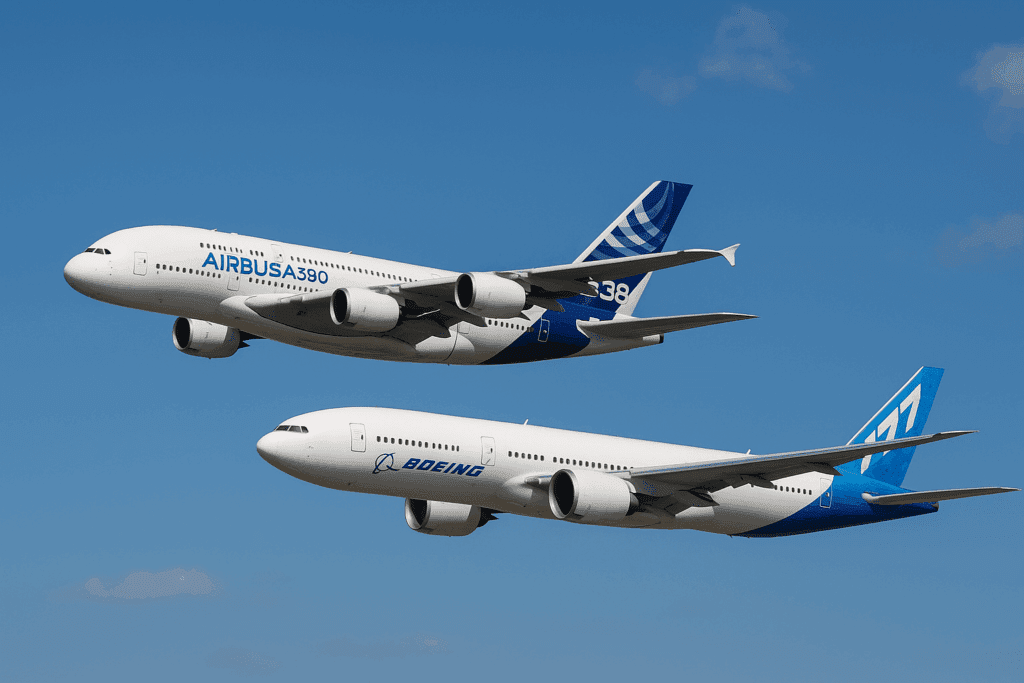
Despite assumptions that the larger Airbus A380 must be slower—or that the Boeing 777 should be faster with its huge GE90 engines—the truth is:
- Airbus A380 cruise speed: Mach 0.85
- Boeing 777 cruise speed: Mach 0.84
This difference is only about 6 knots, effectively negligible in real-world flight operations. Both aircraft were engineered around the same economic “sweet spot” where fuel efficiency and competitive flight times intersect.
Why Modern Widebodies All Settle Around Mach 0.84–0.85
1. Fuel Efficiency Dictates Cruise Speed
Flying faster than Mach 0.85 significantly increases fuel burn due to rapidly rising transonic drag. Above this point, even a small increase in speed results in a large penalty in fuel usage.
2. Physics Limits Practical Speed
At transonic speeds, drag spikes sharply. That’s why nearly all modern long-haul jets—including the 787, A350, 747-8, A380, and 777—cruise between Mach 0.84 and 0.86. It’s the optimal balance of:
- Fuel consumption
- Flight duration
- Airframe stress
- Engine efficiency
How the A380 Maintains Mach 0.85 Despite Its Size
The impressive part is not that the A380 is “faster,” but that it matches the 777’s speed while being much larger and heavier.
Advanced Aerodynamic Wing Design
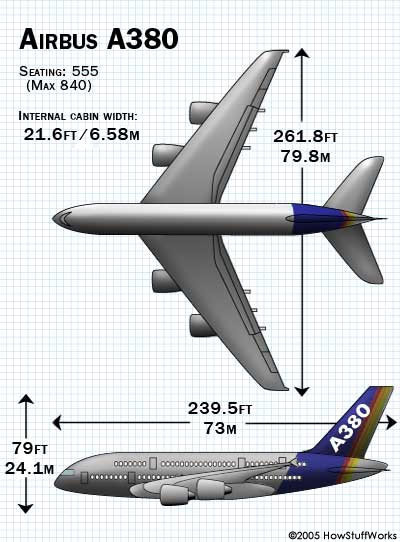
The A380’s massive 845 m² wing uses:
- Supercritical airfoils
- A high aspect ratio
- A 33.5° sweep angle
- Dual-mounted wingtip fences
- Highly advanced high-lift devices
These features reduce drag and allow efficient cruise at high Mach numbers—even at 575 tonnes MTOW.
Engine Efficiency at Altitude
The Rolls-Royce Trent 900 and GP7200 engines were optimized for:
- High-altitude cruise
- Large bypass ratios
- Excellent fuel economy in thin air
Emirates even reported that their A380s were more fuel-efficient at Mach 0.86 than at Mach 0.83, showing how precisely tuned the aircraft is for its design cruise speed.
How the Boeing 777 Is Optimized for the Same Sweet Spot
The Boeing 777’s design philosophy is different, but the result is the same.
Wing Characteristics
The 777 wing has a 31.6° sweep, a supercritical airfoil, and optimal thickness distribution—all tailored for Mach 0.84 cruise.
GE90 Engines
The legendary GE90-115B produces record-breaking takeoff thrust, but in cruise, it is tuned for:
- Reduced fuel burn
- High-efficiency operation
- Long-range stability
Both aircraft use only a small fraction of their rated thrust once at cruise altitude.
Different Design Philosophies, Same Performance Outcome
Airbus A380 Philosophy
- Built for hub-and-spoke mega-routes
- Four engines for thrust distribution
- Huge wing for maximum lift efficiency
- Double-deck design for volume
Boeing 777 Philosophy
- Twin-engine efficiency
- Point-to-point route flexibility
- Long, single-deck fuselage
- Multiple variants for diverse missions
Despite these differences, both target optimal Mach 0.84–0.85 cruise due to economic realities.
Altitude and Efficiency: The Full Picture
Both jets routinely cruise above 40,000 ft, where:
- Thinner air reduces drag
- Higher true airspeeds are achieved at the same Mach
- Fuel efficiency improves
The A380’s large wing allows efficient climbs, while the 777 performs step climbs as its fuel load decreases.
Bottom Line
The Airbus A380 does not fly faster than the Boeing 777. Both aircraft cruise at virtually the same speed, because:
- Mach 0.84–0.85 is the economically optimal zone
- Aerodynamics and physics dictate this range
- Modern jets are engineered around fuel efficiency and cost effectiveness
What’s remarkable is that the A380, despite being the world’s largest passenger aircraft, achieves the same cruise performance as the far lighter twin-engine Boeing 777 through advanced aerodynamic and engine design.
Both aircraft stand as engineering masterpieces, proving that in commercial aviation, fuel efficiency—not raw speed—is the ultimate priority.
By Aeropeep team