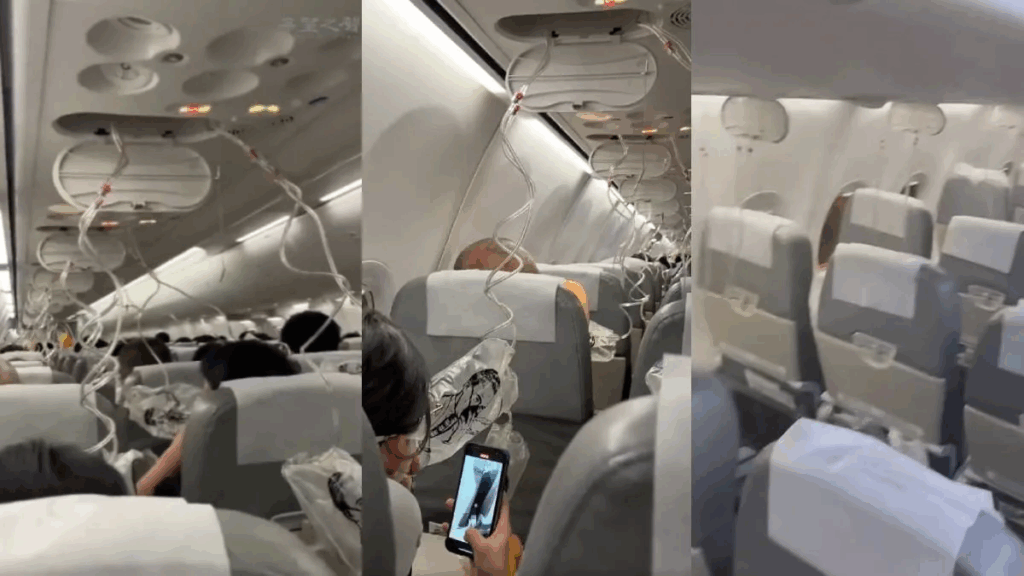
On June 30, 2025, passengers aboard Japan Airlines Flight JL8696 (also operating as Spring Japan IJ004) experienced a terrifying emergency when their Boeing 737 aircraft suddenly descended nearly 26,000 feet in just 10 minutes. The flight, en route from Shanghai Pudong Airport to Tokyo Narita Airport, was forced to make an emergency landing at Kansai International Airport in Osaka due to a mechanical issue affecting the cabin’s pressurization system.
Sudden Altitude Loss – A Closer Look
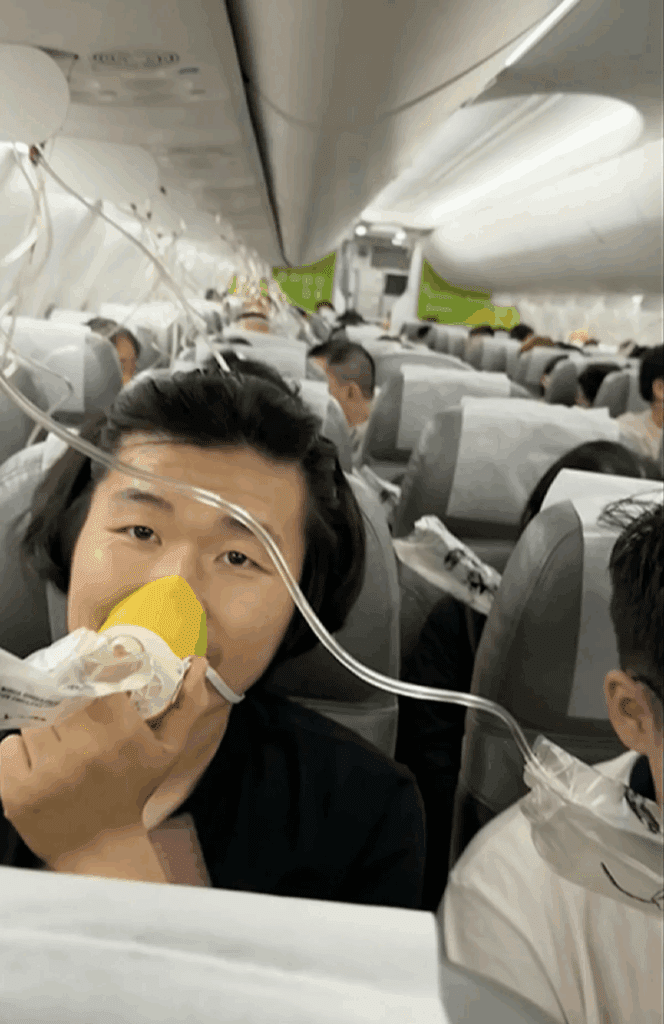
Flight tracking data indicates that the aircraft was cruising at approximately 36,000 feet when it initiated a rapid descent to just under 10,500 feet around 6:53 p.m. local time. The abrupt drop triggered the automatic deployment of oxygen masks, and passengers reported feelings of panic and disorientation. Despite the harrowing experience, the plane landed safely at 8:50 p.m., with no injuries reported among the 191 passengers and crew.
Possible Reasons Behind the Rapid Descent
While the exact cause remains under investigation, several potential factors could have contributed to the emergency descent:
1. Cabin Pressurization Failure
A malfunction in the aircraft’s pressurization system can lead to a sudden drop in cabin pressure, necessitating an emergency descent to a safer altitude where passengers can breathe without supplemental oxygen.
2. Structural Damage or Technical Malfunction
Issues such as a cracked fuselage or faulty valves in the air conditioning packs responsible for pressurizing the cabin can compromise the aircraft’s ability to maintain appropriate pressure levels.
3. Instrument or Sensor Error
Faulty altitude sensors or false warnings from the aircraft’s systems can prompt pilots to initiate a descent as a precautionary measure.
4. Smoke, Fire, or Fumes in the Cabin
The presence of smoke or toxic fumes can lead to an emergency descent to minimize risk to occupants.
Passengers’ Experience and Airline Response
Passengers recounted the terrifying moments during the descent, with some writing farewell messages and sharing personal information, fearing the worst. One passenger described hearing a “muffled boom” before the oxygen masks deployed, while another recalled being on “the verge of tears” as they prepared for a potential crash.
Japan Airlines and its subsidiary, Spring Japan, have confirmed the incident and stated that a full investigation is underway in collaboration with the Japan Civil Aviation Bureau (JCAB).
How Safe Are Modern Aircraft Like the Boeing 737?
Despite the alarming nature of the incident, aviation experts emphasize that modern commercial aircraft, including the Boeing 737, are equipped with multiple safety systems and redundancies. Emergency descents, while rare, are part of rigorous pilot training and are executed to ensure passenger safety.
The incident involving Japan Airlines Flight JL8696 underscores the importance of stringent safety protocols and the preparedness of flight crews to handle emergencies. As investigations continue, the aviation community seeks to understand the root cause to enhance safety measures and prevent similar occurrences in the future.
By Aeropeep Team