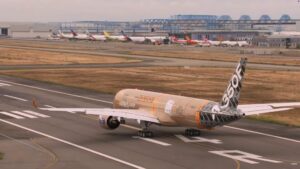
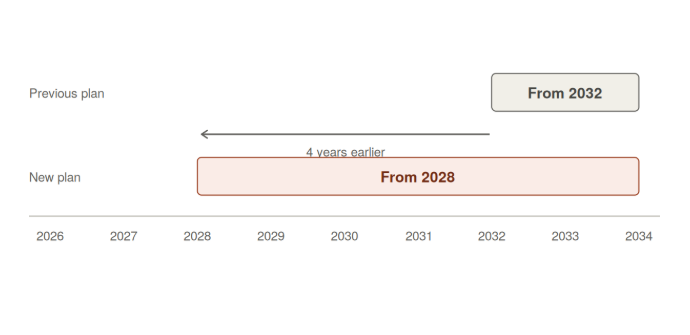
For nearly two decades, the Airbus A380 has been the flagship of Qantas’s international network. That chapter now has an end date. Qantas has confirmed it will begin retiring its A380s from calendar year 2028, much earlier than planned. Here is what has been confirmed, why it is happening, and what it means for passengers and aviation fans.
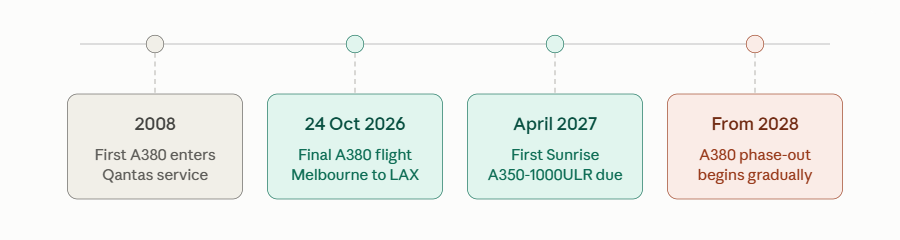
Qantas A380 Retirement at a Glance
- Start date: Qantas will begin retiring its fleet of 10 A380s in calendar year 2028.
- Previous plan: The retirement was originally flagged for 2032, so the schedule moved forward by about four years.
- Where it was announced: The change came with the airline’s FY26 financial results.
- What is not yet known: Qantas has not announced which aircraft or route will be the first to lose A380 service.
It is also important to understand what 2028 means. Qantas is not saying all its A380s will vanish that year. The fleet will be phased out gradually from 2028, so the superjumbo is likely to remain in service on some routes for a period after that.
Why Qantas Is Retiring the A380 Early
Several reasons come together in the airline’s own explanation and in industry reporting.
1. The A380 is out of production. Qantas said supply chain challenges from the aircraft being out of production increase operational risk and maintenance costs. For an engineer’s view: when a type is no longer built, parts, repairs and support all become harder and more expensive to sustain over time.
2. Fuel costs hit four-engine aircraft hardest. Qantas’s investor presentation said the Middle East conflict raised fuel costs disproportionately for the A380 fleet. A four-engine aircraft simply burns more fuel than a modern twin.
3. Better confidence in new aircraft deliveries. Qantas said its confidence in the delivery schedule of its future fleet is now much higher, with Sunrise aircraft and 787-9s arriving from 2027. That makes it safer to plan the exit of the older fleet.
4. An ageing fleet. The ten A380s average around 17 years old. Qantas also stored many of them during the pandemic, so the fleet’s service history has been interrupted.
Interestingly, this is not an idle fleet being cleared out. Qantas is accelerating retirement of aircraft it still used recently for network flexibility.
A Short History of the Qantas A380
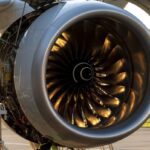
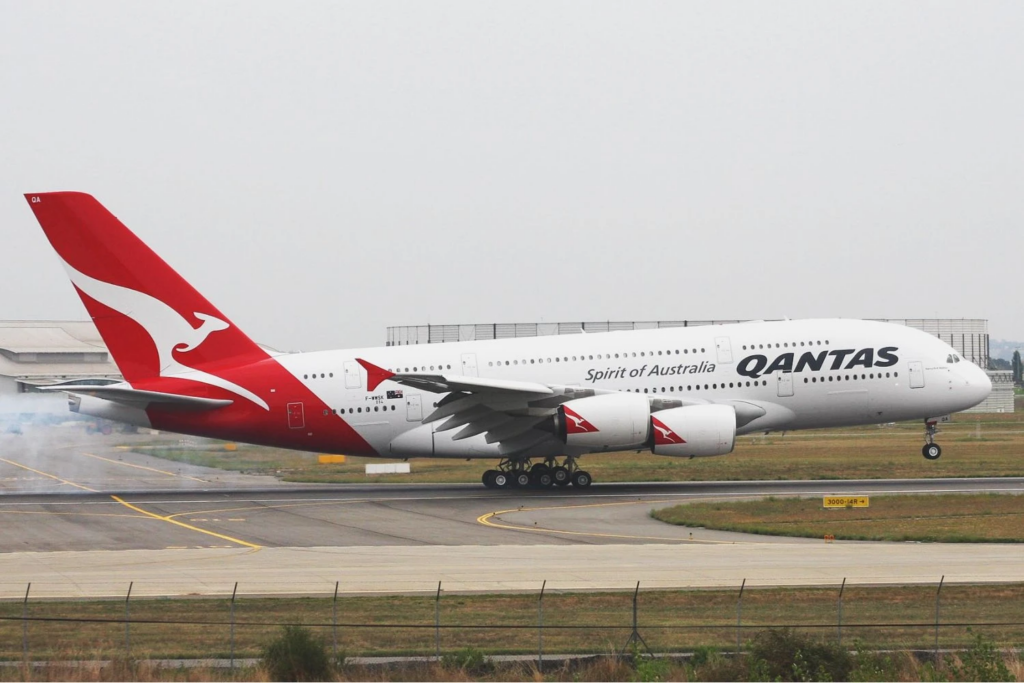
The first Qantas A380, VH-OQA “Nancy-Bird Walton”, entered service in 2008. Qantas ultimately received 12 A380-800s powered by Rolls-Royce Trent 900 engines, and ten remain today.
The type’s reputation was shaped by the 2010 QF32 engine failure over Indonesia. The aircraft landed safely, and the case has since become a widely studied example of crew resource management and aircraft damage tolerance. The A380 went on to serve Sydney, Melbourne and Los Angeles, then added London and Singapore, and became closely tied to Qantas’s premium long-haul image.
The First Visible Change: Melbourne to Los Angeles
While no formal retirement timetable exists, one route change is already scheduled. Qantas will operate its final A380 flight from Melbourne to Los Angeles on October 24, 2026, with the Boeing 787-9 taking over the next day. The services affected are QF93 and QF94.
After that, Singapore and London Heathrow remain the only A380 destinations from Melbourne. This move is a redeployment rather than the start of the 2028 retirement, as the airline plans to use its A380s on routes where extra capacity is more valuable, particularly to Asia and Europe.
What Replaces the Qantas A380?
The replacement is a mix of newer twin-engine widebodies.
Airbus A350-1000: The headline aircraft is the A350-1000, including the Project Sunrise ultra-long-range version. The first Project Sunrise A350-1000ULR is due to arrive in April 2027. Project Sunrise itself is not a direct A380 replacement program, since it remains a parallel part of the international fleet transition, but the A350 family is central to the long-term plan.
Boeing 787-9: Qantas’s first new 787s are due in the 2028 financial year.
More aircraft to come: Qantas is in talks with Boeing and Airbus about converting around 20 existing purchase right options to firm orders from 2030. Those orders would help cover the A380 exit and future growth.
Will Qantas Fly Fewer Seats?
Yes, on paper. The A380 is a very high-capacity aircraft. Qantas’s A380s are configured for 485 passengers across four cabins. Reporting on the A350-1000 Sunrise layout puts the seat count at 238 versus the A380’s 485, though standard A350 configurations may differ.
That points to a more premium-focused cabin mix. Qantas said the earlier timeline would support a higher premium cabin mix for customers. For travellers, fewer total seats and more premium seats can mean tighter economy availability on some routes. Qantas has not published fare changes, but some travel outlets expect economy pricing to be affected.
What This Means for Passengers
Right now, very little changes. Qantas has set a fleet direction, not a published route-withdrawal schedule. If you have a booking on an A380, it will operate as scheduled unless Qantas notifies you of an aircraft swap.
Check your aircraft type. After October 24, Melbourne to Los Angeles will be a 787-9 service, so cabin layout, seat type and lounge expectations may differ from the A380.
Loyalty and upgrades. Cabins on newer aircraft have different seat configurations, so upgrade availability and seat selection can change. It’s worth checking the seat map for each booking.
If you want to fly the A380. Enthusiasts should book sooner rather than later, especially for the routes Qantas has already flagged for change. Since the first retirements start in 2028, 2026 and 2027 are good years to experience the type.
The Engineering View: Why Retirement Makes Sense
From a maintenance and planning perspective, an out-of-production aircraft changes the economics in several ways. Component repair and overhaul pipelines can narrow, spares costs rise and support depends more on a shrinking global operator base. Beyond Qantas, nine other airlines operate the A380, which is a small pool compared with common narrowbody types.
Four engines also mean more scheduled engine maintenance events. A twin like the A350 or 787 halves the engine count while delivering strong fuel burn, which is why modern long-haul planning favours them. For a CAMO team, a younger fleet also means different life-limit tracking, AD and service bulletin workload and check planning.
What Happens After 2028?
Qantas has not given a final exit date for the last A380. The sequence will depend on aircraft deliveries, route planning and the results of the order talks. The next meaningful update will be firm conversion of the 20 purchase-right options and a route plan showing how Qantas replaces both the A380’s seats and its premium product.
Also worth watching: the Sunrise aircraft itself. A modified A350-1000ULR recently completed a 19-hour test flight from Toulouse to Melbourne, with commercial Sydney to London flights slated for October 2027.
FAQ
When will Qantas retire the A380?
Retirement begins gradually from calendar year 2028.
How many A380s does Qantas have?
Ten are in service, out of 12 originally delivered.
What is the last A380 flight on Melbourne to Los Angeles?
October 24, 2026.
What will replace the A380 at Qantas?
A mix of Airbus A350-1000s and Boeing 787s, with more orders under discussion.
Why is Qantas retiring the A380 early?
Rising maintenance and supply-chain costs, higher fuel burn on a four-engine aircraft, and growing confidence in new aircraft deliveries.
Which route will lose the A380 first after 2028?
Qantas has not said.
Final Thoughts
The Qantas A380 retirement is a major moment for Australian aviation. The superjumbo helped define long-haul travel for a generation, but economics now favour newer twin-engine aircraft. Between now and 2028, passengers still have time to fly it, and the coming months should bring clearer route plans as Qantas finalises its next orders.