The rudder is the smallest-looking control surface on an airliner, yet it sits on the tallest, most heavily loaded piece of structure at the back of the aircraft. On the Airbus A350 it is a carbon-fibre surface moved by a fly-by-wire system. This article explains how big the forces on it are, what it would take to break it, and what history teaches us from real rudder and fin failures.
How the A350 Rudder Works
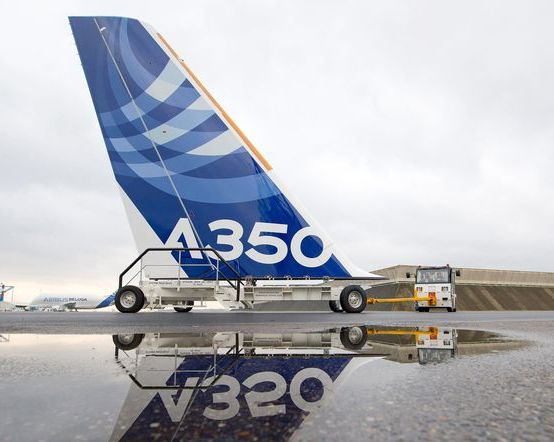
The A350 uses an electrical rudder. There is no mechanical link between the pedals and the rudder. According to Airbus’s own Safety First magazine, the pedal input is converted into a sideslip target, and the yaw control law then commands the servo controls to reach it.
The maximum sideslip target changes with the flight phase. Airbus quotes about 2° of sideslip at VMO, rising to 15° in CONF 3 and FULL at approach speed. The target is proportional to pedal displacement until it reaches that maximum. You can press the pedals further, but the target does not grow.
In normal law, yaw damping and turn coordination are automatic. The rudder is also not how an Airbus turns. The aircraft turns by banking with the ailerons and spoilers; the rudder keeps the turn coordinated and keeps the nose straight in a crosswind or after an engine failure.
How Big Are the Forces on the Rudder and Fin?
Airbus does not publish the A350 fin or rudder design loads, so no honest article can give you the official number. What we can do is show the physics and an order-of-magnitude estimate.
The side force on the vertical tail is roughly:
F = q × S × C_L
where q is dynamic pressure (½ρV²), S is fin area, and C_L is the fin’s side-force coefficient, which depends on sideslip angle and rudder deflection.
Illustrative example (assumptions, not Airbus data):
- Cruise-speed end of the envelope: about 170 m/s equivalent airspeed gives q of roughly 17–18 kPa. With an assumed fin area near 45 m² and a small C_L of about 0.1 (around 2° of sideslip), the side force is on the order of 80 kN, or about 8 tonnes-force.
- Approach end of the envelope: at about 72 m/s, q drops to roughly 3 kPa. Even with 15° of sideslip and a much higher C_L of about 0.8, the force is on the order of 100 kN, or about 10 tonnes-force.
Notice the pattern. The allowed sideslip shrinks as speed rises, so the load on the tail stays within a similar band across the envelope. That is exactly what the speed-scheduled rudder limit is for. Because force grows with the square of speed, a rudder movement that is harmless at approach speed can be dangerous at high speed.
These loads act through the rudder hinges and actuators and into the fin attachment fittings on the fuselage, creating a large side force and a bending and torsion moment at the fin root.
What the A350 Does to Protect the Tail
The A350 limits sideslip as a function of speed, so a full pedal push does not command full rudder at high speed. But Airbus is explicit about the limits of this protection:
- The rudder travel limit system is not designed to prevent damage caused by forceful, rapid, alternating pedal inputs.
- Electrical rudder control laws may reduce the structural stress from such inputs, but this should not be considered protection against structural damage or failure.
That is why Airbus says rudder pedals should be used only for the takeoff and landing roll, to decrab in crosswind landings, and to counter engine-failure asymmetry until the rudder is trimmed. They should never be used to induce roll or to counter turbulence or wake vortices.
How Much Force Does It Take to Break the Rudder or Fin?
There is no single number, because there are two different questions.
The fin (vertical stabilizer). Certification requires the structure to carry limit load without permanent damage and ultimate load, which is 1.5 times limit load, without failure. The design cases include a sudden rudder application and the sideslip overswing that follows. A fin only breaks when loads climb well beyond those cases.
The best real-world data point is American Airlines Flight 587. The NTSB found that the aerodynamic loads when the fin began to separate were about twice the design envelope and beyond ultimate design strength. Public summaries put this at roughly 200,000 lbf (about 900 kN) against a design figure near 100,000 lbf. That is a different aircraft, so treat it as an indication of scale, not an A350 number. The estimated sideslip at separation was 10 to 12.5°.
The rudder surface itself. A rudder can fail at far lower loads if it is already damaged. Air Transat Flight 961 lost its rudder in level cruise with no abnormal manoeuvre, because the structure inside had degraded. So “how much force breaks it” depends on what condition the structure is in.
What Happens If the Rudder or Fin Fails?
- Rudder lost, fin intact: the aircraft remains flyable. Yaw damping and crosswind or engine-out authority are reduced, but crews have landed safely (see Air Transat 961).
- Fin lost: this is catastrophic. The aircraft loses directional stability, can enter a rapid yaw and roll, and the structure fails around it. The fin also often carries hydraulic and control components that go with it.
- Debris and secondary damage: a departing rudder can strike the horizontal stabilizer or leave damaged hydraulic lines.
Real Incidents
American Airlines Flight 587 (12 November 2001)
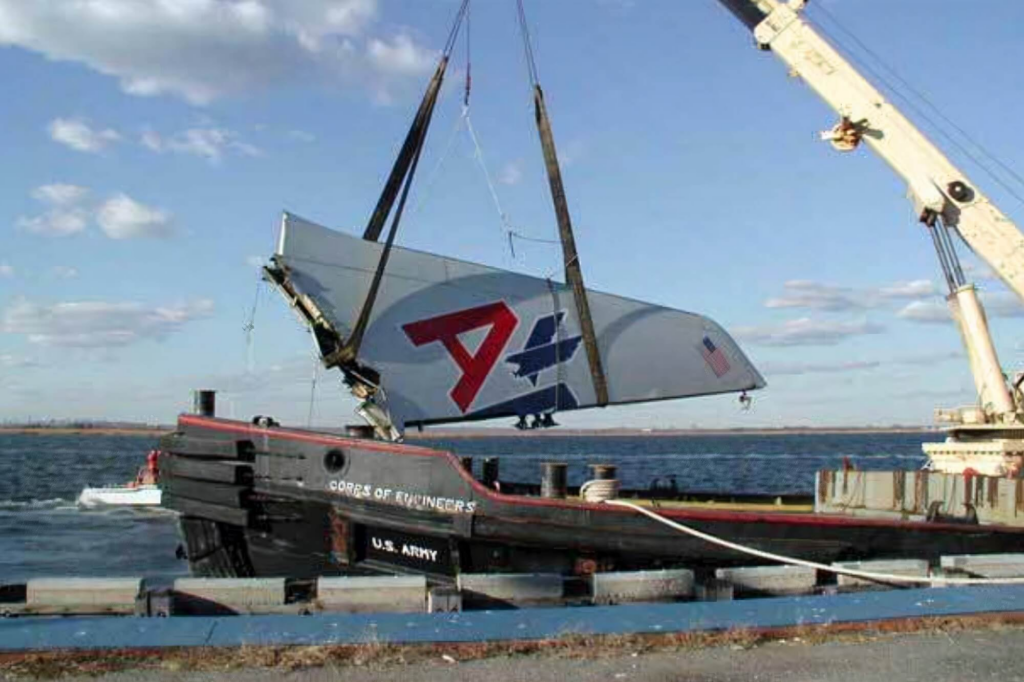
An Airbus A300-605R encountered wake turbulence from a Boeing 747 after takeoff from New York JFK. The first officer applied a series of alternating, aggressive rudder pedal inputs. The vertical stabilizer separated, and the aircraft crashed in Queens, killing 265 people, including five on the ground.
The NTSB’s probable cause: the in-flight separation of the vertical stabilizer from loads beyond ultimate design, created by the first officer’s unnecessary and excessive rudder inputs. Contributing factors were the A300-600 rudder system’s design characteristics and elements of the airline’s training. The NTSB also noted the composite material was not a factor, because the fin failed well beyond its certified limits.
Air Transat Flight 961 (6 March 2005)
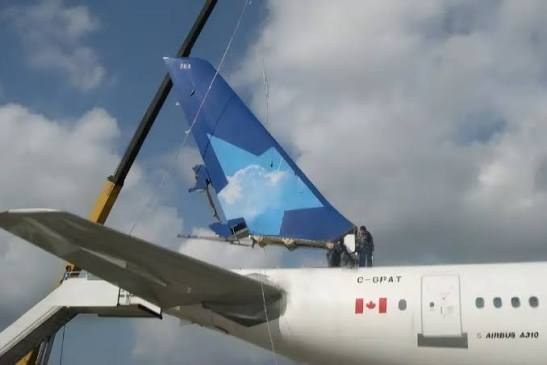
An A310-300 was cruising at FL350 about 90 nm south of Miami when the crew heard a loud bang and felt vibration. Most of the rudder had separated, leaving only the bottom closing rib and a short length of spar. The crew diverted and landed at Varadero, Cuba. One flight attendant was slightly injured.
The rudder was a composite sandwich with a Nomex honeycomb core. The investigation linked the failure to hydraulic fluid contamination causing progressive disbonding, and found that such damage could grow in flight and go undetected. Authorities then required new, more comprehensive inspections on A300, A310, A330 and A340 rudders.
Japan Airlines Flight 123 (12 August 1985)
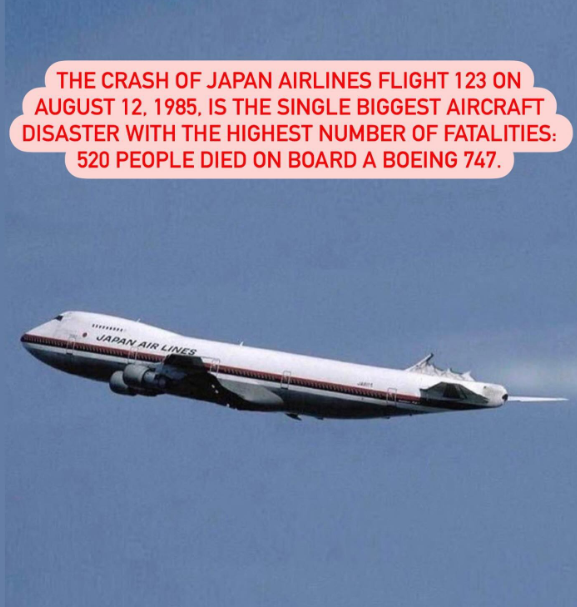
Although not a rudder-input event, it shows what losing the fin means. A Boeing 747SR lost most of its vertical fin and hydraulic systems after a failed aft pressure bulkhead. The crew managed to keep flying for about 32 minutes using engine thrust, but the aircraft crashed with 520 fatalities.
A320 Near-Miss From Airbus Safety First
Airbus describes an A320 that, after a roll upset, received four STOP RUDDER INPUT warnings as the pilot flying alternated rudder and sidestick inputs. Peak lateral acceleration was 0.41 g, near design limit loads. The crew reported turbulence but not the rudder warnings, so the specific high-lateral-loads inspection was missed and the event was only analysed almost a year later.
Lessons for Pilots and Maintenance Teams
- Do not use the rudder to counter turbulence or wake vortices.
- Report any high-load event in the logbook, and state specifically if the rudder was used.
- Maintenance should ask for more detail when a report is thin, and apply the correct high-lateral-loads inspection for the type (check your own aircraft’s AMM).
- Composite rudders need inspection programmes that detect hidden disbonding, not just visible damage.
FAQ
Does an A350 turn using the rudder? No. It turns by banking. The rudder coordinates the turn and handles crosswind and engine-out asymmetry.
Can a pilot break the A350 rudder with the pedals? Airbus warns that aggressive, rapid, opposite pedal inputs can exceed design loads on any of its aircraft, and that electrical rudder laws are not a guarantee against this.
Can an airliner land without a rudder? Yes, it has been done. Air Transat 961 landed safely after losing most of its rudder, though control margins in crosswind or engine failure are reduced.
What is the A350 rudder made of? A carbon-fibre composite, like most of the A350 empennage.
Sources
Airbus Safety First, “Use of Rudder”; NTSB final report on American Airlines Flight 587 (NTSB/AAR-04/04) and coverage of its findings; Transportation Safety Board of Canada, recommendations A06-05 and A06-06 on Air Transat Flight 961; Wikipedia, “Rudder travel limiter”. Force figures for the A350 are illustrative estimates, not manufacturer data.