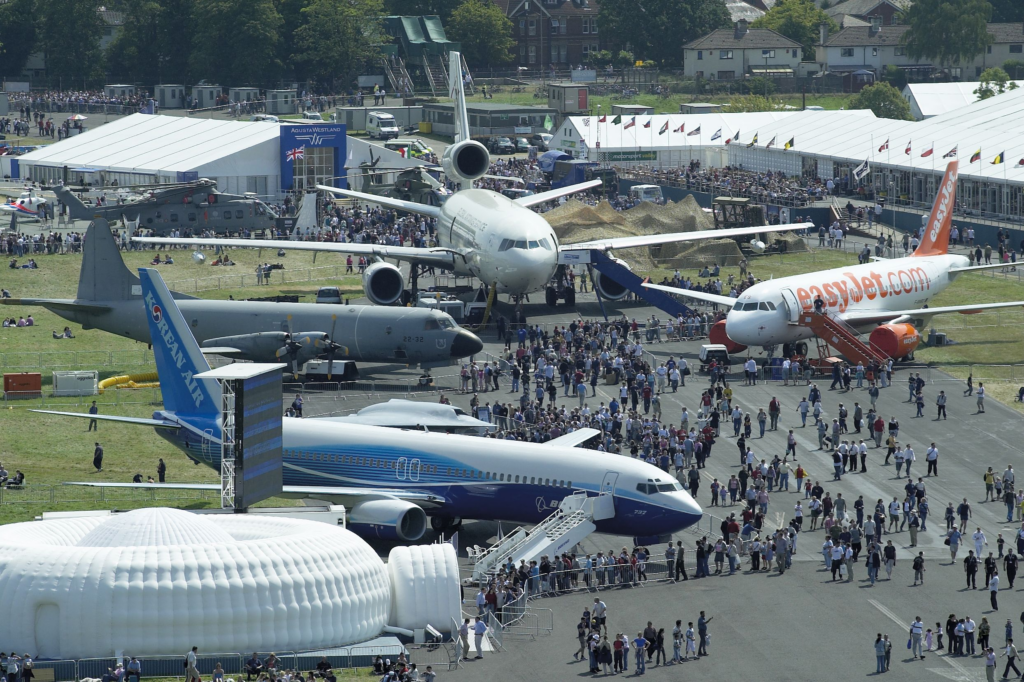
The aerospace world’s calendar has one unmissable date this month: the Farnborough International Airshow, running July 20–24 at the Farnborough International Exhibition and Conference Centre in Hampshire, UK. By every measure organizers are tracking, this is shaping up to be the biggest edition in the show’s history.
A Record-Breaking Show
More than 1,400 exhibitors from over 40 countries are expected, alongside well over 100,000 visitors across the week — the first three days reserved for trade, the final two open to the public. Exhibition space reportedly sold out twice over, prompting organizers to add a sixth hall with 5,000 square meters of extra floor space.
One notable shift this year: the traditional 60/40 split between commercial aviation and defense exhibitors is closing in on 50/50, reflecting how much defense spending has grown across the industry over the past two years.
The Order Book Question
Airshow order announcements used to be the headline story every time, but 2026 arrives with a twist. The combined Airbus-Boeing backlog now stretches past 17,000 aircraft, giving both manufacturers demand visibility out to the end of the decade — which means new orders carry proportionally less weight than they once did.
That hasn’t stopped the forecasting. Aviation intelligence firm IBA projects the show could generate orders and commitments for up to 875 commercial aircraft, split roughly across:
- ~480 narrowbodies (about 55% of the total)
- ~280 widebodies
- 75 regional jets
- 25 turboprops
- 15 widebody freighters
Philippine Airlines is widely tipped to place a mixed widebody order, reportedly weighing 15 Boeing 787-10s alongside nine Airbus A350-1000s. Etihad Airways is also rumored to be closing in on a further ten Boeing 787-family jets. Whether headline order counts hit six or seven hundred aircraft, analysts suggest execution — not the order book — will be the real story judges use to grade this year’s show.
Engines and Production Are the Real Story
Airbus heads into the show having posted its strongest first half since 2019, delivering 351 aircraft in six months. Boeing, meanwhile, trailed by roughly a dozen jets through May as it works to ramp up 737 MAX output — including opening a new production line at its Everett, Washington site earlier this month.
With engine shortages still grounding aircraft across multiple fleets industry-wide, expect plenty of the week’s serious conversations — in the chalets, not on the flightline — to center on whether manufacturers and suppliers can actually deliver on what they’re already selling, rather than how many new jets get ordered.
What’s Flying and What’s New
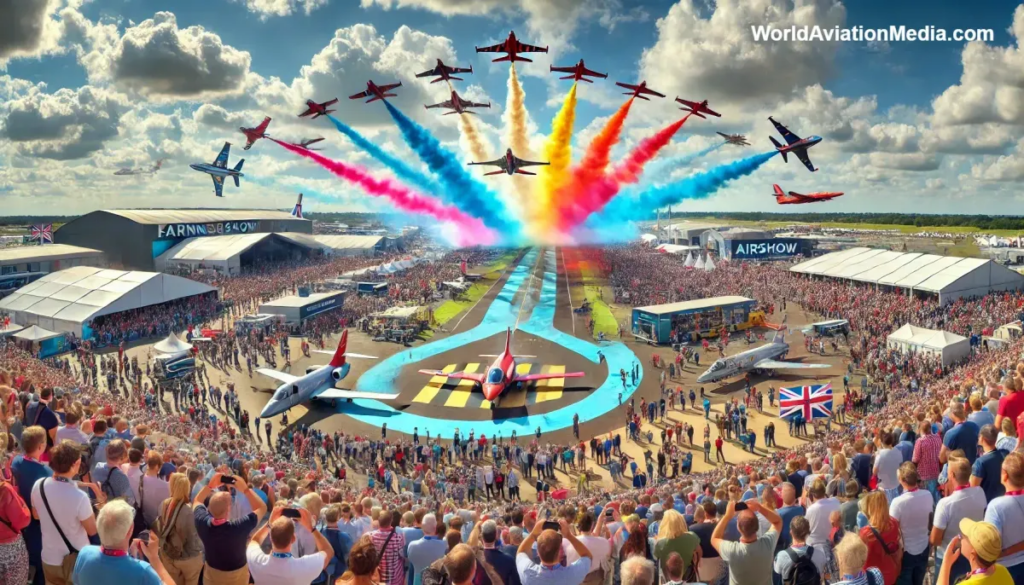
On the flying display side, Airbus is centering its commercial presence on the A350-1000, while Boeing is leaning more heavily into its military lineup this year. The UAE’s national aerobatic team, Fursan Al Emarat, joins the flying schedule for the first time, alongside military helicopter demonstrations, parachute displays, and a confirmed F-35A appearance.
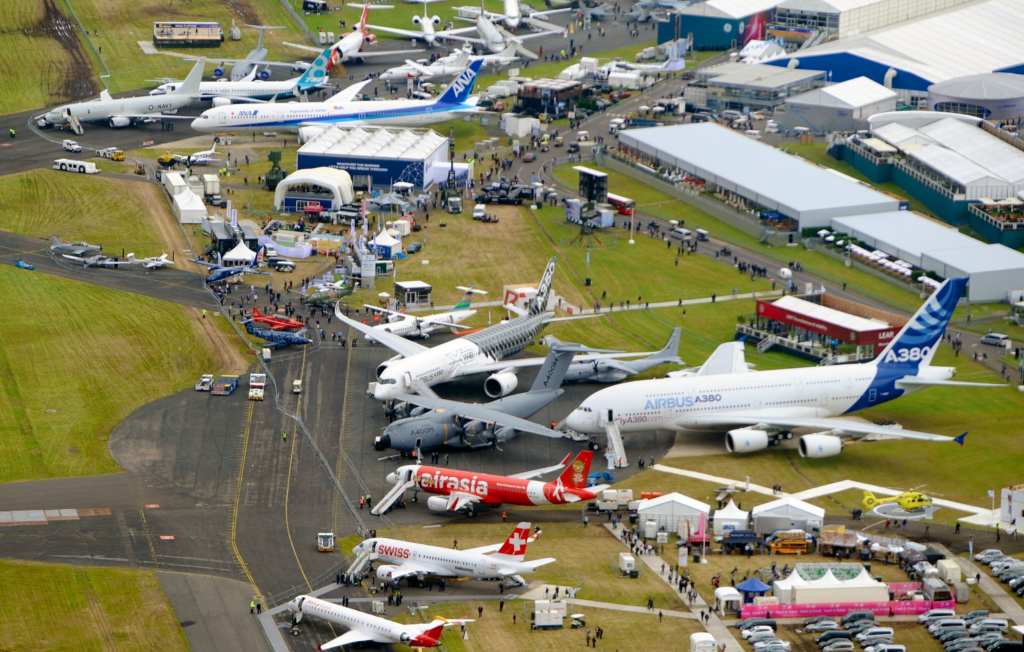
Perhaps the most telling sign of where the industry is heading: advanced air mobility is getting real runway time this year rather than just static-display curiosity. BETA Technologies is expected to fly its CX300, and Vertical Aerospace is reportedly working through final regulatory steps to demonstrate its VX4 eVTOL in the air. Two years ago that would have been a novelty booth; in 2026 it’s part of the main program.
Why It Matters
Farnborough has always been a barometer for where commercial aerospace is headed, and this year’s signals point to an industry that’s less about who can win the biggest order and more about who can actually build, certify, and deliver at scale — while defense spending, engine supply chains, and early-stage electric aircraft all fight for a bigger share of the spotlight.
AeroPeep will be following the show’s key announcements as they land through the week.
By – Aeropeep Team