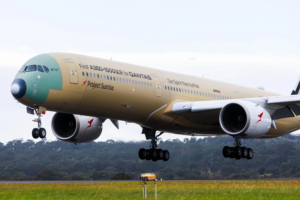
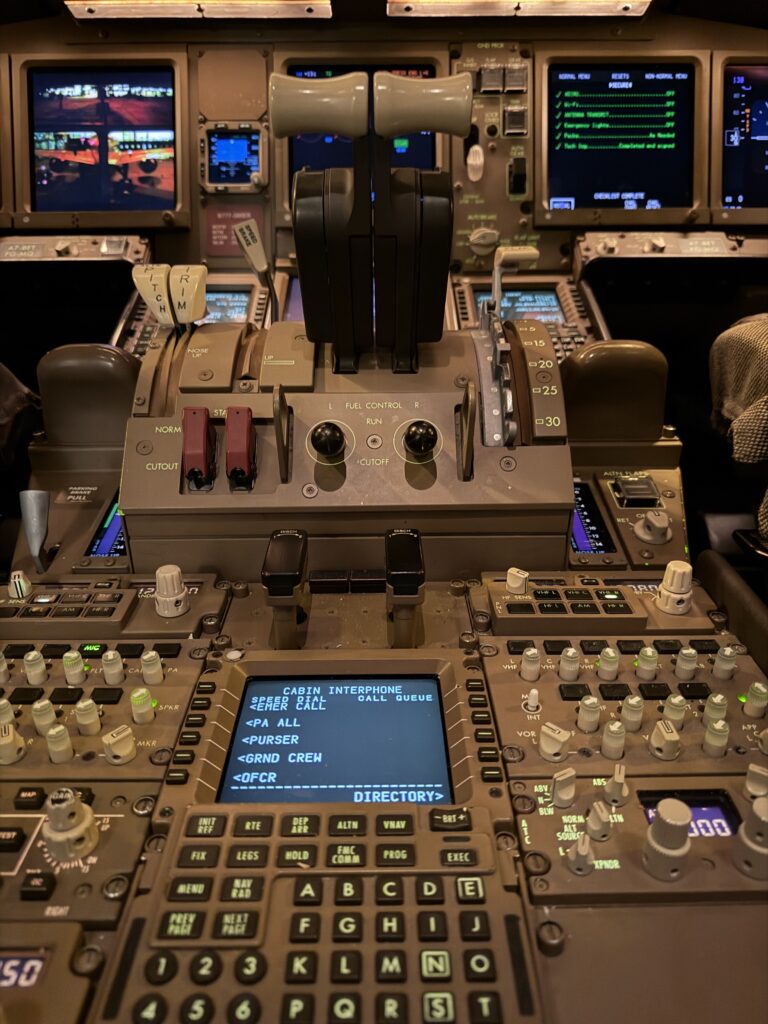

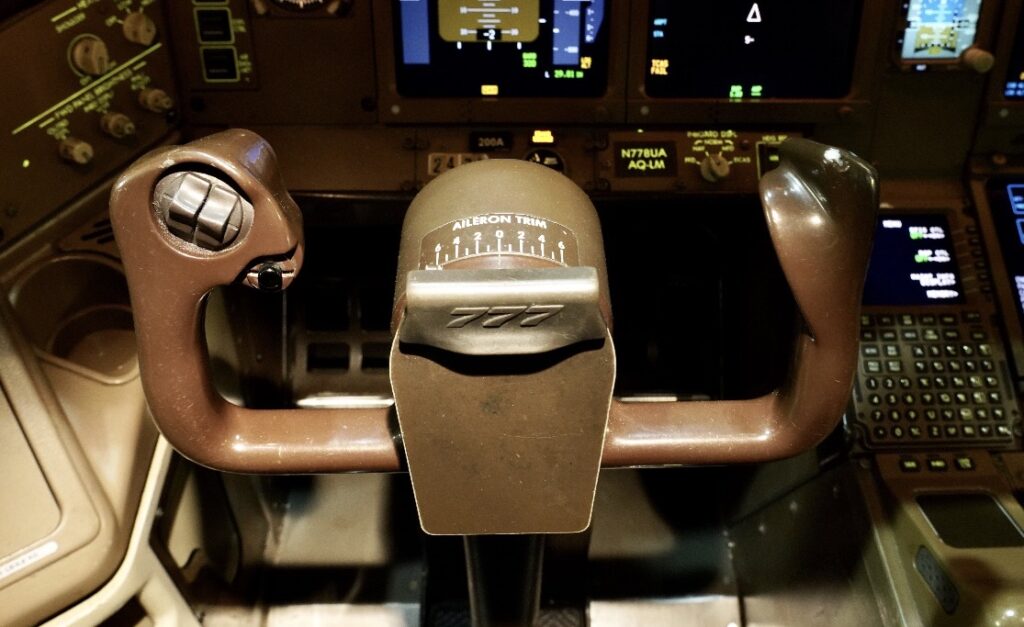
When the Boeing 777 entered service in 1995, it was Boeing’s first commercial jet to fly on fly-by-wire (FBW) controls — a technology Airbus had already committed to a decade earlier with the A320. But Boeing didn’t simply copy the Airbus approach. It built something with a very different philosophy underneath the skin, and one small design decision from that era still shapes how engineers and pilots think about the 777 today: buried in the tail of every 777 is a set of steel cables that can fly the airplane if every single flight control computer goes dark.
To understand why that matters, it helps to first understand what fly-by-wire actually replaced, and where Boeing and Airbus quietly diverged on how much trust to place in the system.
From Cables and Hydraulics to Electrons
On a conventional aircraft, moving the control column or rudder pedals pulls a cable, pushes a hydraulic line, or rotates a torque tube that is mechanically connected — sometimes through a chain of linkages and boosted by hydraulic actuators — all the way out to the ailerons, elevators, and rudder. The pilot is, in a very direct sense, physically wired to the control surfaces.
Fly-by-wire strips that mechanical link out. The control column or sidestick instead sends an electrical signal to a set of flight control computers, which interpret that input, apply limits, and command hydraulic actuators to move the surfaces.
The benefit is significant: computers can enforce envelope protection (preventing stalls or over-stressing the airframe), automatically compensate for turbulence and configuration changes, and remove hundreds of kilograms of cabling, pulleys, and linkages from the airframe.
The tradeoff is that the pilot is no longer flying the airplane directly — they’re flying a computer that is flying the airplane.
If that computer, or the entire chain of computers behind it, stops working, what happens next depends entirely on how the manufacturer engineered the fallback.
Two Philosophies, Two Answers
Airbus and Boeing arrived at fly-by-wire from different starting assumptions, and those assumptions still show up in the flight decks of the A350 and 777 today.
Airbus built the A320, A330, A350 and beyond around full-authority, full-time fly-by-wire. In Normal Law, the computers hold hard limits on bank angle, angle of attack, and load factor — the pilot’s sidestick inputs are requests, not direct commands, and the system will not let the aircraft be flown outside a defined envelope under normal conditions.
If the primary computers fail, the aircraft degrades through Alternate Law and, in the rarest cases, Direct Law, where stick inputs map more directly to control surface deflection but computers are still in the loop.
True total loss of all flight control computers is treated as an extreme edge case, mitigated mostly through heavy computer redundancy rather than a separate mechanical path for the whole control system (a manual trim wheel does remain, similarly to Boeing).
Boeing took a more conservative middle path with the 777. The aircraft is fully fly-by-wire and uses a triplex — triple-redundant — Primary Flight Computer architecture, so on the vast majority of flights, pilots are moving control surfaces electronically just as on an Airbus.
But Boeing kept the familiar control column and yoke rather than adopting a sidestick, partly because it wanted pilots to retain the tactile feel of the older, cable-and-hydraulics generation.
More importantly, Boeing’s flight control laws deliberately allow pilots to fly outside the normal envelope if they choose to pull hard enough — the system provides protection cues rather than a hard, unbreakable ceiling in every regime.
And then there is the backup that gives this whole comparison its bite:
In the extraordinarily unlikely event that the 777 loses its entire digital flight control system — every Primary Flight Computer, every actuator control electronics unit — Boeing engineered a purely mechanical fallback path that requires no electrical power at all.
What the 777’s Mechanical Backup Actually Does
The 777’s mechanical backup isn’t a full flight control system in the traditional sense — it’s a minimal path designed to keep the aircraft flying straight and level long enough for the crew to restore electrical power or reach an airport.
It works through two elements:
1. Stabilizer Trim
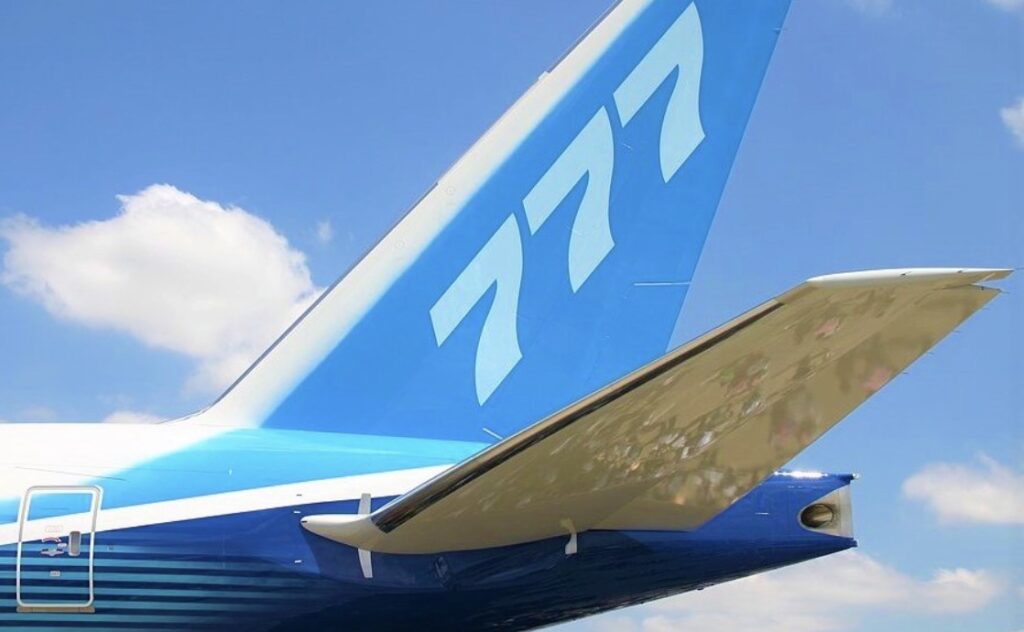
The alternate pitch trim levers in the cockpit connect through control cables to the stabilizer trim control modules, and from there mechanically to the horizontal stabilizer itself.
Moving those levers physically drives the stabilizer, giving the crew pitch control without needing a single computer or electrical signal in the loop.
2. Selected Spoilers
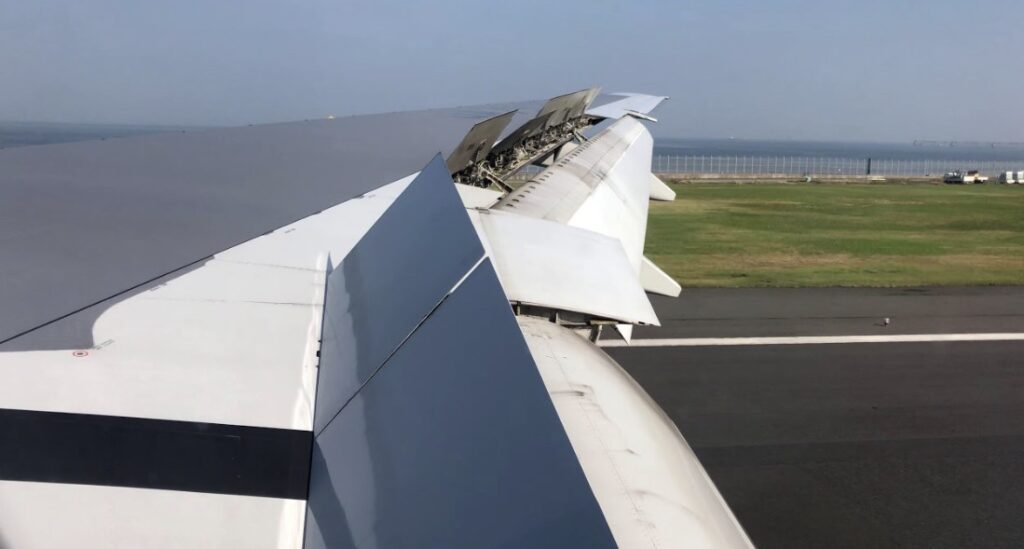
A cable running from the control wheel mechanically actuates two of the wing spoilers — commonly cited as spoilers 4 and 11 — giving a basic roll control input through differential spoiler deflection, again without any electronics involved.
Together, these two mechanical paths don’t give a pilot full, precise control the way the normal fly-by-wire system does.
They give something more limited but arguably more important: a way to keep the wings level and the nose roughly where it needs to be, entirely independent of the aircraft’s electrical and computer systems, until those systems can be brought back online.
It’s worth being clear about how remote this scenario is.
The 777’s Primary Flight Computers, actuator control electronics, and the multiple independent hydraulic and electrical systems feeding them are all designed with enough redundancy that a total loss of digital flight control has never occurred in airline service.
The mechanical backup exists as a last line of defense against a failure mode so improbable that certification authorities essentially treat it as “what if everything we designed against everything still somehow fails.”
A Similar Idea Elsewhere in the Fleet
This same instinct — keep a dumb, purely mechanical path alive underneath a smart electronic system — shows up elsewhere in Boeing’s lineup, even on aircraft that aren’t full fly-by-wire.
The 737, for instance, retains a manually operated trim wheel connected by cable to the stabilizer jackscrew, allowing pilots to physically override or take over from the electric trim motor if needed.
It’s a different problem being solved (electric trim runaway rather than total computer loss) but the underlying philosophy is the same: never remove the pilot’s last physical connection to the aircraft’s most critical control surfaces.
Airbus, for its part, isn’t without a form of manual reversion either — a mechanical trim wheel is retained on Airbus fly-by-wire types as well, and Direct Law provides a simplified, though still computer-mediated, control mode.
The real philosophical difference isn’t “mechanical backup versus none” — it’s how much authority the computer retains right up until the last resort, and how directly the pilot’s own muscles can still move a control surface when every screen in the cockpit goes dark.
Why This Still Matters to Engineers Today
For anyone working the 777 line, the mechanical backup system is a useful reminder that fly-by-wire didn’t eliminate mechanical systems from the airframe — it just relegated them to an emergency role.
Maintenance and inspection of those backup cable runs, pulleys, and stabilizer trim control modules still matters, even though they may never be used in the aircraft’s entire operational life.
It’s the aviation equivalent of a fire axe behind glass: you hope it never gets touched, but its condition still has to be verified on schedule.
It’s also a good example of how two manufacturers can solve the same underlying engineering problem — how do you let computers fly the airplane most of the time while keeping humans able to save it if the computers can’t — and arrive at meaningfully different answers, each defensible, each shaped by decades of institutional design philosophy.
The A350’s confidence in computer redundancy versus the 777’s insistence on a purely mechanical fallback isn’t a case of one being objectively safer than the other; both aircraft have excellent safety records.
It’s a case of two engineering cultures making different bets about where the last line of defense should sit — in silicon, or in steel cable.