

Ask any group of pilots or engineers to debate Boeing versus Airbus, and it rarely takes long before the conversation lands on two acronyms: EICAS and ECAM. Both systems exist to do the same fundamental job — watch every major aircraft system, catch a failure the instant it happens, and tell the crew what’s wrong. But how each manufacturer chose to deliver that information says a lot about two very different design philosophies, one built around pilot judgment and reference material, the other built around guided, on-screen procedure.
For anyone who’s spent time around CAMO planning, maintenance scheduling, or line troubleshooting, this isn’t just cockpit trivia — it directly shapes how faults get logged, how crews report defects, and how maintenance teams interpret what actually happened in flight.
What EICAS Actually Does
EICAS, the Engine Indicating and Crew Alerting System, first flew on the Boeing 757 and has since become standard across the 767, 747-400 and later, 777, and 787. Its core job is twofold: continuously display engine parameters — N1, N2, EGT, fuel flow, oil pressure — and centralize alerting for every other monitored system, from hydraulics to pneumatics to electrical power.
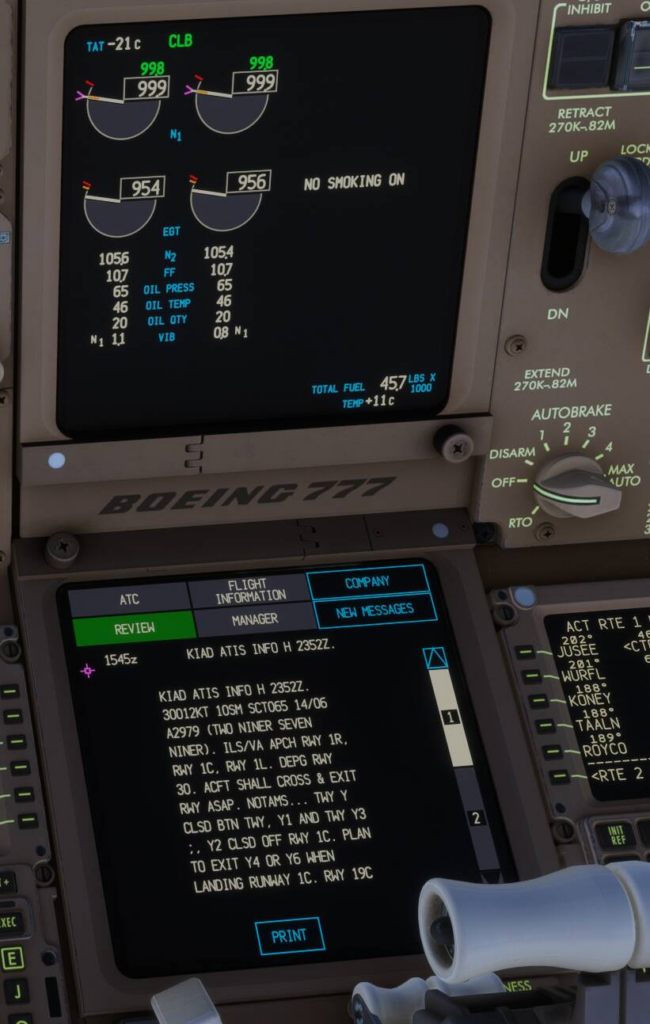
When something goes wrong, EICAS generates a message ranked by severity: warning, caution, or advisory, each with its own color and aural alert, with the most urgent conditions triggering a master warning or caution light and, for the most serious failures, an aural tone. What EICAS does not do, at least on the 777’s original architecture, is walk the crew through the full corrective procedure directly on the same screen. The message tells you what’s wrong; the crew then pulls the appropriate non-normal checklist, historically from the paper Quick Reference Handbook and now more commonly from an electronic checklist system, to work through the actual steps.
That separation between “here’s the alert” and “here’s the procedure” is deliberate. It reflects Boeing’s long-standing philosophy of keeping the pilot in the loop as the active decision-maker, referencing a structured checklist rather than being walked through actions automatically by the display itself.
What ECAM Adds on Top
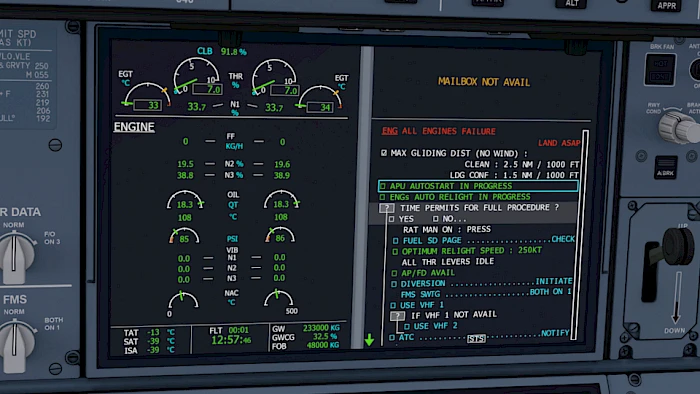
Airbus’s Electronic Centralised Aircraft Monitor, standard across the A320, A330, A350 and beyond, performs the same core alerting role as EICAS but integrates the response more tightly into the display itself. When a failure occurs, ECAM doesn’t just raise a message — it typically presents an ordered list of recommended actions directly on the lower display, and automatically calls up the relevant system synoptic page so the crew can see, graphically, which valve, pump, or generator is affected.
In practice this means an Airbus crew dealing with, say, a hydraulic system fault will often see the abnormal procedure’s action items already sequenced on screen, alongside a live diagram of the affected system, without needing to cross-reference a separate checklist document for many failures. It’s a more automated, more guided approach to fault management — the system doesn’t just tell you something’s wrong, it tends to show you what to do about it and where it lives on the aircraft.
Where the Gap Has Narrowed
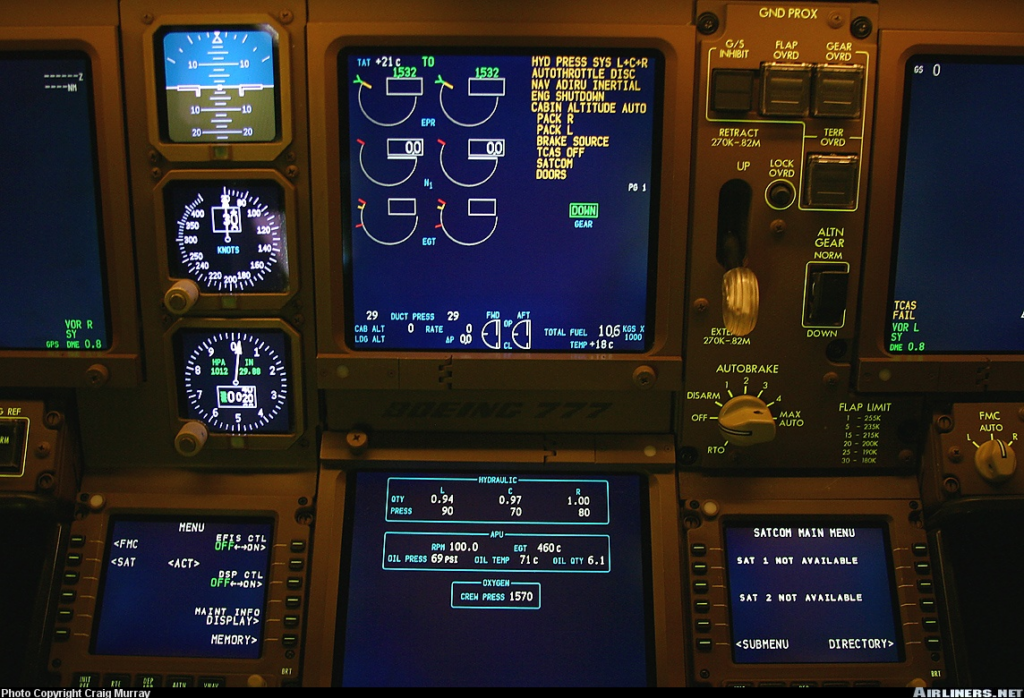
It’s worth being fair to Boeing here: the sharp EICAS-versus-ECAM divide that existed in the 1990s has narrowed considerably. Newer Boeing installations, particularly the electronic checklist systems fitted to later 777s and the 787, link EICAS messages directly to an on-screen checklist, closing much of the gap with ECAM’s guided-action approach. The philosophical DNA is still visible, though — Boeing’s system remains built around linking an alert to a checklist reference, while Airbus’s remains built around displaying the procedure and the system state as one integrated picture.
Two Philosophies, Two Trade-Offs
Neither approach is simply “better.” Each comes from a coherent design philosophy with real trade-offs.
Boeing’s EICAS approach keeps the crew actively cross-referencing a checklist, which supporters argue reinforces situational awareness and keeps pilots engaged with the underlying logic of a procedure rather than simply following on-screen prompts. Critics counter that in a high-workload failure scenario, having to locate and work through a separate checklist reference adds a step that a more automated system removes.
Airbus’s ECAM approach reduces the crew’s manual workload during a failure by presenting sequenced actions and system diagrams automatically, which supporters say reduces the chance of missing a step under pressure. Critics of the more automated approach sometimes argue it can encourage a more passive “follow the screen” mindset rather than deeper systems understanding — though modern Airbus training programs work specifically to counter that tendency.
Why This Matters Beyond the Flight Deck
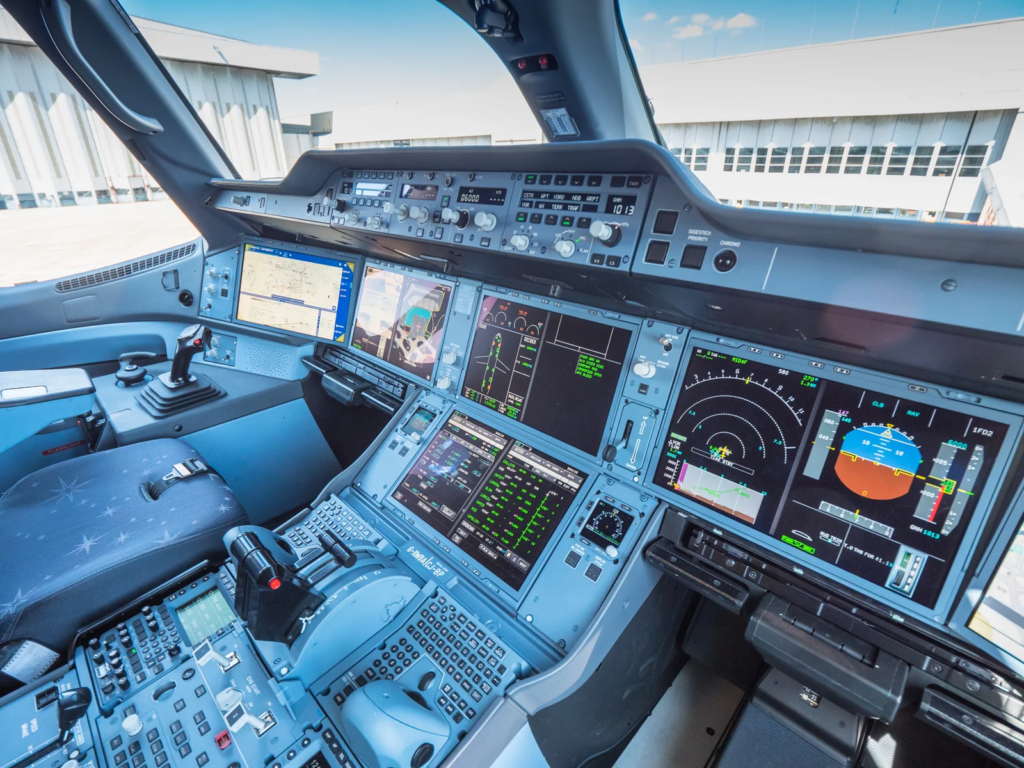
For engineers and planners, the EICAS/ECAM distinction isn’t just cockpit philosophy — it shapes the defect data that eventually lands on a tech log or maintenance message. An ECAM-generated fault typically arrives with a tightly defined system reference already tied to a synoptic page, which can streamline initial troubleshooting. An EICAS-originated message may require slightly more cross-referencing between the alert and the applicable non-normal checklist or maintenance manual reference to build the same picture, particularly on older-generation installations without a fully linked electronic checklist.
Either way, both systems ultimately feed into the same goal that CAMO and planning departments care about: turning an in-flight event into an accurate, actionable maintenance record with the correct fault code, the correct system reference, and the correct corrective action — whichever acronym generated the alert in the first place.
A Design Philosophy, Not Just a Screen Layout
What makes EICAS versus ECAM such a durable topic of debate among pilots and engineers isn’t really about which colored message box looks nicer. It’s a genuine philosophical fork in how two manufacturers think about the relationship between automation and human judgment in the cockpit — one that shows up again and again across other systems on these same aircraft, from fly-by-wire control laws to autothrottle behavior to checklist architecture.
Boeing’s approach, at least in its classic form, trusts the crew to actively pull the relevant procedure and work through it with the system providing structured alerting but stopping short of prescribing every action on-screen. Airbus’s approach trusts the system to present the procedure and the affected hardware together, reducing the crew’s cognitive load during a failure at the cost of a somewhat more automation-dependent workflow.
Both philosophies have been proven safe and effective across decades of airline operations on the aircraft types that carry them. The real value in understanding the difference isn’t picking a side — it’s recognizing that behind every glowing amber or red message on a flight deck, there’s a design decision that traces all the way back to how each manufacturer answered one deceptively simple question: when something breaks at 35,000 feet, how much should the airplane tell the crew — and how much should it show them?