
The payload is not a normal passenger load
An NFL travel party is players, coaches and staff, plus a large volume of equipment: helmets, pads, medical supplies, video gear and kit bags. That makes weight and balance the first concern. The aircraft’s centre of gravity has to stay inside limits, so heavy equipment goes in specific cargo compartments and is not simply stacked at the back. Load planners work from actual weights, and the flight crew checks the final load sheet before departure.
Route length changes the whole plan
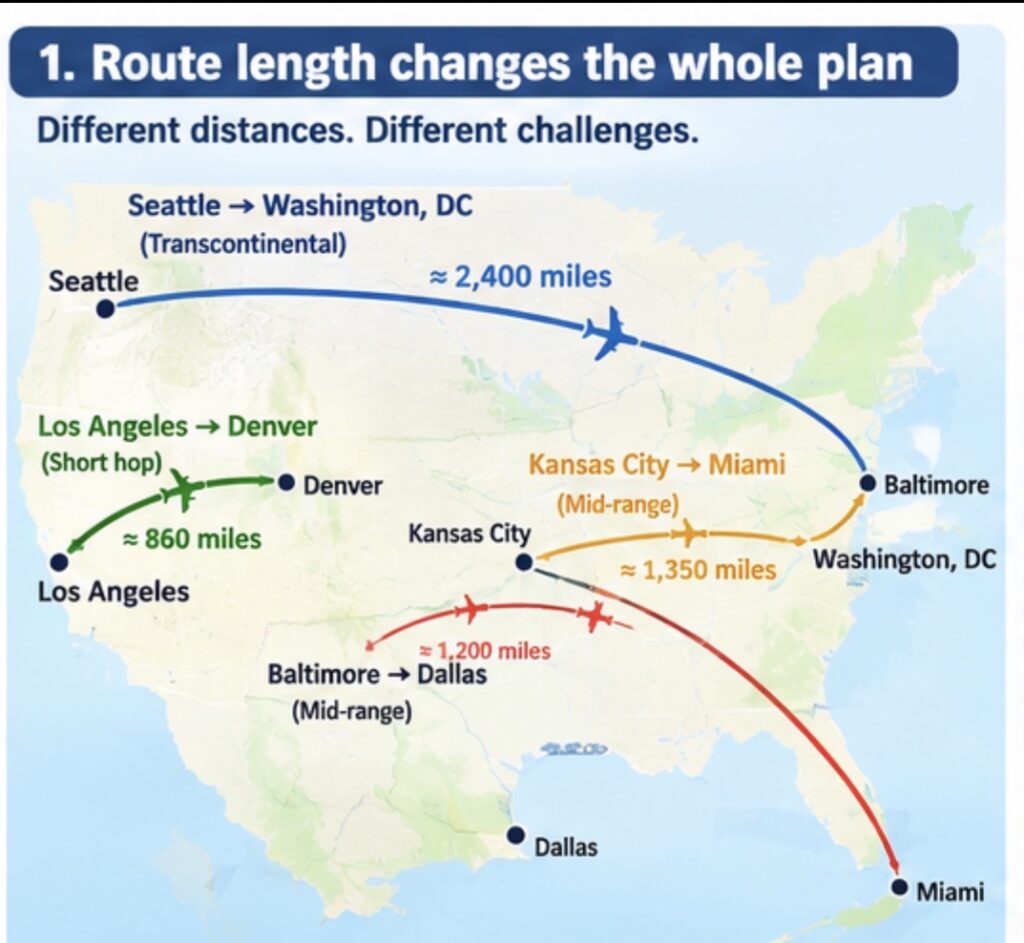
The four matchups cover very different distances. Los Angeles to Denver is a short hop. Baltimore to Dallas and Kansas City to Miami are mid-range. Seattle to Washington, DC is close to a full transcontinental flight. Longer sectors mean more fuel, which means higher takeoff weight and less margin on performance.
Direction matters too. Eastbound flights often ride the jet stream and arrive faster. Westbound flights fight headwinds and burn more fuel, so fuel planning and alternates change.
Altitude and heat: density altitude
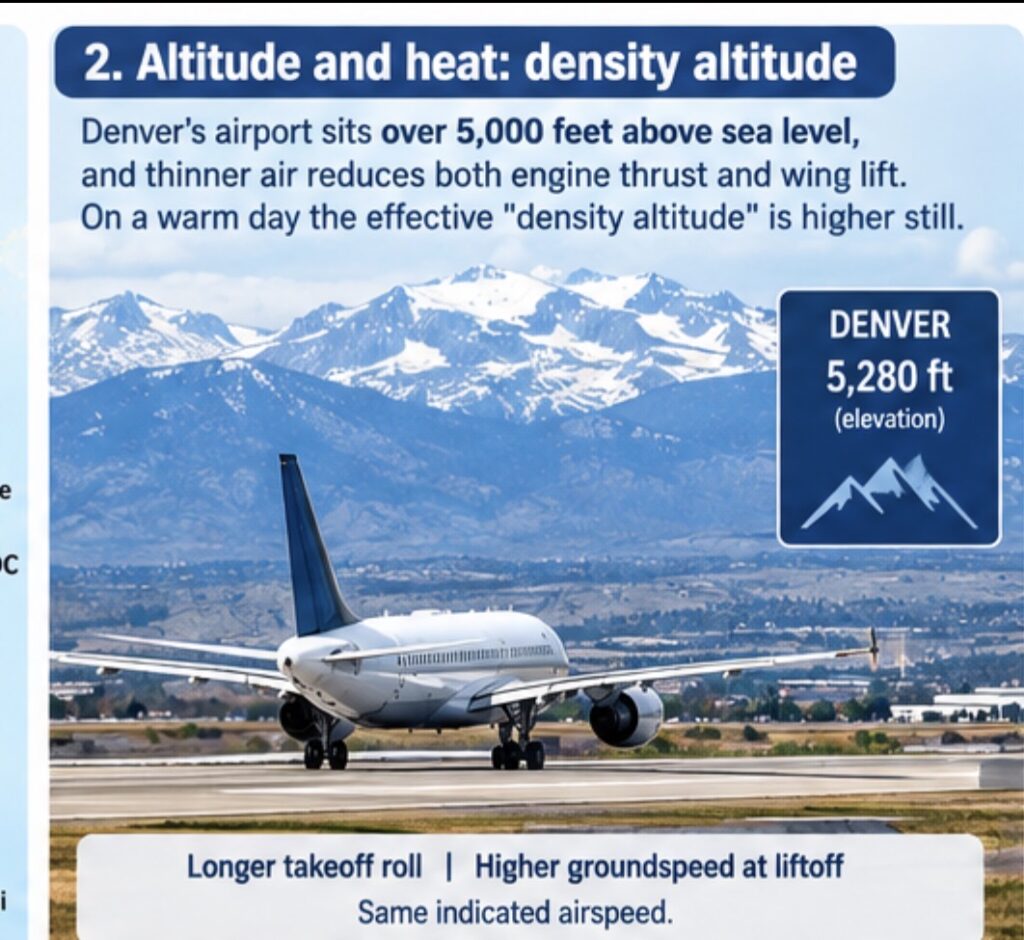
A Denver trip is the classic performance case. Denver’s airport sits over 5,000 feet above sea level, and thinner air reduces both engine thrust and wing lift. On a warm day the effective “density altitude” is higher still. The result is a longer takeoff roll and a higher groundspeed at liftoff for the same indicated airspeed. Crews use performance software to check runway length, takeoff weight and climb gradient before they commit. Miami has the opposite problem: heat and humidity also cut performance, just at sea level.
Weather
With winter storm warnings also trending, weather planning is part of the story. Snow and ice bring de-icing and anti-icing procedures, holdover times and possible re-routing. A team can’t just wait out a storm the way a fan can, because the game schedule is fixed.
What engineers check before the team boards
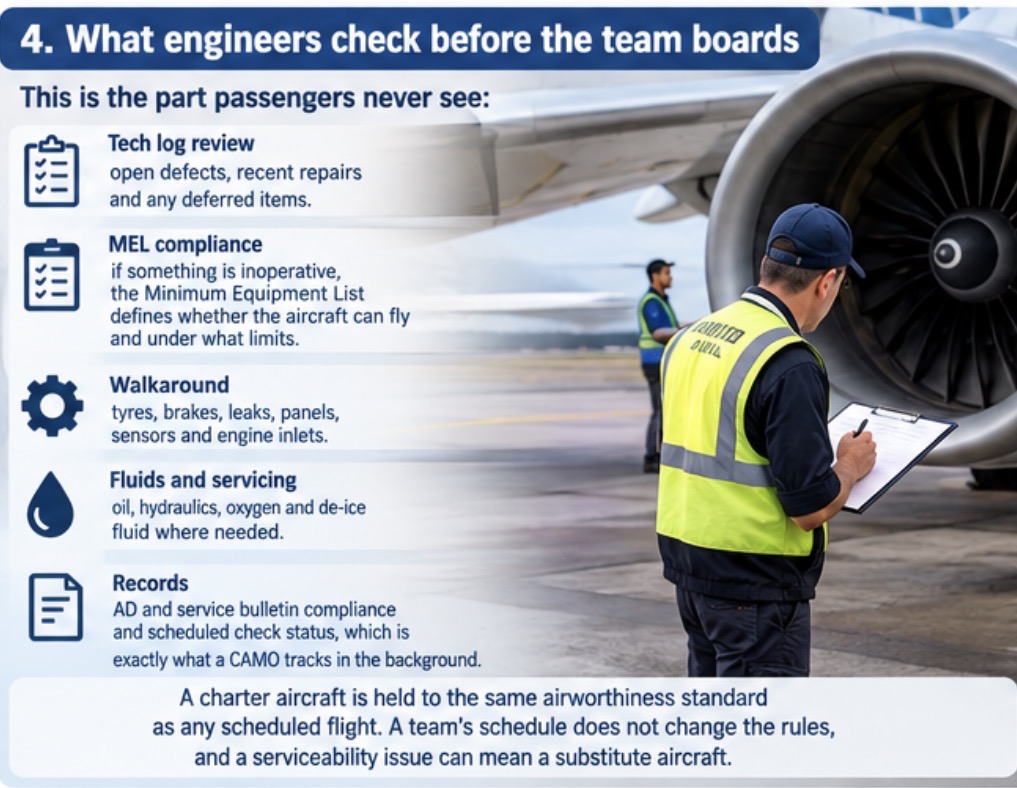
This is the part passengers never see:
• Tech log review: open defects, recent repairs and any deferred items.
• MEL compliance: if something is inoperative, the Minimum Equipment List defines whether the aircraft can fly and under what limits.
• Walkaround: tyres, brakes, leaks, panels, sensors and engine inlets.
• Fluids and servicing: oil, hydraulics, oxygen and de-ice fluid where needed.
• Records: AD and service bulletin compliance and scheduled check status, which is exactly what a CAMO tracks in the background.
A charter aircraft is held to the same airworthiness standard as any scheduled flight. A team’s schedule does not change the rules, and a serviceability issue can mean a substitute aircraft.
Crew duty limits
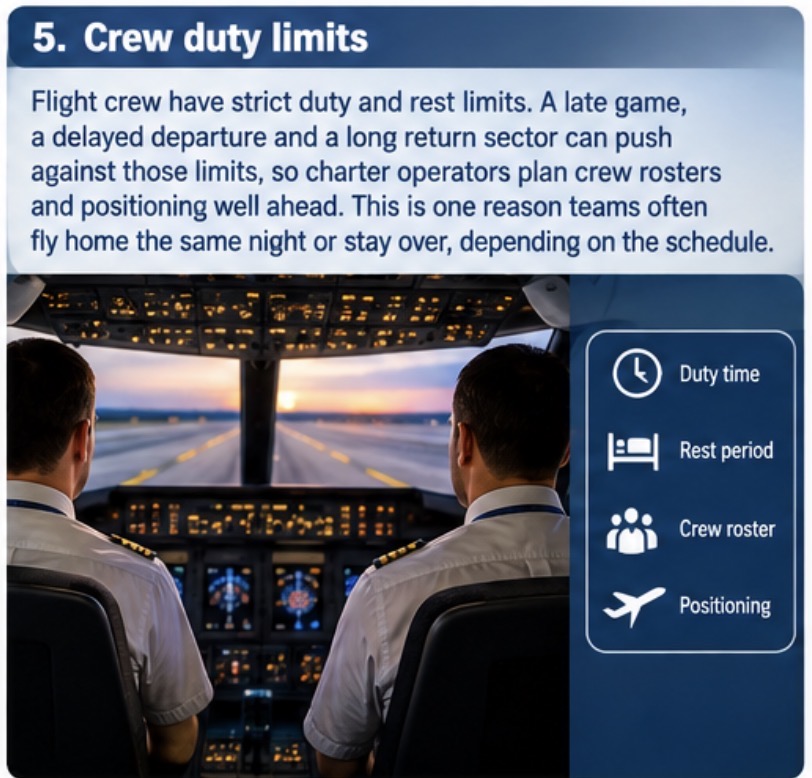
Flight crew have strict duty and rest limits. A late game, a delayed departure and a long return sector can push against those limits, so charter operators plan crew rosters and positioning well ahead. This is one reason teams often fly home the same night or stay over, depending on the schedule.
Takeaway
The next time a big game trends, remember the aircraft that carried the team there. Weight and balance, density altitude, weather, MEL decisions and duty limits all have to line up before the wheels leave the ground.