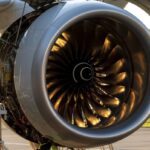
If you have ever watched a jet roll toward the terminal with one engine spooled down, you have seen single-engine taxi (SET) in action. It looks unusual, but it is a routine, approved procedure at many airlines. This article explains why operators do it and, more importantly, the technical side: how the aircraft keeps stability and directional control with only one engine producing thrust.
What Is Single-Engine Taxi?
Single-engine taxi means moving a twin-engine aircraft on the ground with only one engine running. After landing, the crew shuts down one engine once the aircraft is clear of the runway and any required cooling period has passed. Operators may also delay starting the second engine on departure. As Flyaway Simulation’s overview of taxiing on one enginenotes, it is used mainly to reduce fuel burn, emissions and engine running time during long taxis, and only where the aircraft flight manual and operator procedures permit it.
Why Do Airlines Taxi on One Engine?
A jet engine at idle still burns a meaningful amount of fuel, and taxi times at busy airports can be long. Shutting one engine down:
- Cuts fuel burn during the taxi phase.
- Reduces emissions and noise around the apron.
- Saves engine running hours, which supports maintenance planning and engine life.
The benefit is not universal. Crews also weigh aircraft weight, airfield altitude, outside temperature, taxiway slope and surface condition, as pilots discuss in this PPRuNe thread on single-engine taxiing.
The Core Physics: Why the Aircraft Wants to Yaw
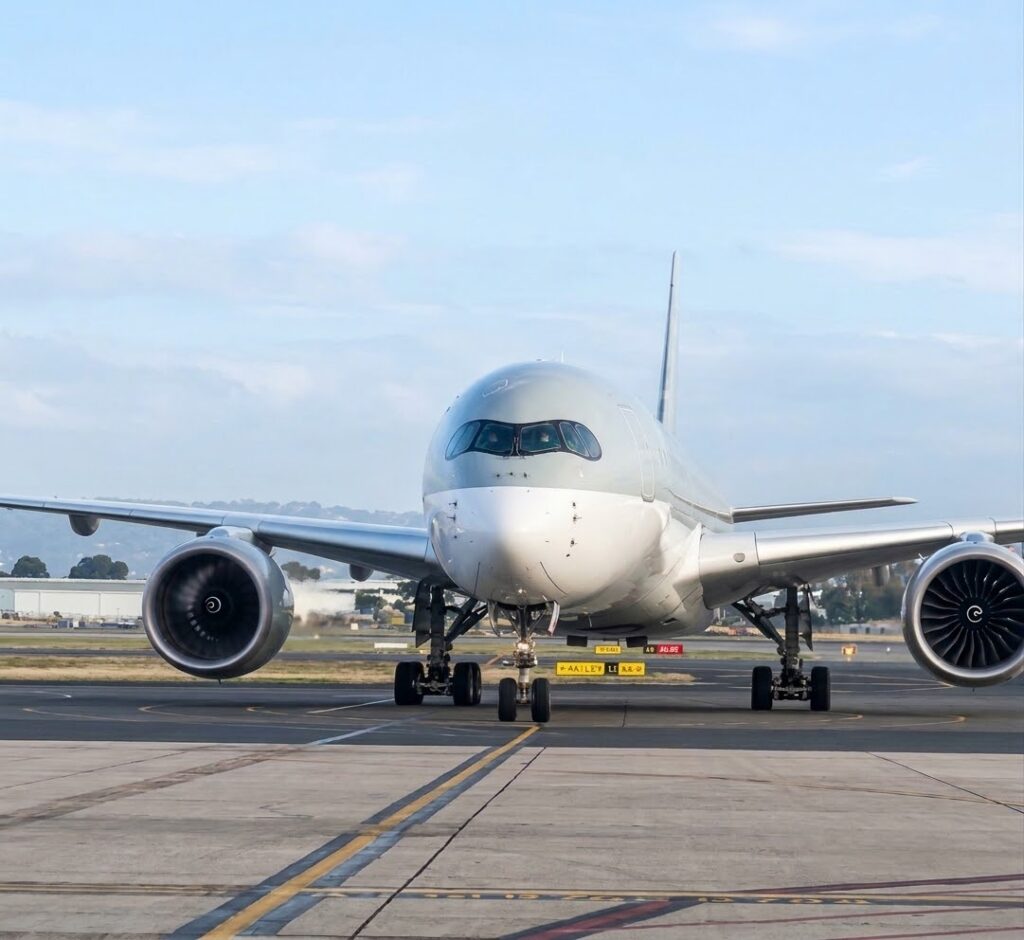
With both engines running at idle, thrust is symmetrical. Each engine sits out on a wing, a few metres from the centreline, so equal thrust on each side produces equal and opposite yawing moments that cancel.
With one engine shut down, that symmetry disappears. The running engine produces thrust at a lateral offset from the centreline, which creates a yawing moment (thrust multiplied by the distance from the centreline) that tries to turn the nose toward the side of the stopped engine.
At taxi speeds the rudder is nearly useless because airflow over the fin is too slow. So the aircraft cannot rely on aerodynamic control. Stability on the ground comes from the landing gear and the steering and braking systems.
How the Aircraft Stays Stable and Controllable
1. Low thrust requirement
Once an aircraft is rolling, it needs very little thrust to keep moving. Idle thrust on one engine is often enough on a flat, dry taxiway. The yawing moment is therefore small. The larger thrust demand is breakaway thrust, the short burst needed to start the aircraft moving from a stop. Crews manage this by setting the aircraft rolling gently and avoiding stopping on slopes or soft surfaces where possible.
2. Landing gear geometry
A tricycle landing gear is inherently directionally stable on the ground. The main gear sits behind the centre of gravity and the tyres resist sideways sliding. The wide main gear track resists the tendency to rotate, so a small yawing moment does not cause a runaway turn. The tyres’ cornering force acts as a built-in damper.
3. Nosewheel steering
The nosewheel steering system is the primary directional control on the ground. The pilot uses the tiller to command a steering angle, and the nose gear generates the side force that counters the yaw from the live engine. This is also why steering availability is a gating item: the crew must be sure that the hydraulic system powering steering stays pressurised after the engine is shut down.
4. Differential braking
If the nosewheel alone cannot hold the line, for example on a slippery surface or when thrust is raised, pilots can apply gentle differential braking, braking the wheels on the side of the live engine slightly more or less as required to balance the turn. In practice, crews avoid reaching this point and plan the taxi so that thrust stays low.
5. Turning direction matters
Turning away from the running engine is easier than turning toward it, because the thrust offset assists the turn. Turning toward the running engine takes more steering input. This is one reason the choice of which engine remains running can depend on the expected taxi route, along with the factors below.
Aircraft Systems That Must Keep Working
Shutting down an engine does not only remove thrust. It removes a generator, a hydraulic pump and a bleed air source. Stability on the ground depends on these systems being managed correctly.
- Hydraulics: Brakes and nosewheel steering are powered by hydraulic systems, each normally fed by an engine-driven pump. On many types a power transfer unit (PTU) or an electric auxiliary pump keeps the affected system pressurised when one engine is off. The importance of this is underlined by the Flight Safety Foundation’s analysis of a DC-9 ramp collision, where shutting down an engine left insufficient hydraulic pressure for the brakes, steering and thrust reversers.
- Electrical power: The remaining engine’s generator, or the APU, must be able to carry the electrical load.
- Bleed air and air conditioning: Crews decide whether to run the APU for air conditioning and pneumatic supply. Pilots often discuss leaving the APU running during single-engine taxi, as seen in this Airbus Drivers forum discussion on single-engine taxi and APU use.
- Brakes: Brake temperature and cooling affect how soon an engine can be shut down after landing, especially after heavy reverse thrust and braking.
The exact configuration, including which engine stays on, is defined by the aircraft manufacturer and the operator’s procedures, and varies between types such as the A320 family, A330 and Boeing 737 and 777.
When Single-Engine Taxi Is Not Used
Crews and operators typically avoid or restrict single-engine taxi when:
- The taxiway is slippery, contaminated or steeply sloped.
- The aircraft is at a high weight or the airfield is at high altitude or high temperature, increasing thrust demand.
- There is a technical defect affecting steering, braking, hydraulics, or generators.
- The taxi route is short, so there is no benefit, or the congestion could force repeated stops.
- Engine warm-up or cooldown requirements have not been met.
The second engine is never optional for takeoff. A normal takeoff is not permitted on one engine, so if the second engine does not start or fails its checks, the aircraft returns to the stand.
Safety and Maintenance Perspective
From an engineering and maintenance viewpoint, single-engine taxi changes how often engines start and stop, so engine start cycles, thermal cycling and APU running hours are tracked differently. Operators weigh the fuel saving against the extra APU use and the additional start cycles. Defects in hydraulic or steering components matter even more when the aircraft relies on a reduced set of power sources, which is why technical records and defect rectification are central to safe operation. Authoritative general references on ground operations and safety are available from SKYbrary.
Key Takeaways
- Single-engine taxi reduces fuel burn and emissions, and only runs when procedures allow.
- The running engine creates a yawing moment toward the stopped engine.
- The rudder is ineffective at taxi speeds, so control comes from nosewheel steering, landing gear geometry and, if needed, differential braking b.
- Hydraulic, electrical and bleed air systems must be managed so that steering and brakes stay available.
- Crews consider weight, slope, surface condition and temperature before choosing to taxi on one engine.
FAQ
Is single-engine taxi safe? Yes, when it is done within the manufacturer’s limits and the operator’s procedures. Crews check that steering, braking and essential systems are available before shutting an engine down.
Which engine do pilots leave running? It depends on the aircraft type and operator procedure, including hydraulic pump arrangement, generators, pneumatic supply and the expected turns.
Can an aircraft take off on one engine after taxiing that way? No. The second engine must be started and pass its checks before a normal takeoff.
Does the rudder help while taxiing? Not at taxi speeds. Directional control comes mainly from nosewheel steering and, if needed, differential braking.
Always follow your aircraft’s flight crew operating manual and your operator’s procedures. This article is general educational information and not operational guidance.