Date: May 25, 2018
Aircraft: Boeing 737-2K2CA Freighter
Registration: PK-JRM
Operator: Dirgantara Air Services
Engines: 2 × Pratt & Whitney JT8D-15A
MSN: 20943 (Line Number 405)
Cargo Load: 12,500 kg
Location: Wamena, Indonesia
The Incident
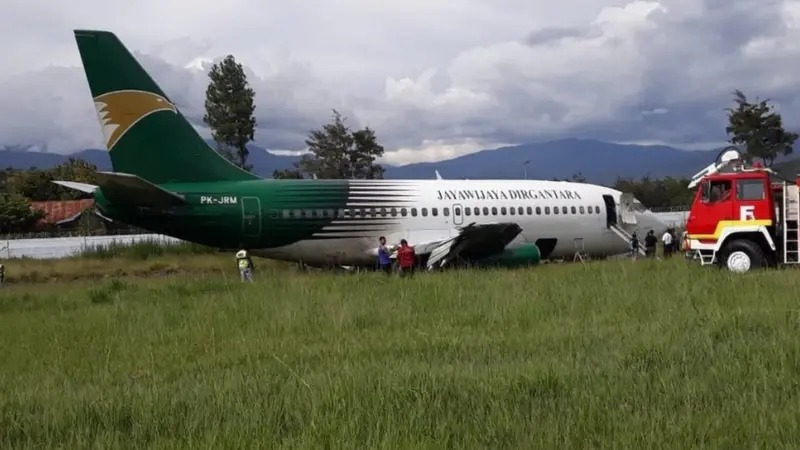
On May 25, 2018, a Boeing 737-200 freighter operated by Dirgantara Air Services experienced a serious incident while landing at Wamena Airport in Indonesia’s Papua province.
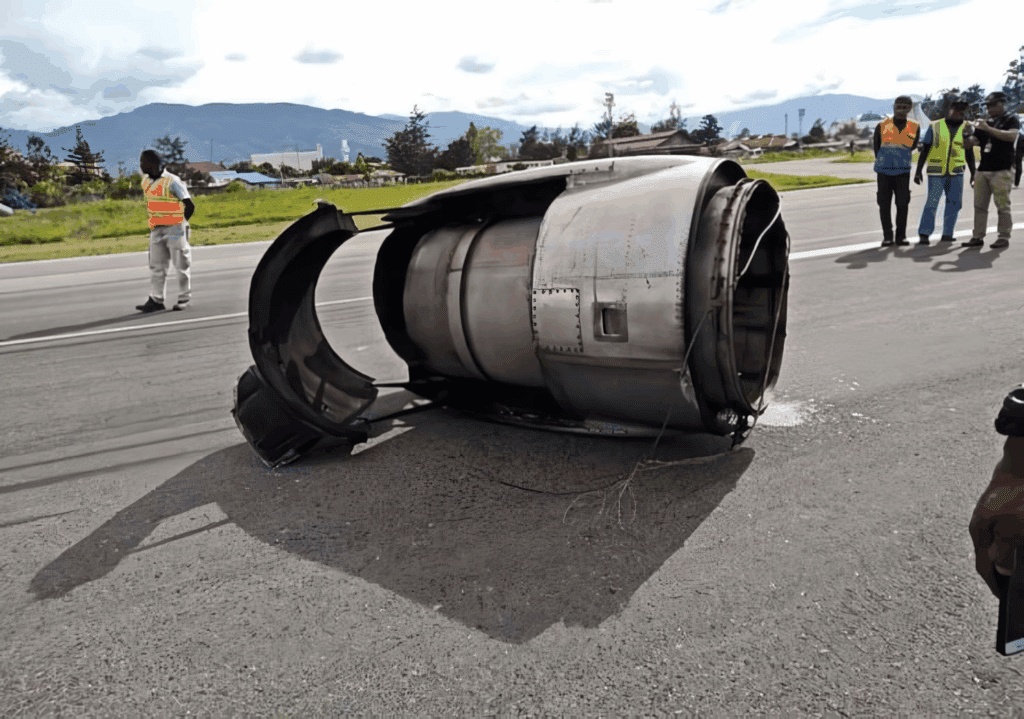
During the landing roll, the crew deployed the thrust reversers — a normal step to decelerate the aircraft on the relatively short, high-altitude runway. However, immediately after activation, the No. 2 engine’s thrust reverser clam shell doors, along with their supporting structure, separated from the aircraft.
With one reverser suddenly gone, the aircraft lost directional control, veered off the runway, and came to rest on the grass area beside the strip. Fortunately, there were no injuries reported, but the aircraft sustained significant structural damage.
Technical Background
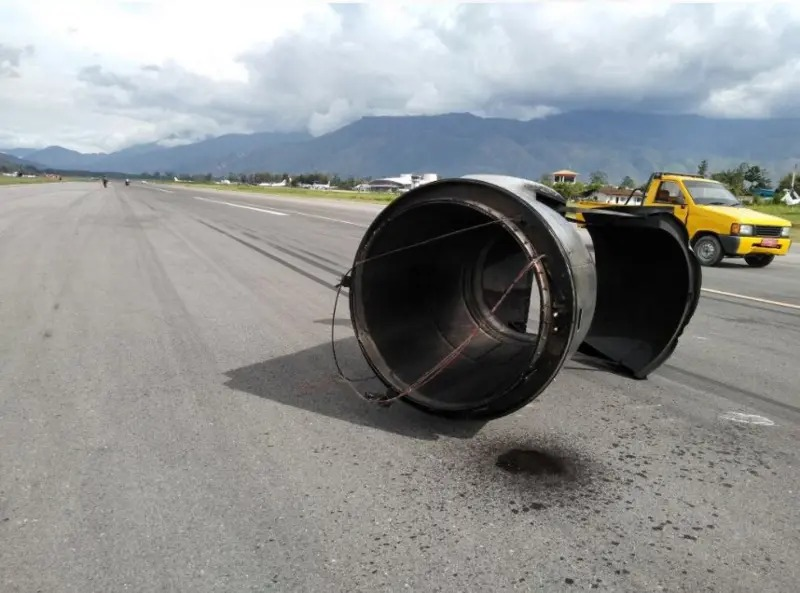
The Boeing 737-200 is equipped with Pratt & Whitney JT8D-15A engines, each fitted with clam shell-type thrust reversers. These mechanical doors redirect the engine’s exhaust forward to reduce speed after touchdown.
When properly maintained and deployed symmetrically, they help the aircraft stop efficiently — but any asymmetry or structural failure can cause a sudden yawing motion, making control extremely difficult during the high-energy phase of landing.
In this case, the No. 2 engine’s reverser assembly detached, likely due to structural fatigue or improper latching mechanism, instantly eliminating braking force on that side while creating additional drag on the other.
📋 Contributing Factors (Likely)
While the official report emphasized the mechanical failure, the following factors are generally associated with similar events:
- Wear and fatigue in the reverser actuation mechanism.
- Improper maintenance or inspection of the reverser latching system.
- Excessive use of reversers on short, high-altitude runways, increasing mechanical stress.
- Possible mis-rigging or hydraulic leak causing asymmetrical deployment.
💬 Lesson for Operators and Pilots
The phrase “Do not select R when trying to park” is a lighthearted yet serious reminder — in aviation, even a simple lever movement has consequences.
In freighter operations, where older aircraft like the 737-200 are still in service, component fatigue, hydraulic pressure irregularities, and improper rigging can cause reverser failures. Strict adherence to maintenance schedules, pre-flight checks, and post-landing inspections remains essential.
📚 Key Takeaway
This incident reinforces a timeless lesson in aviation safety:
Systems that help you slow down can also cause a loss of control if they fail asymmetrically.
Thanks to effective crew response and robust airframe design, the event ended without injuries — but it serves as a stark reminder of how critical mechanical integrity and situational awareness are during every phase of flight.
By Aeropeep Team
If you enjoy our work, please consider making a small donation—it helps us stay independent and keep delivering quality aviation content. 💙
👉 Donate
Thank you for being part of the Aeropeep journey!