Crashes that occur at high speeds and altitudes can lead to significant disintegration of the aircraft upon impact. The force can scatter debris over a wide area, making it seem like there is less wreckage in any one spot.
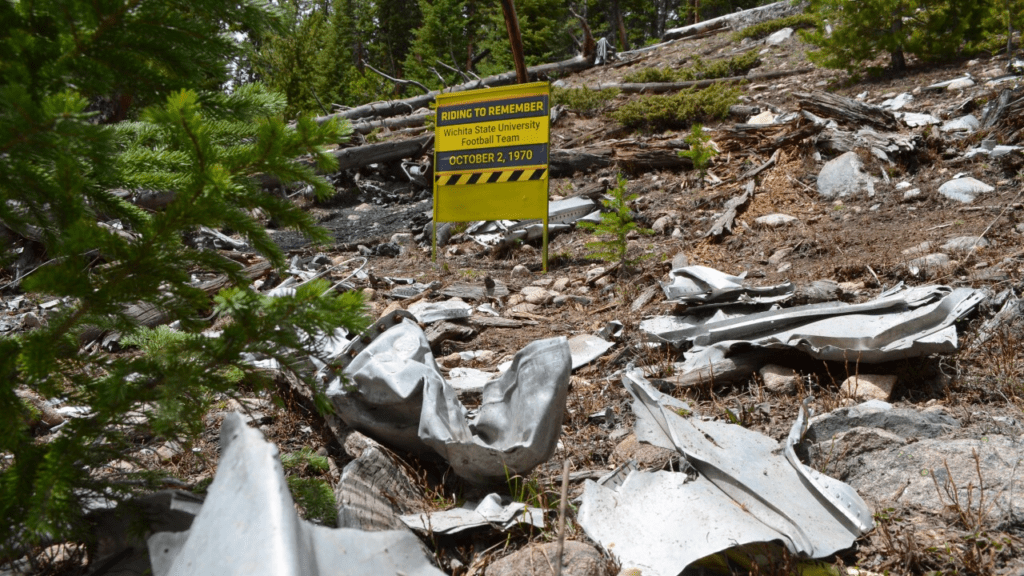
I’m going to be using impacts that are already assumed to be on the upper end of destruction (eg PSA Flight 1771, Silkair Flight 185, Germanwings Flight 9525, Turkish Airlines Flight 981, Adam Air Flight 574, etc).
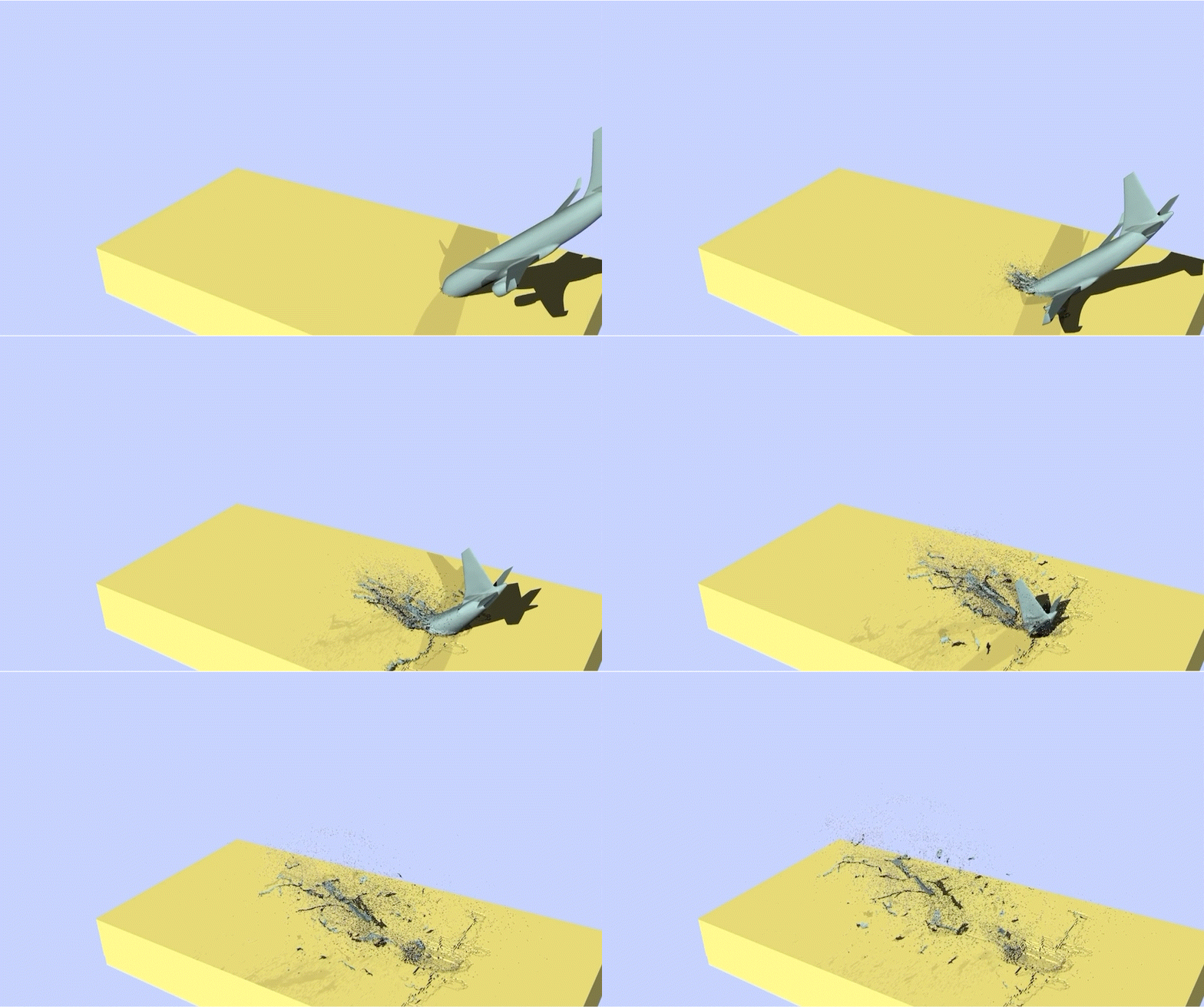
For example Germanwings Flight 9525 (Airbus A320) was flown into the Alps by the copilot in a mass murder-suicide with an impact speed of around 435 miles per hour, which is about 638 feet per second.
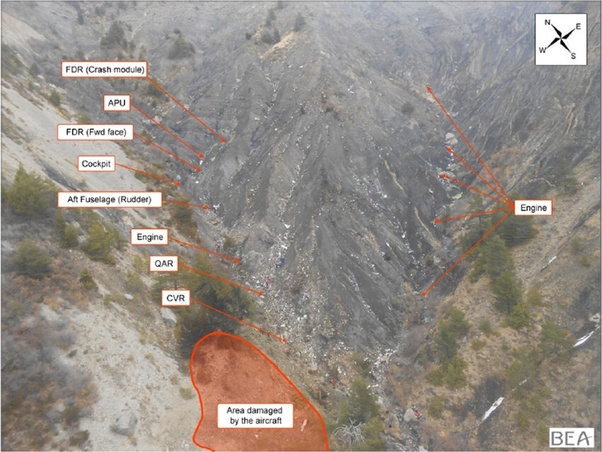
Germanwings 9525 debris field; the fragmentation damage that occurs is technically a type of pulverization.
The A320 is approximately 123 feet long. This means that from the moment the nose of the airliner began to touch the rocky surface of the Alps to the moment the tail cone was finished impacting the rock (the amount of time it took for the plane to impact) was 0.193 seconds. This does not account for the continued movement of the wreckage which continued forward and outward in a “V” formation as it spent kinetic energy.
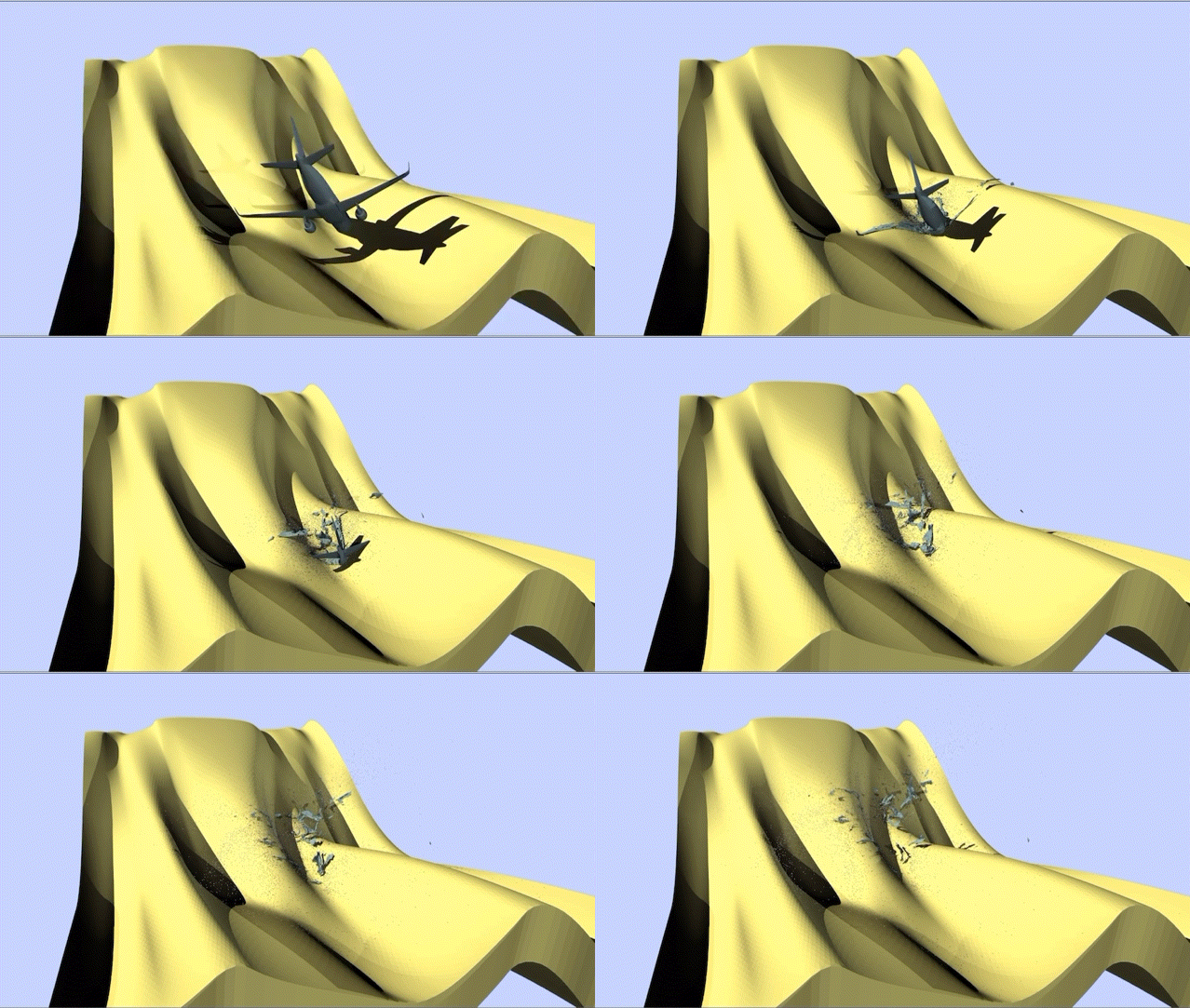
After fuselage pulverization wreckage was measured to continue flying forward and outward for another 250m during this calculation.
In some unique circumstances, areas of fuselage that experience aperture from IED detonation, often show a pattern as if a very large shotgun blast was fired at close range from within the pressurized fuselage. This area will itself have a starburst pattern fracturing around it. The shotgun blast zone may be fractured into such tiny fragments that it is practically impossible to recover that area.
Also some objects that are fire susceptible may carbonize in post impact fires. For example 4 individuals who were victims on Pan Am Flight 103 never had any of their tissue discovered; it was concluded that if the seating allocation was correct the 4 would have been sitting over the wing section that ended up impacting downtown Lockerbie causing a large inferno, their remains were carbonized and fragmented beyond recognition.
Author – Aleks Storlid
- Qantas A380 Retirement- Dates, Routes, Reasons and What Replaces the Superjumbo
- How a flydubai 737 MAX Lost 15,000 Feet in Under Two Minutes
- Terror at 34,000 Feet: flydubai 737 MAX Dives 15,000 Ft as Cockpit Attack Is Reported
- A350F First Flight. Payload, Range and How It Compares with the 777F
- How NFL Teams Fly: The Aircraft Engineering Behind Game Day