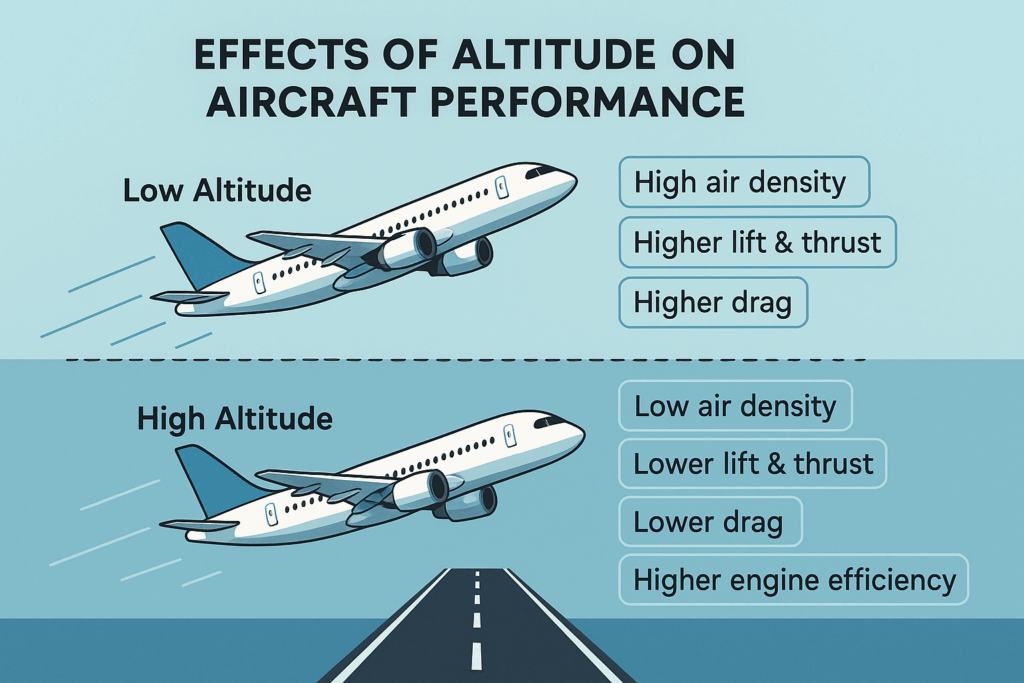
| Factor | Low Altitude | High Altitude |
|---|---|---|
| Air Density | High | Low |
| Lift & Thrust | Higher | Lower |
| Drag | Higher | Lower |
| Engine Efficiency | Lower (at cruise) | Higher (for jets) |
| Fuel Efficiency | Lower | Higher |
| Runway Length Needed | Shorter | Longer |
Have you ever wondered why commercial jets fly so high or why aircraft struggle more at high-altitude airports? The answer lies in the relationship between altitude and aircraft performance—a topic crucial for pilots, engineers, aviation students, and even frequent flyers.
In this article, we’ll break down exactly how altitude impacts aircraft performance and why understanding it is essential in the world of aviation.
1. Air Density and Its Impact
As altitude increases, air density decreases. Thinner air means:
- Reduced lift: Wings produce less lift, requiring higher speeds to stay airborne.
- Lower thrust: Engines, especially jet engines and propellers, become less efficient.
- Decreased drag: While lower drag improves cruising efficiency, it’s not enough to offset the drop in lift and thrust during takeoff.
2. Engine Performance at Altitude
- Jet engines: While thrust decreases, modern jet engines are optimized for high altitudes (~30,000–40,000 feet), balancing performance and fuel efficiency.
- Piston engines: Performance drops significantly without a turbocharger, making them more sensitive to altitude changes.
3. Takeoff and Landing Challenges
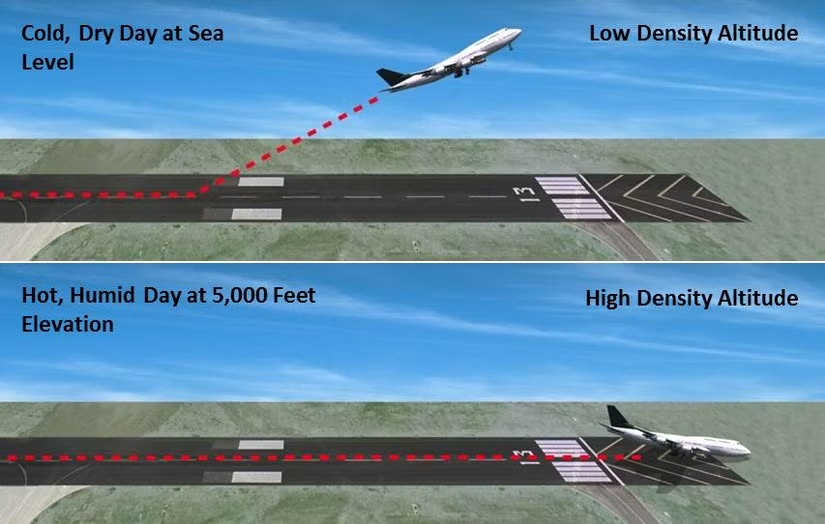
At higher altitudes, like in airports such as Denver or La Paz, aircraft require:
- Longer runways due to lower engine performance.
- Slower climb rates and potential weight restrictions.
This is known as operating in high-density altitude conditions, where aircraft behave as if they’re at an even higher elevation, especially on hot days.
4. Fuel Efficiency at High Altitude
Despite performance drawbacks, aircraft often fly at high altitudes because:
- Fuel burn is lower due to reduced drag.
- Jet streams can assist with faster travel, saving fuel.
This trade-off is why high-altitude cruising is standard in commercial aviation.
5. Cabin Pressurization and Passenger Safety
Flying at high altitudes requires pressurizing the cabin. Systems onboard keep passengers safe and comfortable, mimicking conditions at around 6,000–8,000 feet despite cruising much higher.
Altitude is a double-edged sword in aviation—offering greater fuel efficiency but also presenting engineering and operational challenges. Understanding these effects is vital not just for pilots and engineers, but for anyone curious about how aircraft achieve their incredible feats.
By Aeropeep Team
- Qantas A380 Retirement- Dates, Routes, Reasons and What Replaces the Superjumbo
- How a flydubai 737 MAX Lost 15,000 Feet in Under Two Minutes
- Terror at 34,000 Feet: flydubai 737 MAX Dives 15,000 Ft as Cockpit Attack Is Reported
- A350F First Flight. Payload, Range and How It Compares with the 777F
- How NFL Teams Fly: The Aircraft Engineering Behind Game Day
Aviation #FlightDynamics #PilotTraining #AircraftPerformance #Altitude #FlyingTips #AviationExplained