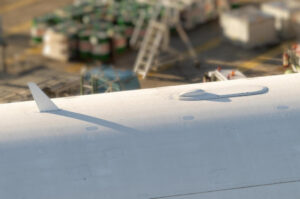
If you’ve ever had a window seat during turbulence and watched the wingtip bounce and bow several feet up and down, you’ve probably had one thought: is that normal?
It is. In fact, it’s not just normal — it’s the whole point. Modern airliner wings are deliberately engineered to flex, and the amount of bending you see from your window seat is a tiny fraction of what the structure is actually built to withstand. Here’s the engineering behind it.
Wing Flex Isn’t a Flaw — It’s a Feature
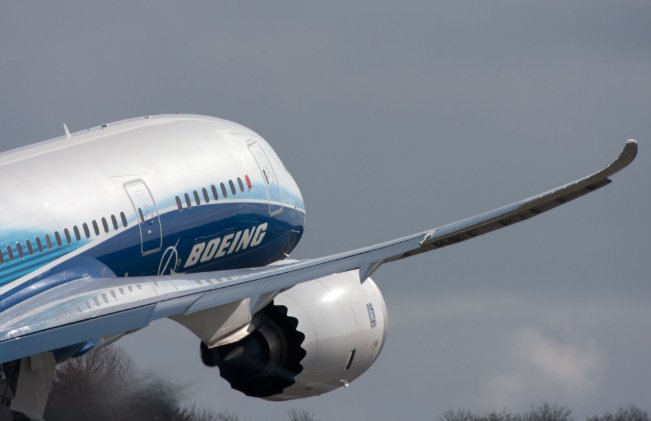
A rigid, unbending wing sounds safer on paper, but in practice it would be a structural liability. Aircraft wings are subjected to constantly changing aerodynamic loads — gusts, turbulence, maneuvering, and the sheer weight of fuel and lift being generated. A wing that couldn’t flex would have to absorb every one of those loads as pure stress, concentrated at the wing root where it joins the fuselage.
By allowing the wing to bend, engineers give the structure a way to dissipate energy instead of fighting it. Think of the difference between a stiff steel ruler and a fibreglass fishing rod. Snap a hard, quick force onto the ruler and it can crack. Apply the same force to the rod and it simply bends, absorbing the load along its length before returning to shape. Airliner wings behave more like the fishing rod than the ruler, and that’s a deliberate design choice.
The Aeroelasticity Problem
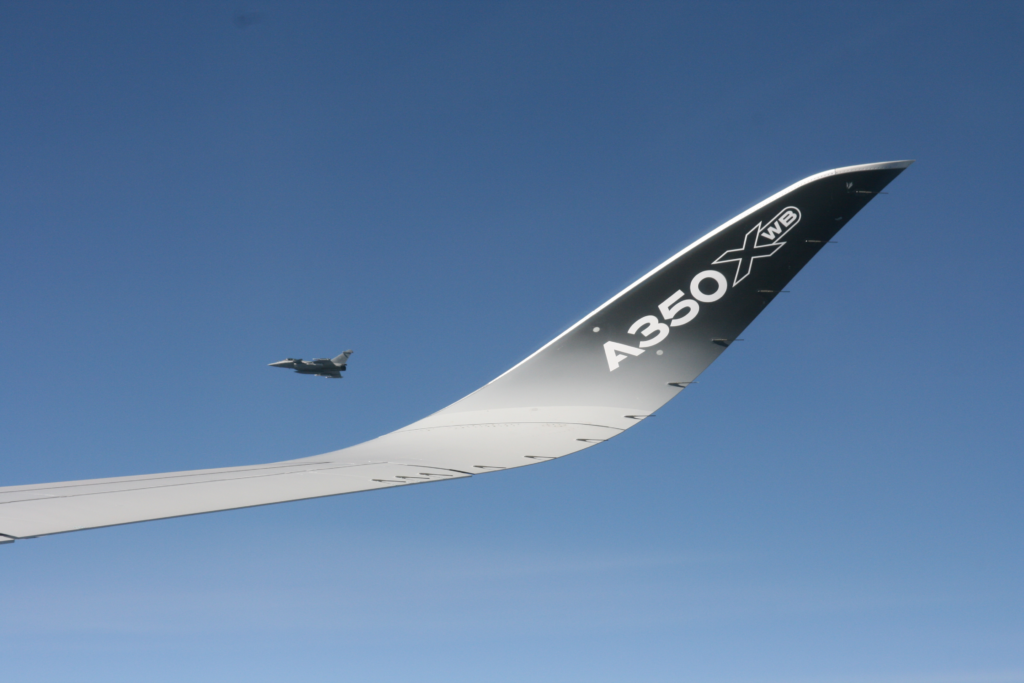
The engineering discipline behind this is called aeroelasticity — the study of how aerodynamic forces, structural elasticity, and inertia interact with each other. Every wing is a compromise between being stiff enough to hold its aerodynamic shape and flexible enough to absorb loads safely.
As an aircraft flies, lift isn’t distributed evenly across the wing. It’s generally concentrated more toward the wing root and tapers off toward the tip, and this distribution shifts constantly with speed, angle of attack, and turbulence. A flexible wing naturally twists and bends in response, which actually helps redistribute those loads more evenly and reduces peak stress at any single point — particularly at the root, which carries the greatest bending moment.
Engineers use load alleviation systems alongside this natural flex. Ailerons and spoilers can deflect automatically in gusty conditions to reduce lift at the wingtips, working with the wing’s flexibility rather than against it, easing the structural loads during turbulence.
Why Composite Wings Flex More Than Older Aluminum Ones
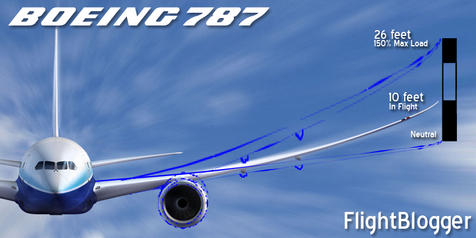
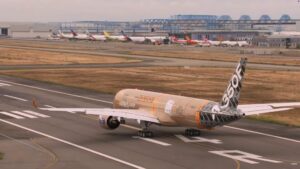
If you’ve watched footage of a Boeing 787 or Airbus A350 wing in flight, you may have noticed it flexes noticeably more than older aircraft like a 737 or A320. That’s not a coincidence — it comes down to materials.
Modern composite wings, built from carbon-fiber-reinforced polymer, have a different stiffness-to-strength ratio than traditional aluminum wings. Composite materials can be engineered to flex elastically over a much greater range without fatiguing or cracking the way metal does under repeated cyclic stress. Aluminum wings flex too, but engineers historically kept them stiffer because aluminum is more prone to metal fatigue — the same repeated bending that a composite wing shrugs off can eventually cause microscopic cracks in aluminum structures over thousands of flight cycles.
This is part of why composite-winged aircraft are often designed with noticeably longer, thinner, higher-aspect-ratio wings. The material lets designers chase more aerodynamic efficiency (longer, slimmer wings reduce drag and improve fuel burn) without paying the fatigue penalty that would come with an aluminum wing of the same proportions.
How Much Do Wings Actually Flex?
The flex you see from a window seat during cruise or light turbulence is usually only a foot or two of vertical movement at the tip — barely a fraction of what the structure is rated for.
Wing designs are proven through static structural testing, where a full airframe is bolted to a test rig and the wings are loaded far beyond anything they’d ever see in service, typically to at least 150% of the maximum load the aircraft is certified for, before being pushed to failure. In these destructive certification tests, wingtips have been documented bending upward by several meters before the structure ultimately fails — dramatically more than anything a passenger would ever experience in normal or even severe turbulence.
That huge gap between “what a wing experiences in real flight” and “what a wing can survive in testing” is intentional. It’s the safety margin that certification authorities like the FAA and EASA require before any commercial aircraft is allowed to carry passengers.
Why More Flex Doesn’t Mean Less Safe
It’s an easy but understandable assumption: a wing that bends more must be weaker. In reality, the opposite is often true. A wing engineered to flex is dispersing loads instead of concentrating them, which reduces fatigue over the aircraft’s operational life and improves its resistance to sudden gust loads.
The alternative — a wing built to be almost perfectly rigid — would need to be dramatically heavier to survive the same loads, since it would have no ability to bend and redistribute stress. That extra weight would cost fuel efficiency for the entire life of the aircraft. Engineers have found that a flexible, lighter wing that manages loads dynamically is both safer over the long term and far more efficient than a stiff one.
Turbulence and Wing Flex: What’s Actually Happening
During turbulence, what you’re seeing is the wing doing exactly what it’s designed to do: absorbing sudden changes in airflow by flexing rather than transmitting that shock directly into the fuselage and the people inside it. The wing acts almost like a shock absorber for the whole aircraft.
Modern aircraft also use structural load monitoring and, in some designs, active gust-alleviation systems that make small automatic aileron adjustments to reduce stress during rough air. Combined with the wing’s natural elasticity, these systems keep the loads experienced in turbulence a small fraction of what the wing was certified to handle.
The Bottom Line
Wing flex is not a warning sign — it’s evidence of decades of aerospace engineering working exactly as intended. From the aeroelastic principles that govern how loads move through the structure, to the composite materials that allow modern wings to flex further without fatigue, to the brutal certification testing that proves a wingtip can bend meters beyond anything it will ever see in service, everything about that flex you see from your window seat is by design.
Next time you’re cruising at altitude and the wingtip starts to bounce in light chop, you’re not watching a structure under threat. You’re watching an engineering solution do exactly what generations of aerospace engineers built it to do.
By Aeropeep Team